Human (controlled)Mixed
On this page
L-Ornithine is a behind-the-scenes amino acid your body uses to take out the trash — specifically ammonia, the toxic byproduct left over when you break down protein. It sits at the heart of the urea cycle, the liver’s ammonia-disposal system. That housekeeping role is why it’s studied for fatigue and sleep, and why it earns a genuine medical use in liver care.
What is L-Ornithine?
L-Ornithine is a non-proteinogenic amino acid, meaning your body uses it as a metabolic workhorse rather than as a building block for proteins — you won’t find it written into any protein sequence. It’s produced inside the urea cycle from arginine, and it’s best known as one of the key relay points in how the body neutralises and excretes ammonia.
What does L-Ornithine do in the body?
Ornithine’s main role is ammonia cleanup. When you digest protein, ammonia is generated, and it’s toxic if it builds up — the urea cycle converts it into urea for safe disposal in urine, with ornithine acting as a reusable carrier that keeps the cycle turning, like a shuttle bus that runs the same loop over and over. Ornithine is also a precursor for polyamines, the compounds cells need to grow and divide, and it feeds into making proline and glutamate.
Where do you get L-Ornithine?
You don’t need to get ornithine from food — the body produces it continuously as part of the urea cycle. It isn’t concentrated in any particular food the way, say, leucine is in meat; you get small amounts as a metabolic intermediate in protein-rich foods. Supplemental ornithine is sold as L-ornithine hydrochloride, often marketed for recovery, fatigue or sleep.
What does the research show?
The most interesting human signal is around fatigue and sleep: small controlled trials have reported that L-ornithine can lower subjective tiredness and improve stress and sleep markers, plausibly by helping the body clear fatigue-linked ammonia. The trials are small, so it’s an encouraging lead rather than a settled result. Separately, in supervised liver care, ornithine — usually as L-ornithine-L-aspartate — is used to bring down high blood ammonia, and controlled trials back that clinical use. It’s a satisfying example of one molecule doing quiet, essential work that researchers are still learning to harness.
Is L-Ornithine safe?
L-Ornithine is generally well tolerated, with mild digestive upset — cramping or loose stools — the main issue at higher doses. Anyone with significant liver or kidney disease should only take it with medical supervision, since those organs run its metabolism. As with any supplement, start low and see how you respond.
Evidence by outcome
Each outcome L-Ornithine has been studied for, with the honest evidence grade and what the studies actually found. A tier never stands alone — the verdict rides with it.
| Outcome | Evidence | What was found |
|---|---|---|
| Fatigue, stress & sleep | Human (controlled)Mixed | Small controlled human trials have reported that L-ornithine can reduce subjective fatigue and improve markers of stress and sleep quality, an effect often tied to its role in helping clear ammonia, a fatigue-linked byproduct. The studies are small, so it's a promising early signal rather than proof. |
| Ammonia clearance & liver support | Human (controlled)Helped | In a clinical setting, ornithine — usually as the combination L-ornithine-L-aspartate (LOLA) — is used to help lower blood ammonia in liver disease, and controlled trials support that use. That's a supervised medical context, not the same as a general wellness benefit from an over-the-counter ornithine capsule. |
FDA & legal status
- United States: dietary supplement / food (as of Jul 2026)
A non-proteinogenic amino acid, sold as a dietary supplement. Not an FDA-approved drug; supplements are regulated as food, not medicine.
Chemical identifiers
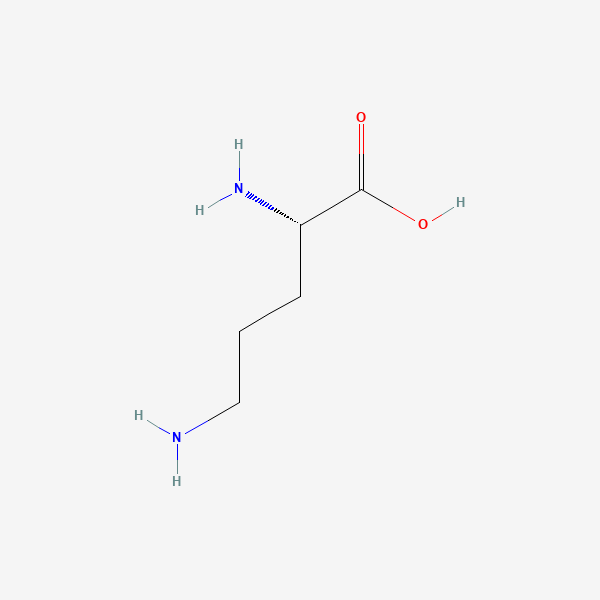
- Molecular formula
- C5H12N2O2
- Molecular weight
- 132.16 g/mol
- IUPAC name
- (2S)-2,5-diaminopentanoic acid
Verified external records: