Human (controlled)Helped
On this page
L-leucine is the amino acid your muscles listen for. It’s one of the three branched-chain amino acids (BCAAs), it’s essential — your body can’t make it — and of all twenty amino acids it’s the one most directly responsible for telling muscle tissue to start building. If you’ve ever wondered why whey protein and BCAA powders are built around leucine, this is why.
What is L-leucine?
L-leucine is an essential, proteinogenic amino acid and one of the three branched-chain amino acids, alongside isoleucine and valine. “Branched-chain” describes its forked side chain, and “essential” means you have to eat it — the human body has no way to synthesize it. You’ll see it abbreviated Leu or the single letter L. It turns up in every protein you own, but its standout job is signaling, not just structure.
What does L-leucine do in the body?
L-leucine acts like the ignition key for muscle growth. When enough leucine arrives after a meal, it activates a cellular sensor called mTOR, which switches on muscle protein synthesis — the process of turning dietary amino acids into new muscle. Think of protein as the bricks and leucine as the foreman who tells the crew to start laying them. On top of that, muscle can burn branched-chain amino acids directly for fuel during exercise, and leucine’s carbon skeleton can feed ketone production when carbohydrates are scarce.
Where do you get L-leucine?
L-leucine is abundant in protein-rich food, and animal sources are especially dense in it. Whey protein is one of the richest sources going, which is why it’s the backbone of most muscle-building supplements; eggs, meat, poultry, fish and dairy all deliver generous amounts. Soy, other legumes, nuts and seeds cover the plant side. Anyone eating adequate total protein is almost certainly getting plenty of leucine.
What does the research show?
L-leucine’s headline result is real and human-backed: adding leucine to a protein dose raises the rate of muscle protein synthesis through the mTOR pathway. That’s one of the sturdier findings in sports nutrition. Researchers have pushed further — using leucine-enriched protein to fight the “anabolic resistance” of aging muscle, and testing BCAAs for post-workout soreness — and those results are more mixed, with modest effects. The core signal (leucine drives the muscle-building switch) is solid; the bigger long-term promises are still being pinned down.
Is L-leucine safe?
L-leucine is very safe. You already eat grams of it daily in any protein-containing diet, and the doses in supplements and protein powders are well tolerated. The one real caveat is balance: mega-dosing leucine on its own can crowd out isoleucine and valine, so whole protein or a balanced BCAA blend is usually the better call. People with rare BCAA-metabolism disorders must restrict it under medical supervision.
Evidence by outcome
Each outcome L-Leucine has been studied for, with the honest evidence grade and what the studies actually found. A tier never stands alone — the verdict rides with it.
| Outcome | Evidence | What was found |
|---|---|---|
| Muscle protein synthesis | Human (controlled)Helped | Leucine is the amino acid that flips the muscle-building switch. In controlled human studies, adding leucine to a meal or protein dose raises the rate of muscle protein synthesis, largely by activating the mTOR pathway. This is one of the better-established findings in sports nutrition — genuine human data, not just theory. |
| Preserving muscle in older adults | Human (controlled)Mixed | Because older muscle responds less to protein ("anabolic resistance"), leucine-enriched protein has been tested to help maintain lean mass. Some controlled trials show a benefit for the muscle-synthesis response; whether that reliably translates into more strength or size long-term is still mixed. |
| Reducing exercise muscle soreness | Human (controlled)Mixed | Branched-chain amino acids including leucine have been studied for easing delayed muscle soreness after hard training. Results are mixed and effect sizes are modest, so it is a reasonable, low-risk thing to try rather than a guaranteed fix. |
FDA & legal status
- United States: dietary supplement / food (as of Jul 2026)
A proteinogenic amino acid found in dietary protein and sold as a supplement. Not an FDA-approved drug; supplements are regulated as food, not medicine.
Chemical identifiers
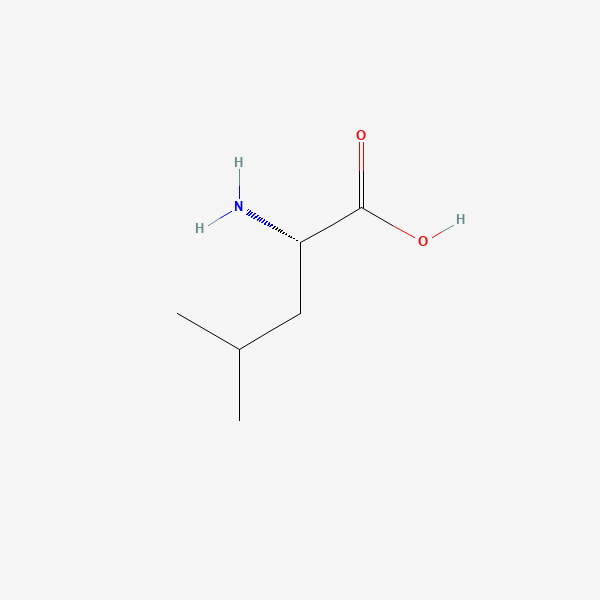
- Molecular formula
- C6H13NO2
- Molecular weight
- 131.17 g/mol
- IUPAC name
- (2S)-2-amino-4-methylpentanoic acid
Verified external records:
References
More on L-Leucine
Everything else we've written about L-Leucine — what the community reports, the explainers that cover it, and the terms it keeps running into.
- Collagen peptides vs whey protein: Different JobsExplainer
- Amino acidGlossary
- Essential amino acidGlossary