Human (controlled)Mixed
On this page
L-lysine is an essential amino acid with two standout jobs: it locks collagen fibers together and it helps the body make carnitine, the molecule that ferries fat into cells to be burned. It’s also the amino acid most likely to run short in grain-heavy diets, and the one people most often reach for at the first tingle of a cold sore.
What is L-lysine?
L-lysine is an essential, proteinogenic amino acid, written Lys or the single letter K. Being essential, it must come from the diet — humans can’t build it. It’s the “limiting” amino acid in many cereal grains, meaning grains are relatively low in it, which historically made grain-plus-legume pairings (rice and beans, hummus and pita) a smart way to round out protein quality.
What does L-lysine do in the body?
L-lysine works as connective-tissue glue and a metabolic starter kit. In collagen, lysine residues form the crosslinks that turn loose protein strands into strong, load-bearing tissue — think of it as the rivets holding a structure together, which is why it matters for skin, tendon and bone. Separately, lysine is a raw material the body uses to synthesize carnitine, which shuttles fatty acids into cells’ mitochondria to be used for energy. It also plays a supporting role in calcium handling and, of course, serves as a building block in proteins throughout the body.
Where do you get L-lysine?
L-lysine is rich in animal protein — meat, poultry, fish, eggs and dairy, with cheese being an especially dense source. On the plant side, legumes stand out: lentils, beans and soy are strong sources, which is exactly why they complement lysine-poor grains so well. A mixed diet with any of these easily covers lysine needs.
What does the research show?
L-lysine’s most talked-about use is against cold sores, and here the human evidence is real but mixed: several small controlled trials hint that lysine may cut how often or how severely herpes simplex outbreaks strike, though the studies are small and don’t all agree. A smaller set of human work — sometimes pairing lysine with arginine — has explored stress and anxiety with some early positive signals. Lysine’s collagen-crosslinking role is textbook biochemistry, but that it’s necessary doesn’t mean extra supplemental lysine visibly boosts connective tissue in well-fed people — that part is unproven.
Is L-lysine safe?
L-lysine is well tolerated. You already eat grams of it daily in a protein-rich diet, and supplement doses are generally fine, with occasional mild digestive upset at high intakes. Starting low and seeing how you respond is the sensible approach.
Evidence by outcome
Each outcome L-Lysine has been studied for, with the honest evidence grade and what the studies actually found. A tier never stands alone — the verdict rides with it.
| Outcome | Evidence | What was found |
|---|---|---|
| Cold sores (herpes simplex) frequency and severity | Human (controlled)Mixed | Lysine is the classic supplement people reach for against recurrent cold sores. Several small controlled human trials suggest it may reduce how often or how severely outbreaks occur, but the studies are small and inconsistent, so the evidence is mixed rather than settled. It's low-risk to try. |
| Anxiety and stress response (often paired with arginine) | Human (controlled)Mixed | A handful of human studies, several combining lysine with arginine, have looked at stress and anxiety measures with some positive signals. The body of work is small and preliminary, so it's an interesting early lead rather than an established use. |
| Collagen and connective-tissue support | MechanisticUnclear | Lysine forms the crosslinks that make collagen strong, so adequate lysine is clearly necessary for healthy connective tissue. Whether taking extra beyond dietary needs visibly improves skin, tendon or bone in well-fed people isn't established — the raw material matters; the supplement bonus is unproven. |
FDA & legal status
- United States: dietary supplement / food (as of Jul 2026)
A proteinogenic amino acid found in dietary protein and sold as a supplement. Not an FDA-approved drug; supplements are regulated as food, not medicine.
Chemical identifiers
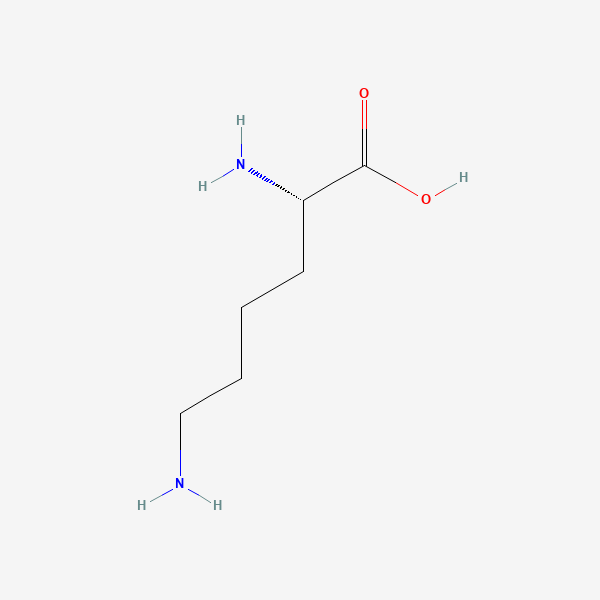
- Molecular formula
- C6H14N2O2
- Molecular weight
- 146.19 g/mol
- IUPAC name
- (2S)-2,6-diaminohexanoic acid
Verified external records: