Human RCTHelped
On this page
NAC, short for N-acetylcysteine, is that rare supplement that’s also a genuine, hospital-grade drug. It’s a stable, well-absorbed form of the amino acid cysteine, and its whole reason for existing is to feed the body’s master antioxidant, glutathione. That single job explains its two proven medical uses — reversing acetaminophen overdose and thinning stubborn mucus — plus a long list of research uses that are still being sorted out.
What is NAC?
NAC is a non-proteinogenic amino acid derivative: chemically, it’s cysteine with an acetyl group attached, which makes it sturdier and easier for the body to use. It isn’t something you eat directly — it’s manufactured — and it exists in two worlds at once: an FDA-approved prescription medicine and an over-the-counter supplement. You’ll see it written as acetylcysteine or N-acetyl-L-cysteine.
What does NAC do in the body?
NAC’s core function is supply. The body builds glutathione — its master antioxidant and detox molecule — and the slowest, rate-limiting ingredient in that build is cysteine. NAC delivers cysteine reliably, keeping the glutathione production line stocked. It has a second, more physical trick: it breaks the disulfide bonds that make mucus thick and gluey, which is why it loosens congestion. And in an acetaminophen overdose, that same glutathione-restoring action is what saves the liver.
Where do you get NAC?
Unlike most amino acids, NAC isn’t a food component — it’s made in a lab. What you can get from food is its parent, cysteine, which is abundant in high-protein foods like eggs, meat, dairy and legumes. But to reach the doses used medically or in research, people take NAC as a capsule, a solution, or, in hospitals, an IV.
What does the research show?
NAC’s evidence splits into “rock solid” and “still open.” Rock solid: it’s an FDA-approved, life-saving antidote for acetaminophen overdose, restoring glutathione before the liver fails, and it’s a long-established mucus-thinner for respiratory conditions. Still open: because it props up glutathione, NAC is studied for fertility, mood, and compulsive behaviors, where some trials look promising but the overall picture is mixed. The honest read is a molecule with two proven medical jobs and a wide frontier of encouraging-but-unsettled ones.
Is NAC safe?
NAC is well established and generally safe — it’s approved medicine, after all. Oral doses can cause nausea or a sulfur-like taste and smell, and the IV form used for overdose can rarely trigger allergic-type reactions, which is why that’s done under supervision. Because NAC can affect clotting and blood pressure and interacts with some drugs, check with a doctor before regular high-dose use, particularly around surgery.
Evidence by outcome
Each outcome NAC (N-acetylcysteine) has been studied for, with the honest evidence grade and what the studies actually found. A tier never stands alone — the verdict rides with it.
| Outcome | Evidence | What was found |
|---|---|---|
| Acetaminophen (paracetamol) overdose antidote | Human RCTHelped | This is NAC at its most proven — an FDA-approved, life-saving treatment. Given in time after an acetaminophen overdose, it restores glutathione and prevents catastrophic liver damage. It's standard hospital care, not a fringe claim. |
| Loosening mucus (mucolytic) | Human (controlled)Helped | NAC has long been used to thin thick mucus in respiratory conditions by breaking the chemical bonds that make it sticky. It's an established medical use with supportive human evidence, especially in chronic lung conditions. |
| Glutathione, antioxidant & psychiatric uses | Human (controlled)Mixed | By feeding glutathione production, NAC is studied for everything from fertility to mood and compulsive behaviors. Some trials are encouraging, but this broader territory is mixed — promising leads rather than settled conclusions. |
FDA & legal status
- United States: fda approved (as of Jul 2026)
This amino acid is also an FDA-approved prescription medicine (e.g. Acetylcysteine; Acetadote). That approved drug is prescription-only; any version sold as a plant-extract "supplement" is a separate, unapproved product.
Chemical identifiers
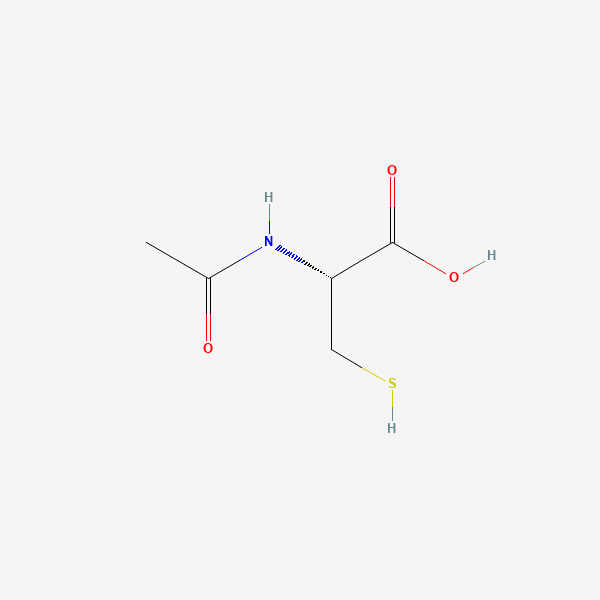
- Molecular formula
- C5H9NO3S
- Molecular weight
- 163.2 g/mol
- IUPAC name
- (2R)-2-acetamido-3-sulfanylpropanoic acid
Verified external records:
References
- 1.Acetylcysteine — PubChem compound record (CID 12035), National Library of Medicine
- 2.N-Acetylcysteine — indexed human research (PubMed, National Library of Medicine)
- 3.Hendrickson — What is the most appropriate dose of N-acetylcysteine after massive acetaminophen overdose?
- 4.Moldéus P et al. — N-acetylcysteine.
- 5.Fukumoto M et al. — [Acetylcysteine].
- 6.Rao S et al. — Hyperthyroidism and N-Acetylcysteine.
- 7.Facharztmagazine R et al. — Neues Nasenspray mit N-Acetylcystein.