MechanisticUnclear
On this page
L-Proline is the amino acid that gives collagen its shape. Along with glycine and hydroxyproline, it forms the repeating pattern that lets collagen coil into the strong triple helix holding your skin, tendons and joints together. Your body makes proline from glutamate, but during healing and growth the demand can outrun supply — which is why it’s called conditionally essential.
What is L-Proline?
L-Proline is a conditionally-essential proteinogenic amino acid with an unusual trick: its side chain loops back and bonds to its own backbone, forming a ring. That ring makes proline stiff and forces sharp kinks wherever it appears in a protein — an inconvenience for most proteins but the entire point in collagen, where those regular kinks let three strands wind into a rope. “Conditionally essential” means the body normally makes it (from glutamate) but can fall behind when building tissue fast. You’ll see it abbreviated Pro or P.
What does L-Proline do in the body?
L-Proline is first and foremost a collagen brick. Collagen is the most abundant protein in the body — the scaffolding of skin, tendon, cartilage, bone and blood vessels — and proline (often chemically upgraded to hydroxyproline) is one of its signature repeating units, stabilizing that all-important triple helix. Its rigid ring also shapes the folds and turns of countless other proteins, acting like a structural elbow joint. Beyond structure, proline connects back to glutamate, letting it feed into energy and nitrogen metabolism. Think of it as the girder that sets the shape of the body’s connective tissue.
Where do you get L-Proline?
L-Proline is richest in collagen-heavy foods: bone broth, gelatin, and the skin and connective tissue of meat, poultry and fish. Dairy, eggs, legumes and whole grains contribute too, and the body manufactures its own from glutamate. A modern diet that skips collagen-rich cuts supplies less than a nose-to-tail one did — one reason collagen and gelatin supplements, which deliver proline, have caught on.
What does the research show?
The honest picture is strong biology, thin standalone trials. Proline is indisputably a core structural piece of collagen, so supplying it — nearly always as part of collagen or gelatin rather than on its own — is a sensible idea for skin, tendon and joint tissue, and healing tissue clearly demands more of it. What’s missing is human evidence isolating proline itself: it’s rarely tested alone, so we can’t cleanly credit it for the benefits people attribute to collagen supplements. The raw-material logic is sound; the specific proof is still open.
Is L-Proline safe?
L-Proline is safe as part of a normal diet and in the collagen and gelatin foods that provide most of it. Taking isolated high-dose proline is uncommon and less well studied, so there’s no reason to push large amounts — getting it through protein and collagen-rich foods is the well-trodden, well-tolerated route.
Evidence by outcome
Each outcome L-Proline has been studied for, with the honest evidence grade and what the studies actually found. A tier never stands alone — the verdict rides with it.
| Outcome | Evidence | What was found |
|---|---|---|
| Collagen and connective-tissue support | MechanisticUnclear | Proline is a core structural piece of collagen, so supplying it (usually via collagen or gelatin) is a biologically sensible idea for skin, tendon and joint tissue. That the raw material matters is clear; that extra proline specifically improves those tissues in people is not separately proven, since it's rarely studied on its own. |
| Wound healing | MechanisticUnclear | Because healing tissue lays down collagen quickly, proline demand rises during repair. That makes adequate supply plausibly useful, but there isn't strong human trial evidence that supplementing proline alone speeds healing. |
FDA & legal status
- United States: dietary supplement / food (as of Jul 2026)
A proteinogenic amino acid found in dietary protein and sold as a supplement. Not an FDA-approved drug; supplements are regulated as food, not medicine.
Chemical identifiers
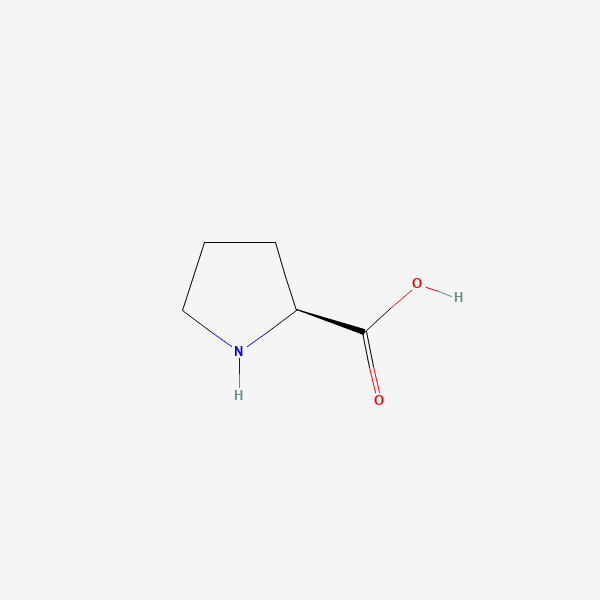
- Molecular formula
- C5H9NO2
- Molecular weight
- 115.13 g/mol
- IUPAC name
- (2S)-pyrrolidine-2-carboxylic acid
Verified external records:
References
More on L-Proline
Everything else we've written about L-Proline — what the community reports, the explainers that cover it, and the terms it keeps running into.