Human (controlled)Helped
On this page
SAMe — S-adenosylmethionine — is the body’s universal methyl donor, the molecule almost every methylation reaction reaches for when it needs to tag DNA, a protein, or a neurotransmitter. That central role is why it has real human evidence behind it for two very different things: depression and joint pain. It’s one of the more compelling amino-acid derivatives on the shelf.
What is SAMe?
SAMe isn’t a standard amino acid — it’s a derivative your cells build from the amino acid methionine plus ATP, the cell’s energy currency. That reaction loads methionine with a highly reactive methyl group, turning it into the body’s most-used methyl donor. You’ll see it sold as SAM-e or under the drug name ademetionine, in a stabilised salt form because the raw molecule is too unstable to survive on a shelf otherwise.
What does SAMe do in the body?
SAMe’s core job is donating methyl groups — small chemical tags the body attaches to control how genes, proteins and signalling molecules behave. Picture it as the body’s methyl-group delivery service, dropping off a package almost everywhere methylation happens. Two deliveries matter most here: it feeds the production of mood neurotransmitters like serotonin and dopamine, and it supports the cartilage metabolism behind healthy joints. It also feeds, indirectly, into making the antioxidant glutathione.
Where do you get SAMe?
You don’t really get SAMe from food — the molecule is too unstable to survive digestion in useful amounts. Instead, your body manufactures it continuously from methionine, an amino acid you do get from protein. Supplemental SAMe is made as a stabilised salt so it can be packaged and absorbed, which is why it tends to cost more than a basic amino-acid supplement.
What does the research show?
SAMe is unusual for a supplement in having decent human evidence on two fronts. For depression, multiple controlled trials suggest it helps, with some finding it comparable to standard antidepressants — an encouraging base, even if trial quality varies. For osteoarthritis, controlled trials show it can ease joint pain and improve function, in several cases rivalling anti-inflammatory drugs but with a slower build-up and gentler effect on the stomach. Both effects trace back to the same root: SAMe’s job as a methyl donor feeding neurotransmitter and cartilage chemistry.
Is SAMe safe?
SAMe is generally well tolerated, with stomach upset, insomnia or a jittery, restless feeling the main issues at higher doses. Two cautions are important: in people with bipolar disorder it can tip mood toward mania, and because it raises serotonin it can interact dangerously with antidepressants and other serotonergic drugs. If either applies to you, only use SAMe with a clinician’s guidance.
Evidence by outcome
Each outcome SAMe has been studied for, with the honest evidence grade and what the studies actually found. A tier never stands alone — the verdict rides with it.
| Outcome | Evidence | What was found |
|---|---|---|
| Depression & mood | Human (controlled)Helped | This is one of SAMe's better-supported uses. Multiple controlled human trials suggest SAMe can ease depression, with some studies finding it comparable to standard antidepressants, likely through its role in building mood-related neurotransmitters. It's an encouraging evidence base, though trial quality varies and it's not a substitute for medical care. |
| Osteoarthritis & joint pain | Human (controlled)Helped | Controlled trials have found SAMe can reduce osteoarthritis pain and improve joint function, in several cases comparably to anti-inflammatory drugs but with a slower onset and better stomach tolerability. The effect is real in the research, if not universally consistent. |
FDA & legal status
- United States: dietary supplement / food (as of Jul 2026)
A non-proteinogenic amino acid, sold as a dietary supplement. Not an FDA-approved drug; supplements are regulated as food, not medicine.
Chemical identifiers
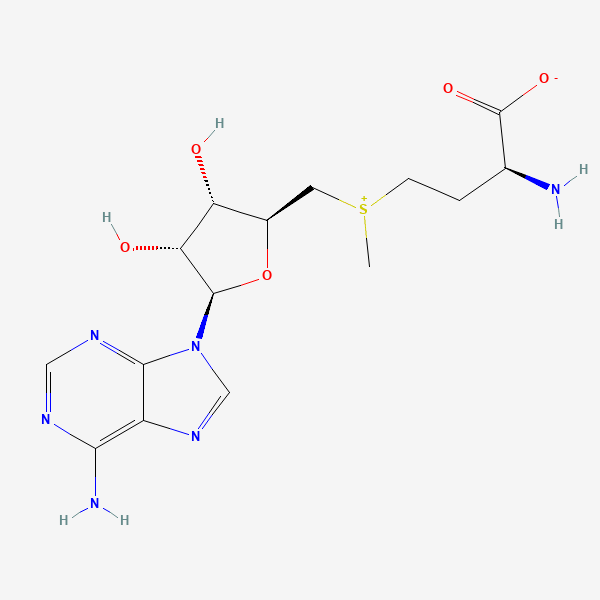
- Molecular formula
- C15H22N6O5S
- Molecular weight
- 398.4 g/mol
- IUPAC name
- (2S)-2-amino-4-[[(2S,3S,4R,5R)-5-(6-aminopurin-9-yl)-3,4-dihydroxyoxolan-2-yl]methyl-methylsulfonio]butanoate
Verified external records: