Human (controlled)Mixed
On this page
L-Serine is a non-essential amino acid that works behind the scenes at some of the body’s busiest supply lines: it hands out one-carbon units for building DNA, helps assemble the membranes around every cell, and feeds brain signaling. Your body makes it from a glucose breakdown product, so a normal diet plus internal production keeps you covered.
What is L-Serine?
L-Serine is a non-essential proteinogenic amino acid with a small hydroxyl (-OH) group on its side chain. That little reactive handle is why serine turns up as a key spot on many enzymes and as an attachment point where cells tag proteins to switch their activity on and off. “Non-essential” means the body synthesizes its own, starting from an intermediate of glucose metabolism. You’ll see it abbreviated Ser or S.
What does L-Serine do in the body?
L-Serine is a hub, not a specialist. It’s the raw material the body converts into glycine and, downstream, cysteine. It heads up one-carbon metabolism — the folate supply chain that provides the pieces for building DNA and for methylation reactions that regulate genes. It’s a building block for phospholipids, the fatty molecules that form cell membranes. And in the brain it’s converted into D-serine, a co-pilot signal that helps activate NMDA receptors involved in learning. Think of it as a parts supplier keeping several critical factories stocked at once.
Where do you get L-Serine?
L-Serine is widespread in protein foods — meat, poultry, fish, eggs and dairy — with soybeans, legumes, nuts, seeds and whole grains adding more. On top of that, your body manufactures serine from a glucose-derived intermediate, so between diet and synthesis a healthy person is comfortably supplied without thinking about it.
What does the research show?
The most concrete human evidence is narrow and medical: for rare inherited disorders where the body can’t make serine, supplemental L-serine is an established treatment, and it’s been trialled for certain other neurological conditions with mixed, still-preliminary results. That’s an active, promising research frontier — worth watching honestly rather than overselling. Beyond those specific settings, serine’s role in brain signaling and membrane building makes it a plausible cognitive target, but there’s little evidence that supplementing it does anything for healthy people whose internal supply is already keeping up.
Is L-Serine safe?
L-Serine is safe as part of any normal diet, and supplemental L-serine has generally been well tolerated at the gram-scale doses used in studies. Very high intakes haven’t been characterised as thoroughly, so the sensible approach is to stay conservative and treat medical uses as something to pursue with a clinician.
Evidence by outcome
Each outcome L-Serine has been studied for, with the honest evidence grade and what the studies actually found. A tier never stands alone — the verdict rides with it.
| Outcome | Evidence | What was found |
|---|---|---|
| Neurological conditions | Human (controlled)Mixed | L-serine has been trialled in humans for specific neurological conditions, and for rare inherited serine-synthesis disorders it is an established treatment. Broader uses are being studied with mixed, preliminary results — an active research area rather than a settled one. |
| General cognitive or mood support | MechanisticUnclear | Because serine feeds brain signaling (via D-serine at NMDA receptors) and membrane building, it's a plausible cognitive target, but there's little evidence that supplementing it helps healthy people whose supply is already adequate. |
FDA & legal status
- United States: dietary supplement / food (as of Jul 2026)
A proteinogenic amino acid found in dietary protein and sold as a supplement. Not an FDA-approved drug; supplements are regulated as food, not medicine.
Chemical identifiers
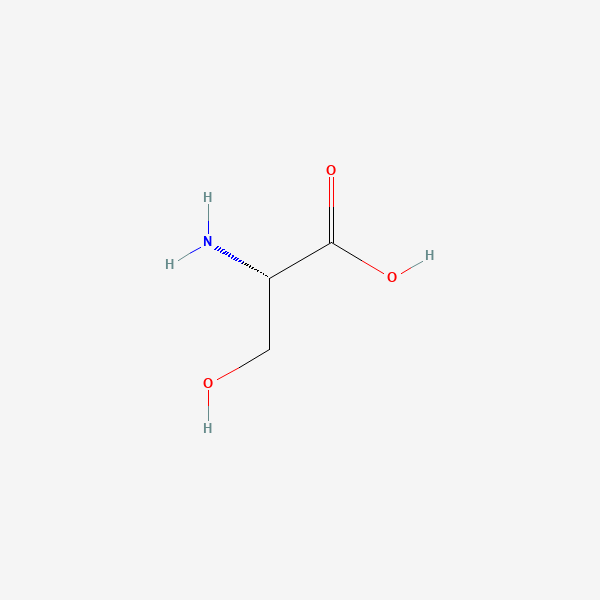
- Molecular formula
- C3H7NO3
- Molecular weight
- 105.09 g/mol
- IUPAC name
- (2S)-2-amino-3-hydroxypropanoic acid
Verified external records:
References
More on L-Serine
Everything else we've written about L-Serine — what the community reports, the explainers that cover it, and the terms it keeps running into.