Human observationalMixed
On this page
Taurine is a sulfur-containing amino acid your body makes and stashes in the tissues that work hardest — your heart, brain, retina and muscles. Most people meet it as the mystery ingredient in energy drinks, but it’s doing real biological work: building the bile salts that digest your food, steadying the fluid balance inside cells, and protecting the cell’s power plants from wear.
What is taurine?
Taurine is a non-proteinogenic amino acid, meaning it doesn’t get built into proteins the way the standard twenty do. Instead it floats free inside cells, where it’s one of the most abundant amino acids in the human body. Its structure carries a sulfonic acid group rather than the usual carboxyl group, which is part of why it behaves more like a cellular regulator than a building block. You’ll also see it written as 2-aminoethanesulfonic acid.
What does taurine do in the body?
Taurine wears several hats. It joins with bile acids to form the bile salts that emulsify dietary fat, so you can absorb it — think of it as the dish soap that breaks grease into droplets. It acts as an osmolyte, balancing water and minerals so cells don’t swell or shrivel. It concentrates inside mitochondria and helps them run cleanly under stress. And it’s found at high levels in electrically busy tissue — the heart, the retina, the brain — where stable cell signaling matters most.
Where do you get taurine?
The richest food sources are animal: shellfish like scallops and mussels, fish, and the darker meat of poultry and red meat. Dairy has a little. Plant foods have essentially none, which is why strict vegans get almost no dietary taurine and rely entirely on what their bodies synthesize. The taurine in energy drinks and pre-workouts is added synthetically, not squeezed from anything exotic.
What does the research show?
The clearest story is mechanistic: taurine supports mitochondria and buffers oxidative stress, which is why it keeps surfacing in aging and heart research. Human outcome data are thinner. Populations eating more taurine tend to show better cardiovascular markers, and small trials hint at modest effects on blood pressure and blood sugar — promising, but mostly associational and short-term. Its famous role in energy drinks is the hardest to judge, because there its effects ride alongside caffeine and sugar. The fair summary: a biologically important molecule with a strong safety record and encouraging early human signals, not a proven fix for any one thing yet.
Is taurine safe?
Taurine is considered very safe. Human trials routinely use one to three grams a day with few side effects, and unlike the caffeine it’s usually bottled with, it doesn’t make you jittery. Being water-soluble, extra taurine is largely cleared by the kidneys. Sensible approach: start at the low end and pay attention to how you feel.
Evidence by outcome
Each outcome Taurine has been studied for, with the honest evidence grade and what the studies actually found. A tier never stands alone — the verdict rides with it.
| Outcome | Evidence | What was found |
|---|---|---|
| Antioxidant & mitochondrial support | MechanisticUnclear | Taurine concentrates inside mitochondria, the cell's power plants, and helps buffer oxidative stress. That role is well described in lab and animal work, which is why it keeps turning up in longevity research — but whether topping up taurine extends healthy lifespan in people is not yet settled. |
| Heart & metabolic health | Human observationalMixed | Populations with higher taurine intake tend to show better cardiovascular markers, and small human trials hint at effects on blood pressure and blood sugar. The signal is encouraging but the human data are still mostly associational and short-term. |
| Energy & exercise (the energy-drink use) | Human observationalMixed | Taurine is the headline non-caffeine ingredient in most energy drinks. In those products its effects are tangled up with caffeine and sugar, so it's hard to credit taurine alone — the honest read is "plausible contributor, not proven driver." |
FDA & legal status
- United States: fda approved (as of Jul 2026)
This amino acid is also an FDA-approved prescription medicine (e.g. Premasol - Sulfite-Free (Amino Acid); Leucine, Lysine, Isoleucine, Valine, Histidine, Phenylalanine, Threonine, Methionine, Tryptophan, Tyrosine, N-Acetyl-Tyrosine, Arginine, Proline, Alanine, Glutamic Acide, Serine, Glycine, Aspartic Acid, Taurine, Cysteine Hydrochloride). That approved drug is prescription-only; any version sold as a plant-extract "supplement" is a separate, unapproved product.
Chemical identifiers
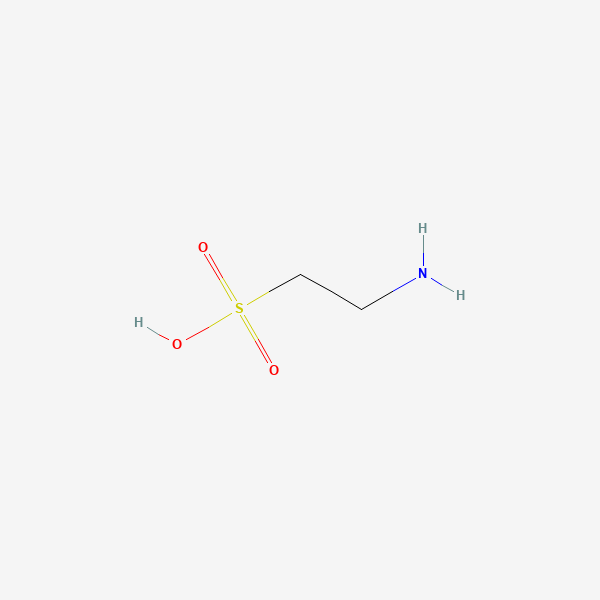
- Molecular formula
- C2H7NO3S
- Molecular weight
- 125.15 g/mol
- IUPAC name
- 2-aminoethanesulfonic acid
Verified external records:
References
- 1.Taurine — PubChem compound record (CID 1123), National Library of Medicine
- 2.Taurine — indexed human research (PubMed, National Library of Medicine)
- 3.Jong, Sandal & Schaffer — The role of taurine in mitochondria health: more than just an antioxidant
- 4.Caine & Geracioti — Taurine, energy drinks, and neuroendocrine effects
- 5.Huxtable RJ et al. — Physiological actions of taurine.
- 6.Oja SS et al. — Taurine and epilepsy.
- 7.Lombardini JB et al. — Taurine: retinal function.