Human (controlled)Mixed
On this page
L-threonine is an essential amino acid that does quiet, unglamorous work — most of it in your gut. It’s a major raw material for mucin, the protein that forms the slippery, protective mucus lining your intestines, and it also helps build collagen and connective tissue. Your body can’t make it, so it has to come from food.
What is L-threonine?
L-threonine is an essential, proteinogenic amino acid, abbreviated Thr or the single letter T. Being essential, it must come from the diet. It belongs to a small club of amino acids whose side chain carries a hydroxyl (-OH) group, which lets sugar molecules attach to it — a feature that matters for building certain specialized proteins, including the ones that make up gut mucus.
What does L-threonine do in the body?
L-threonine’s signature role is in the gut. Mucin — the protein that forms your intestinal mucus layer — is unusually rich in threonine, so a steady supply helps maintain that protective coating, a bit like keeping fresh sealant on a surface that takes constant wear. Beyond the gut, threonine is a building block of collagen and elastin (connective tissue), it can be converted into glycine and serine, and its sugar-attaching hydroxyl group makes it important for how many proteins are assembled and function. It also contributes to the production of immune proteins.
Where do you get L-threonine?
L-threonine is widespread in protein-rich food. Meat, poultry, fish, eggs and dairy are strong sources; lentils, soybeans and other legumes, plus nuts, seeds and whole grains, cover the plant side. A varied diet with adequate protein readily supplies enough threonine.
What does the research show?
L-threonine’s most compelling story is its role in gut mucus, where animal studies show intestinal mucin production responds to threonine supply. It’s an interesting mechanism — but it hasn’t been converted into a proven human supplement benefit, so it sits at animal-and-mechanistic level. Threonine was also tried in small human trials for muscle spasticity (it’s a precursor to the calming neurotransmitter glycine); those results were mixed and mostly underwhelming, and it never became an established treatment. Honest summary: essential and clearly useful in the diet, with supplement claims still unproven in people.
Is L-threonine safe?
L-threonine is well tolerated as part of ordinary protein intake and is a routine ingredient in nutrition and feed products. Dietary amounts pose no real safety concern. Human data on high isolated supplemental doses is limited, so moderation is the sensible approach.
Evidence by outcome
Each outcome L-Threonine has been studied for, with the honest evidence grade and what the studies actually found. A tier never stands alone — the verdict rides with it.
| Outcome | Evidence | What was found |
|---|---|---|
| Gut mucus / intestinal barrier support | Animal-onlyUnclear⚠ none in humans | Threonine is a big fraction of mucin, the protein that makes protective gut mucus, and animal studies show intestinal mucus production is sensitive to threonine supply. It's a biologically compelling role, but it hasn't been turned into a demonstrated human supplement benefit — animal and mechanistic evidence, not proof in people. |
| Spasticity / neurological symptoms | Human (controlled)Mixed | Threonine was tested in small human trials for muscle spasticity (it's a precursor to the inhibitory neurotransmitter glycine). Results were mixed and largely underwhelming, and it isn't an established treatment — an honest "tried, didn't clearly pan out" rather than a win. |
FDA & legal status
- United States: dietary supplement / food (as of Jul 2026)
A proteinogenic amino acid found in dietary protein and sold as a supplement. Not an FDA-approved drug; supplements are regulated as food, not medicine.
Chemical identifiers
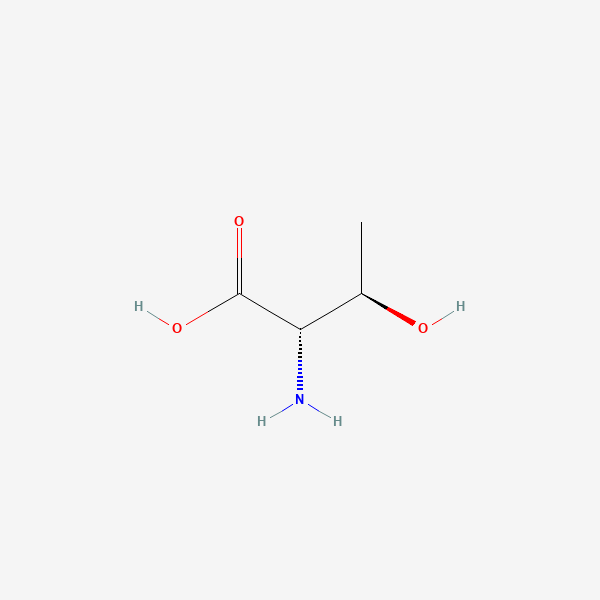
- Molecular formula
- C4H9NO3
- Molecular weight
- 119.12 g/mol
- IUPAC name
- (2S,3R)-2-amino-3-hydroxybutanoic acid
Verified external records: