CJC-1295 vs Ipamorelin
CJC-1295 raises your growth-hormone baseline, ipamorelin fires the pulse, and most people run both. What each does, the evidence, and how they stack.
If you’re weighing CJC-1295 against ipamorelin, odds are you’ve already seen them sold as a matched set: a two-vial “CJC and ipa” blend pitched for deeper sleep, faster recovery, and a slow lean-out. So the first useful thing to know is that the “versus” is a bit of a trick question.
CJC-1295 and ipamorelin aren’t really rivals. CJC-1295 is a GHRH analog that raises your growth-hormone baseline, and its long-acting DAC form stretches that signal across days; ipamorelin is a selective secretagogue that fires a short, clean GH pulse through a completely different receptor. Because they flip two separate switches, the standard move is to run both, not to pick one. Both are research-use-only in the US, both are banned in sport, and the long-term human data behind either is thin.
What people actually run these for
In practice, the honest answer to “which one” is almost always “both, together.” The single most common way people use these is the classic CJC-1295 + ipamorelin stack (usually a no-DAC CJC, which is really Modified GRF 1-29), injected before bed and pointed at growth-hormone goals: better sleep, quicker soft-tissue recovery, gradual fat loss with a little more muscle, skin that looks a bit fresher, a general “recovery feels easier” sense.
What people report is a genuine mix, and the mix is the useful part. Better sleep is the most consistent win by a wide margin. People describe deeper, earlier-in-the-night sleep inside the first week or two, with recovery and skin coming next. The body-recomposition part is real but slow, measured in months rather than weeks. On the other side of the ledger: water retention and morning puffiness, tingling or numb hands (the growth-hormone “carpal tunnel” complaint), a brief flush or light-headed beat right after the shot, and a reliable contingent who ran a full kit and felt nothing worth mentioning. Keep in mind that the loudest reports come from people who felt something and came back to post. The quiet “did nothing for me” crowd is undercounted by design.
One thing trips people up before they even start: the naming. Sermorelin, ipamorelin, CJC-1295, tesamorelin, hexarelin, the growth-hormone secretagogues are named like passwords you keep being forced to reset. “CJC-1295” alone is ambiguous, because the DAC and no-DAC versions behave very differently, which is where the next section earns its keep.
CJC-1295 vs ipamorelin: what each actually does
CJC-1295 is a synthetic analog of GHRH, the hormone your brain uses to tell the pituitary “release more growth hormone.” Think of it as nudging up the thermostat’s set-point so the gland runs a higher baseline. The trick that made it famous is the DAC, a Drug Affinity Complex: a small chemical handle that grabs onto albumin (the taxi protein in your blood) and keeps CJC-1295 circulating for days instead of minutes. Strip the DAC off and you’ve basically got Modified GRF 1-29, which clears in about half an hour. On the evidence, this one isn’t animal-only: early human pharmacokinetic studies did show CJC-1295 raises GH and IGF-1 in people. What those studies measured was hormones in the blood over days, not months of real body-composition outcomes, and that longer-term human record stays limited.
Ipamorelin works the other lever. It’s a selective secretagogue that mimics ghrelin at the GHSR receptor: a different key for a different lock that rings the same GH bell, but as a sharp pulse rather than a raised floor. Its whole reputation is cleanliness. Unlike its GHRP-6 and GHRP-2 cousins, ipamorelin barely touches cortisol or prolactin, and it skips the ravenous hunger GHRP-6 is infamous for. The evidence in humans is early-stage. It’s been studied as a GH secretagogue, but long-term body-composition outcomes aren’t well established.
Here’s why “versus” undersells them: a GHRH analog and a GHRP hit two independent pathways in the broader growth-hormone peptide family, and given together they can produce a bigger GH release than either does alone. That additive effect is the entire reason the stack exists. The point-by-point table below lays the differences out side by side.
How people stack and dose them
The logic of the combo is simple: CJC-1295 raises the ceiling on your GH baseline, and ipamorelin pushes a pulse up against that higher ceiling, so the pulse lands bigger. That is the rationale people give for running the two together rather than solo.
Doses commonly reported in the community (not clinically validated, and not a protocol) cluster around 100 mcg of each, injected subcutaneously before bed on a relatively empty stomach, since food and the insulin it triggers blunt the GH pulse. The no-DAC CJC (Modified GRF 1-29) is short-acting, so reported routines dose it with each injection, sometimes more than once a day. The DAC form lingers for days, so it’s run far less often, roughly once or twice a week. These are peer-passed conventions, not trial-derived numbers, and they carry exactly that much authority.
The two are commonly reconstituted and drawn into a single syringe, which is community practice rather than anything established in a stability study. The reconstitution calculator handles the milligrams-to-syringe-units arithmetic, and the mixing-compatibility reference is where to check the pairing and the sterility caveats before anyone combines anything in one vial.
Is the CJC-1295 + ipamorelin stack safe?
Both compounds raise GH and IGF-1, so they share the growth-hormone side-effect profile: water retention and puffiness, achy joints, numb or tingling hands of the carpal-tunnel type, and an occasional flush or light-headedness just after the shot. Because ipamorelin still acts on the ghrelin receptor, some people also notice a mild appetite bump, though far less than the hunger GHRP-6 is known for.
The deeper caution is mechanism-level, and it’s honest about being theoretical. Chronically pushing GH and IGF-1 can worsen insulin sensitivity, and sustained high IGF-1 is a recognized theoretical concern for cell growth. Neither of those has been demonstrated for these peptides at the doses people use, but there is no long-term human safety data for either to rule them out, which is the actual state of things.
There is also the plain product risk: both are sold as research chemicals, so purity, the true amount of peptide in the vial, and sterility all depend on a vendor you are trusting on faith.
Banned in sport: both are prohibited at all times under the WADA list, with no realistic exemption. For a tested athlete this is not a gray area.
Regulatory status, dated: as of July 2026 neither CJC-1295 nor ipamorelin is FDA-approved, and both are sold only as research-use-only chemicals. That status is under active FDA review this year, so treat it as a moving target and re-check it rather than assuming today’s answer holds.
So: CJC-1295, ipamorelin, or both?
Back to the two-vial kit you probably started with. For most people asking “which one,” the honest answer is both, because they aren’t doing the same job. One raises the baseline, the other fires the pulse, and the whole point of the pairing is that the effects add up.
If you’d rather understand the lean before the picks below: a steadier, longer-lasting GH signal points toward CJC-1295, especially the DAC form; a cleaner, more selective pulse with the fewest off-target effects points toward ipamorelin; and the classic stack points toward running the two together. The by-goal picks that follow break that down goal by goal.
The case for the pairing rests on solid mechanism: two pathways, additive by design. What’s still thin is the long-term human outcome and safety data, and that’s a gap in the quality of the proof, not a verdict against the idea. Neither peptide is a finished, approved product, and both sit in a regulatory spot that could shift this year, so whatever you conclude, hold it loosely and keep an eye on the date.
CJC-1295 vs Ipamorelin, point by point
Every dimension side by side — the honest differences, not a scoreboard.
| Dimension | CJC-1295 | Ipamorelin |
|---|---|---|
| What it is | A synthetic analog of growth-hormone-releasing hormone (GHRH), often made long-acting with a DAC. | A selective growth-hormone secretagogue that mimics ghrelin at the GHSR receptor. |
| How it raises GH | Tells the pituitary to release more GH by acting on the GHRH pathway. | Triggers a separate GH-release pathway (the ghrelin/GHSR receptor). |
| Selectivity | Acts on the GHRH axis; long-acting DAC versions extend the signal for days. | Considered the most selective of the GHRP-class peptides — little effect on cortisol or prolactin. |
| Human evidence | Early human pharmacokinetic/dose studies showed it raises GH and IGF-1; long-term outcome data are limited. | Studied in early human work as a GH secretagogue; long-term body-composition outcomes are not well established. |
| US regulatory status (2026) | Research-use-only — not FDA-approved. | Research-use-only — not FDA-approved. |
| Banned in sport | Yes — GH secretagogues are prohibited at all times under the WADA list. | Yes — GH secretagogues are prohibited at all times under the WADA list. |
- How it raises GH: Because they act on two different receptors, their effects on GH release can be additive — the basis for stacking them.
- US regulatory status (2026): Status is volatile — re-verify after the July 2026 FDA advisory-committee outcome.
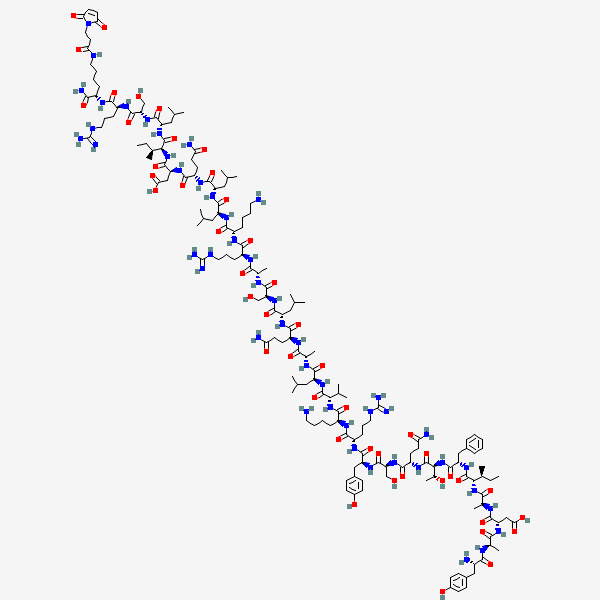
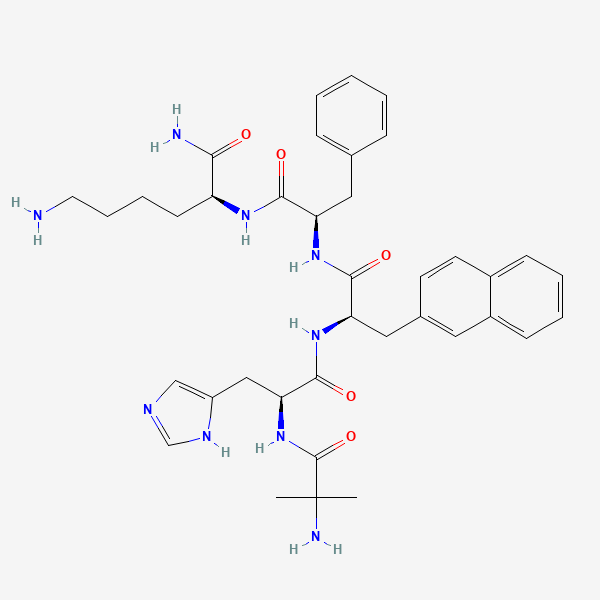
CJC-1295 vs Ipamorelin: the two molecules
The 2D chemical structures, straight from PubChem — a quick way to see how similar (or not) the two actually are.
Which one fits which goal?
There's no universal winner here — the honest answer depends on what you're after. These picks are framed by goal, and each says why.
A steadier, longer-acting GH signal
Leans toward CJC-1295
The long-acting (DAC) form is designed to extend the GH-releasing signal over days rather than a short pulse.
A cleaner, more selective pulse with fewer off-target effects
Leans toward Ipamorelin
Ipamorelin is the most selective of the GHRP-class peptides, reported to raise GH with little effect on cortisol or prolactin.
The commonly-run combination
Leans toward Ipamorelin
In practice people run them together, not against each other — the two pathways are additive, which is the whole rationale for the classic CJC-1295 + ipamorelin stack.