Mazdutide vs Semaglutide
Mazdutide vs Semaglutide compares dual GLP-1/glucagon action with approved GLP-1 therapy across weight loss, evidence, safety, andundefinedstatus.
Mazdutide vs Semaglutide compares a GLP-1/glucagon dual agonist with a GLP-1-only drug. Both have human randomized-trial evidence for weight loss, and a registered Phase 3 trial directly compared them in Chinese adults with type 2 diabetes and obesity. Semaglutide is FDA-approved; mazdutide remains investigational in the United States in 2026.
What is the main difference between mazdutide and semaglutide?
Mazdutide activates two receptors, GLP-1 and glucagon, while semaglutide activates GLP-1 alone. The shared GLP-1 signal reduces appetite, slows stomach emptying, and supports glucose-dependent insulin release. Mazdutide’s second signal is meant to increase energy use and help the liver handle stored fat, although researchers are still measuring how much that glucagon arm adds in people.
The simple analogy is intake versus intake plus expenditure. Semaglutide turns down the appetite dial. Mazdutide turns down that dial and adds a second metabolic lever. Biology is less tidy than a dashboard, however: glucagon can raise blood sugar on its own, while the complete mazdutide molecule lowered blood sugar in randomized trials. The extra receptor changes the research question; it does not automatically make the drug better.
What does mazdutide vs semaglutide weight loss evidence show?
Mazdutide vs semaglutide weight loss evidence shows substantial average reductions with both compounds, but the familiar headline percentages come from separate trials. GLORY-1 tested mazdutide in Chinese adults for 48 weeks. STEP 1 tested semaglutide in a different population for 68 weeks. Comparing the numbers is useful; scoring them as the same race is not.
GLORY-1 reported mean changes of -11.00% with mazdutide 4 mg and -14.01% with 6 mg at week 48 (GLORY-1, PubMed). STEP 1 reported roughly 15% mean weight loss with semaglutide 2.4 mg at week 68 (STEP 1, PubMed). Different durations, participants, doses, and trial procedures prevent a clean numerical winner.
Has a trial compared them directly?
Mazdutide and semaglutide have been placed in a direct registered Phase 3 trial, so this is not purely a comparison across unrelated programs. NCT06184568 enrolled Chinese adults with early type 2 diabetes and obesity, with HbA1c, a three-month blood-sugar average, and body weight among the central outcomes.
The registered record establishes the head-to-head design. This page does not attach a comparative effect size or winner to that trial without a verified result source. That distinction matters: a completed or registered study is not a blank cheque for numbers. The separate GLORY-1 and STEP 1 results above remain useful context, but they cannot substitute for the direct trial’s own reported analysis.
Which has the stronger evidence and approval status in 2026?
Semaglutide has the more mature evidence, regulatory, and access case in the United States in 2026. Mazdutide also earns a human-rct tier and is approved in China for chronic weight management, but it is not FDA-approved. Its pivotal record is China-led, and broader population and long-term experience are still accumulating.
Semaglutide is sold in approved products: Ozempic and Rybelsus for type 2 diabetes, and Wegovy for chronic weight management, with cardiovascular risk-reduction uses also reflected in US labeling (DailyMed). For readers searching mazdutide vs ozempic, this is a molecule-versus-brand comparison: Ozempic contains semaglutide, while mazdutide has no approved US product. Human RCT evidence describes both; only one has an established US prescription pathway.
How do weekly dosing and side effects compare?
Mazdutide and injectable semaglutide are both studied as once-weekly drugs, but their milligram doses are not interchangeable. GLORY-1 studied mazdutide at 4 mg and 6 mg weekly. STEP 1 studied semaglutide at 2.4 mg weekly after gradual escalation. A milligram measures mass, not receptor strength, so there is no honest conversion ratio between them.
Both records are dominated by gastrointestinal effects such as nausea, vomiting, diarrhea, and constipation. Semaglutide has the fuller risk map: US labeling covers gallbladder disease and pancreatitis and carries a boxed warning about thyroid C-cell tumors seen in rodents. Mazdutide’s trials also report mainly gastrointestinal effects, but its long-term and geographically broad safety record is shorter. The half-life visualizer helps illustrate weekly accumulation, while the cost-per-dose tool handles price arithmetic without treating an investigational drug as a normal US retail product.
Which one fits which goal?
Semaglutide fits goals that require approved US access, mature outcome evidence, or an oral option; mazdutide fits the research goal of following GLP-1/glucagon signaling. Neither is a universal winner. The practical choice and the scientifically interesting choice are not always the same thing, which is rather inconvenient for league tables and useful for everyone else.
For an available obesity or type 2 diabetes medicine, semaglutide has the established case. For tracking whether added glucagon activity changes energy expenditure or liver outcomes, mazdutide is the relevant compound, but that is a research pick rather than a US treatment recommendation. The comparison reads the same in reverse: semaglutide vs mazdutide is evidence maturity versus a newer dual-receptor design, not old technology versus new technology.
What other comparisons put these drugs in context?
Mazdutide and semaglutide make more sense beside other dual- and triple-receptor programs. Mazdutide vs tirzepatide swaps the second-receptor question from glucagon versus none to glucagon versus GIP. Semaglutide vs survodutide tests the same single-versus-dual logic with a different investigational GLP-1/glucagon compound.
Retatrutide vs semaglutide adds a triple GLP-1/GIP/glucagon design to the picture, while the GLP-1 and metabolic peptides hub maps the wider field. Together, these comparisons separate receptor count from evidence maturity: more targets can broaden the research program, but only trial results and regulatory review establish what the design delivers.
Mazdutide vs Semaglutide, point by point
Every dimension side by side — the honest differences, not a scoreboard.
| Dimension | Mazdutide | Semaglutide |
|---|---|---|
| Drug class | A dual GLP-1 + glucagon receptor agonist based on the gut hormone oxyntomodulin. | A single GLP-1 receptor agonist. |
| Weight-loss trial result | In GLORY-1, mean weight change at week 48 was -11.00% with 4 mg and -14.01% with 6 mg. | In STEP 1, mean weight change at week 68 was about -15% with 2.4 mg. |
| Direct comparison | A registered Phase 3 trial studied mazdutide against semaglutide in Chinese adults with early type 2 diabetes and obesity. | Semaglutide served as the active comparator in that registered Phase 3 trial. |
| US regulatory status (2026) | INVESTIGATIONAL and not FDA-approved in the United States; approved in China for chronic weight management. | FDA-approved and prescription-only for uses including type 2 diabetes and chronic weight management. |
| Development and evidence maturity | Multiple human RCTs, with pivotal development and approval led from China; broader global evidence is still accumulating. | Multiple Phase 3 programs, cardiovascular-outcome evidence, established US labeling, and extensive clinical use. |
| Studied or labeled weekly dose | GLORY-1 studied 4 mg and 6 mg once weekly. | STEP 1 studied 2.4 mg once weekly after escalation; approved doses depend on product and indication. |
| Safety evidence | Trials commonly report gastrointestinal effects; long-term data outside largely Chinese study populations remain less mature. | A mature label documents gastrointestinal effects plus gallbladder, pancreatitis, and boxed thyroid C-cell-tumor warnings. |
- Drug class: Mazdutide's added glucagon-receptor activity is the defining mechanistic difference.
- Weight-loss trial result: These figures come from separate placebo-controlled trials with different populations and timelines; they do not establish a winner.
- Direct comparison: NCT06184568 centered on HbA1c and body weight; this page does not claim an unpublished or unverified comparative result.
- Studied or labeled weekly dose: Milligram amounts are molecule-specific study context, not a conversion or personal dosing plan.
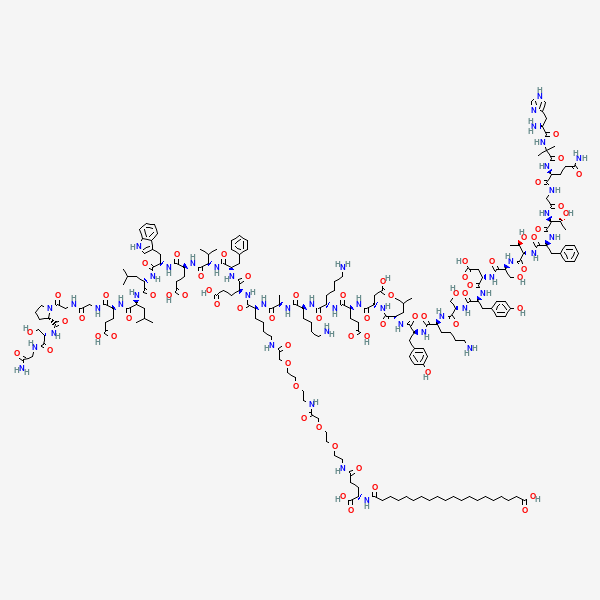
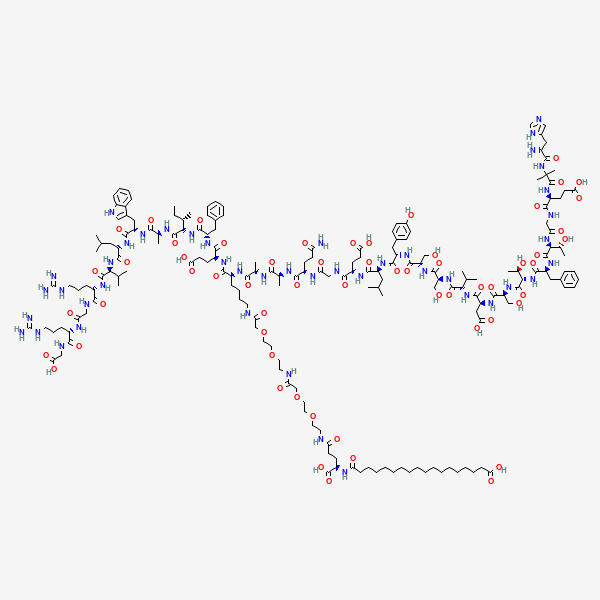
Mazdutide vs Semaglutide: the two molecules
The 2D chemical structures, straight from PubChem — a quick way to see how similar (or not) the two actually are.
Which one fits which goal?
There's no universal winner here — the honest answer depends on what you're after. These picks are framed by goal, and each says why.
An FDA-approved option with mature US prescribing evidence
Leans toward Semaglutide
Semaglutide has established US approvals, standardized products, large Phase 3 programs, and longer routine-use experience.
Following the GLP-1/glucagon mechanism and liver-metabolism research
Leans toward Mazdutide
Mazdutide adds glucagon-receptor activity, the feature driving research interest in energy expenditure and liver-fat handling; it remains investigational in the US.
Wanting an approved oral option rather than an injection
Leans toward Semaglutide
Semaglutide is available as the FDA-approved daily oral tablet Rybelsus as well as weekly injectable products.
Tracking a China-approved dual agonist as global evidence develops
Leans toward Mazdutide
Mazdutide has human RCT evidence and Chinese approval for weight management, while trials continue to build experience beyond that setting.
References
- 1.GLORY-1: once-weekly mazdutide in Chinese adults with obesity or overweight (PubMed)
- 2.Phase 3 mazdutide vs semaglutide trial in type 2 diabetes and obesity (NCT06184568)
- 3.STEP 1: once-weekly semaglutide in adults with overweight or obesity (PubMed)
- 4.Semaglutide prescribing information (DailyMed)
- 5.Mazdutide registered clinical studies (ClinicalTrials.gov)