Also known as: FTPP · Fat-targeted proapoptotic peptide · Prohibitin-TP01 · TP01 · Prohibitin-targeting peptide 1
Animal-onlyMixed⚠ none in humans
On this page
- What is adipotide?
- How does adipotide work?
- What do adipotide results show for fat loss?
- Has adipotide been tested in humans?
- What is known about adipotide dosage?
- Why is the adipotide kidney risk central?
- What are adipotide side effects?
- Is adipotide legal or approved in 2026?
- How does adipotide compare with current weight-loss drugs?
- Evidence by outcome
- FDA & legal status
- Reported side effects
- Chemical identifiers
- References
- Related compounds
- More on Adipotide
Adipotide is an experimental fat-targeting peptidomimetic that cut body weight by about 11% in obese monkeys overundefineddays. The same research found dose-dependent kidney-tubule injury and raised creatinine. One human Phase 1 study enrolled four people, ended early, and posted no results, so adipotide fat loss remains animal evidence—not a human treatment claim.
What is adipotide?
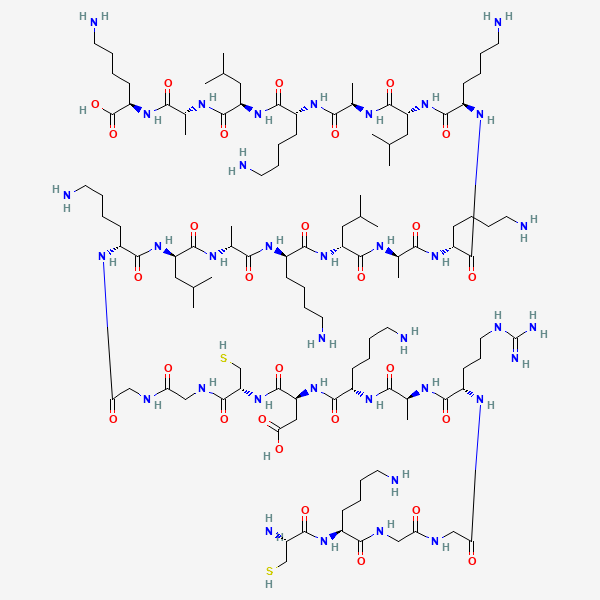
Adipotide is the trade name used for FTPP, or fat-targeted proapoptotic peptide. The ftpp peptide is a synthetic 25-residue construct, not a hormone the body makes. Its verified sequence is CKGGRAKDC-GG-D(KLAKLAK)2; PubChem lists molecular formula C111H206N36O28S2, molecular weight 2,557.2 g/mol, CID 163360068, and CAS 859216-15-2.
That structure joins two jobs in one molecule. CKGGRAKDC is the address label; the D(KLAKLAK)2 domain is the destructive payload. The National Cancer Institute calls the compound prohibitin-targeting peptide 1, or Prohibitin-TP01.
How does adipotide work?
Adipotide targets prohibitin on the endothelial cells lining blood vessels that support white adipose tissue. After those cells take up the construct, the proapoptotic domain disrupts their mitochondria and triggers apoptosis—programmed cell death. Picture a delivery label attached to a demolition charge: the label aims for fat’s vascular “address,” while the second half damages the vessel cells once inside.
This is not how GLP-1 and metabolic peptides work. Semaglutide mainly changes appetite and metabolic signaling; adipotide was designed to remove vascular support underneath fat. The distinction matters because a compound built to kill selected cells needs unusually reliable targeting. A misplaced payload is not a rounding error.
What do adipotide results show for fat loss?
Adipotide results show a real fat-loss signal in animals, especially obese rhesus macaques, but no published human benefit. In the 2011 fixed-dose study, ten treated monkeys received 0.43 mg/kg under the skin daily for 28 days and lost an average 10.6% of body weight; five controls received saline. Abdominal circumference fell 8.4%, and imaging confirmed reduced white fat.
The Barnhart et al. paper also reported improved insulin resistance. Weight began returning during the four-week recovery period, so the experiment did not show durable maintenance. This is animal-only evidence: useful for deciding whether a mechanism deserves study, not enough to predict adipotide fat loss in a person.
Has adipotide been tested in humans?
Adipotide reached humans, but the record is a terminated safety study with no public results—not a completed obesity trial. ClinicalTrials.gov NCT01262664 enrolled four men who had metastatic prostate cancer and obesity. The Phase 1 study planned daily subcutaneous Prohibitin-TP01 for 28 days and focused on tolerability, not proof of weight-loss efficacy.
The registry says “terminated per PI’s request,” lists four actual participants, and contains no results. It does not say kidney toxicity caused termination. No peer-reviewed human outcome paper was found this run. Vendor pages often turn that blank space into a confident story; the honest entry is simply unknown.
What is known about adipotide dosage?
Adipotide dosage is established only as study context, not as a validated human protocol. The principal macaque experiment used 0.43 mg/kg once daily for 28 days, while dose-finding work tested 0.10 to 0.75 mg/kg. Kidney findings changed with dose, which is precisely why copying an animal number into a self-experiment would erase the most important result.
The human registry confirms once-daily injections were planned for 28 days, but it provides no published pharmacokinetic, safety, or efficacy result that could establish a human adipotide dosage. There is also no verified human half-life. Online microgram schedules are vendor or community inventions, not clinical evidence, so they are omitted here.
Why is the adipotide kidney risk central?
The adipotide kidney signal is not a footnote beside the fat-loss result; it is the main safety finding from the same primate program. Creatinine rose with dose, urine and electrolyte changes pointed to altered proximal-tubule function, and kidney histology showed dose-dependent tubular degeneration, regeneration, and single-cell necrosis.
Most changes improved after dosing stopped, but “reversible in monitored monkeys” is not the same as safe in humans. The paper noted that renal D-amino acid oxidase is the only known mammalian enzyme able to use the D(KLAKLAK)2 payload as a substrate. In plain English, the kidney may sit downstream because it processes the very domain built to damage mitochondria. Adipotide starves fat’s blood supply, and the kidney handles part of the cleanup.
What are adipotide side effects?
Adipotide side effects in people cannot be quantified because the four-person Phase 1 study posted no results. The documented animal harms include proximal-tubule dysfunction, glucosuria and proteinuria, electrolyte changes, raised creatinine, and tubular injury. Frequency labels such as “common” or “rare” would be invented for humans.
That missing human safety table matters more than generic lists of nausea, fatigue, or injection-site irritation repeated across sales pages. The specific signal is renal. Product identity adds a separate risk: a research vial is not an FDA-reviewed medicine, and this molecule’s targeting domain and cell-killing domain both have to be what the label claims.
Is adipotide legal or approved in 2026?
Adipotide is unapproved and research-use-only in the United States as of July 16, 2026. The ClinicalTrials.gov record describes Prohibitin-TP01 as investigational, not FDA-approved, and not commercially available. FDA says 503A compounders using a bulk substance need a qualifying monograph, an approved-drug component, or placement on the 503A bulks list; adipotide is not on that list.
“Research use only” describes a laboratory market, not a quiet prescription pathway. The regulatory status reference explains that distinction. WADA’s 2026 S0 rule also prohibits non-approved pharmacological substances at all times, which captures adipotide even though the list does not name it individually.
How does adipotide compare with current weight-loss drugs?
Adipotide has a different mechanism and a much weaker evidence base than current obesity drugs. Semaglutide changes appetite through GLP-1 signaling and has large randomized human trials plus FDA-approved products. Tesofensine works through brain monoamine signaling and has human study data, though its U.S. regulatory position differs from semaglutide’s.
Adipotide remains the anatomy-first experiment: remove the vessels feeding fat and watch the depot shrink. The monkey result explains the scientific interest. The terminated four-person registry entry and kidney pathology explain why an evidence grade must stay animal-only. For the broader landscape, see peptides studied for weight loss and how the site grades evidence.
Evidence by outcome
Each outcome Adipotide has been studied for, with the honest evidence grade and what the studies actually found. A tier never stands alone — the verdict rides with it.
| Outcome | Evidence | What was found |
|---|---|---|
| Weight and white-fat reduction | Animal-onlyHelped⚠ none in humans | Ten obese rhesus macaques given adipotide for 28 days lost an average of 10.6% of body weight, with imaging confirming loss of white fat. No posted or published human results establish fat loss in people. |
| Renal safety | Animal-onlyHarmful⚠ none in humans | Primate studies found dose-dependent proximal-tubule dysfunction, raised creatinine, and tubular injury. Many findings improved after treatment stopped, but reversibility in monkeys does not establish human safety. |
FDA & legal status
- United States: research use only (as of Jul 2026)
Adipotide is not FDA-approved or commercially available as a human drug. It is not on the current 503A bulks list, so it has no identified 503A compounding pathway. Online research-use-only sale does not authorize use in people.
Reported side effects
| Effect | Frequency | Severity |
|---|---|---|
| Renal proximal-tubule dysfunction and injury in monkeys | Dose-dependent in primate studies | Minimal to moderate lesions across studied dose groups; human risk unknown |
| Elevated serum creatinine in monkeys | Dose-dependent in primate studies | Slight to moderate; generally improved after dosing stopped |
Chemical identifiers
References
- 1.Barnhart et al., 2011 — adipotide in obese monkeys (PMID 22072637)
- 2.ClinicalTrials.gov — Prohibitin-TP01 Phase 1 study (NCT01262664)
- 3.NCI Drug Dictionary — prohibitin-targeting peptide 1
- 4.PubChem — Adipotide (CID 163360068)
- 5.FDA — Bulk Drug Substances Used in Compounding
- 6.WADA — 2026 Prohibited List
More on Adipotide
Everything else we've written about Adipotide — what the community reports, the explainers that cover it, and the terms it keeps running into.