Also known as: PTH 1-34 · human parathyroid hormone (1-34) · rhPTH(1-34)
Human RCTHelped
On this page
- What is teriparatide?
- How does teriparatide bone growth work?
- What does the osteoporosis evidence show?
- Does teriparatide improve fracture healing?
- What are teriparatide side effects and risks?
- What is the teriparatide dosage?
- How does teriparatide compare with healing peptides?
- Evidence by outcome
- FDA & legal status
- Reported side effects
- Chemical identifiers
- References
- Related compounds
- More on Teriparatide
The peptide teriparatide is an FDA-approved bone-building drug for people with osteoporosis at high fracture risk. Human randomized trials show that it prevents some future fractures. They do not establish teriparatide as a general fracture-healing peptide: a verified shoulder-fracture trial found no healing, pain, or function benefit.
Key facts
- What it is: a recombinant 34-amino-acid fragment of human parathyroid hormone, also called PTH 1-34
- Evidence tier: human RCT for osteoporosis fracture prevention; mixed human evidence for healing an existing fracture
- U.S. status (2026): prescription-only and FDA-approved for defined osteoporosis uses, not acute fracture healing
- Studied dosage: Forteo’s label specifies 20 micrograms under the skin once daily
- Main risks: nausea, joint pain, transient high calcium, dizziness, and use restrictions tied to osteosarcoma risk
- Sport: the public 2026 WADA list did not yield a teriparatide-specific ruling; tested athletes should check the exact medicine in Global DRO
What is teriparatide?
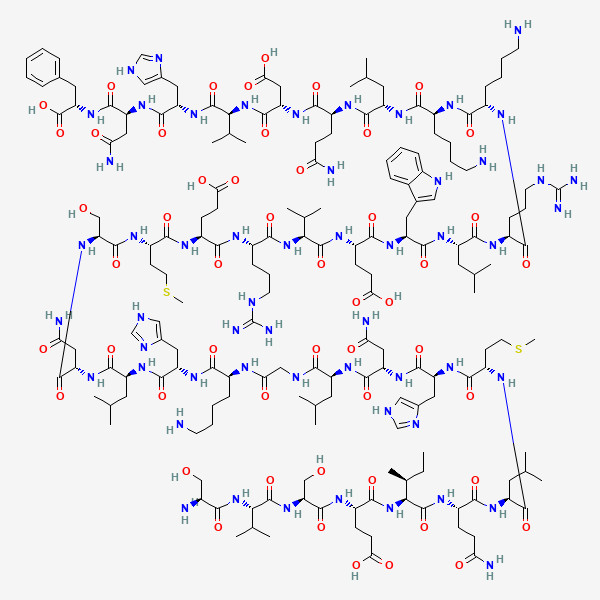
Teriparatide is the bone-active front end of parathyroid hormone, packaged as a prescription drug rather than a typical research peptide. PTH has 84 amino acids; teriparatide keeps the first 34, the section needed to activate its receptor. PubChem identifies the sequence as SVSEIQLMHNLGKHLNSMERVEWLRKKLQDVHNF, with a molecular weight of about 4,118 g/mol. Teriparatide therefore gets its own identity; borrowing the full hormone’s UniProt record would describe the wrong molecule.
Forteo was FDA-approved on November 26, 2002, making teriparatide the first approved anabolic, or bone-building, osteoporosis drug. That history matters because most osteoporosis drugs slow bone loss. Teriparatide actively pushes formation.
How does teriparatide bone growth work?
Teriparatide bone growth comes from a short, intermittent PTH signal that favors osteoblasts, the cells that lay down new bone. Think of bone as a renovation site: osteoclasts remove old material and osteoblasts install the replacement. A once-daily pulse briefly puts the builders ahead. Constantly elevated PTH is a different exposure pattern and can favor bone breakdown instead.
The current Forteo label says daily administration stimulates new bone on trabecular and cortical surfaces. Blood levels peak about 30 minutes after a 20-microgram injection and fall below measurement within three hours. A short blood appearance can still trigger a longer remodeling response.
What does the osteoporosis evidence show?
Teriparatide has human randomized-trial evidence for reducing new fractures in severe osteoporosis. In the 1,360-participant VERO trial, 20 micrograms daily produced fewer new vertebral fractures over 24 months than weekly risedronate: 5.4% versus 12.0%. Clinical fractures were also lower, while the nonvertebral-fracture difference was not statistically conclusive.
That is a strong result for osteoporosis treatment. The label covers high-risk postmenopausal women, high-risk men with primary or hypogonadal osteoporosis, and high-risk adults with osteoporosis linked to sustained systemic glucocorticoids. “Fewer fractures later” is the endpoint. “This broken bone joins faster” is another question.
Does teriparatide improve fracture healing?
Teriparatide fracture healing remains mixed and is not an FDA-approved use. The cleanest reality check is a randomized study of 40 postmenopausal women with proximal humerus fractures. Half received 20 micrograms daily for four weeks; at seven weeks and three months, teriparatide did not improve radiographic healing, pain, arm function, or opioid use.
Other diagnoses have produced signals worth testing. A meta-analysis of hip-fracture studies reported a shorter average time to union, yet found no improvement in union rates at three or six months, hip function, complications, reoperation, or mortality. A small pelvic-fracture RCT likewise found no CT-healing or pain advantage, though physical-performance scores improved. The fair verdict is not “never works.” It is that fracture type, study design, and outcome matter, and broad bone-healing claims run ahead of the human data.
What are teriparatide side effects and risks?
Teriparatide side effects are reasonably well mapped because this is an approved medicine, not an anonymous vial. The Forteo label lists joint pain, other pain, and nausea as the most common adverse reactions. Early doses can cause temporary orthostatic hypotension, meaning blood pressure falls on standing. Teriparatide can also raise calcium and may complicate active or recent kidney stones.
Rats developed dose- and duration-dependent osteosarcoma, a bone cancer. Human observational studies have not shown an increased osteosarcoma risk, but data beyond two years are limited. The label says to avoid Forteo in people with open growth plates, Paget’s disease or another non-osteoporosis metabolic bone disease, bone metastases or prior skeletal cancer, skeletal radiation, or hereditary osteosarcoma risk. This is real risk management, not the decorative warning paragraph websites paste at the bottom.
What is the teriparatide dosage?
Teriparatide dosage on the U.S. Forteo label is 20 micrograms injected under the skin once daily into the thigh or abdomen. The prefilled pen supplies 28 doses and stays refrigerated; the label says not to transfer its contents into a syringe. Use beyond two years over a lifetime is reserved for someone who remains, or again becomes, high risk for fracture.
Forteo arrives as a ready-to-use solution, so there is nothing to reconstitute. A freeze-dried “teriparatide” vial sold in peptide circles is not the labeled Forteo product and does not inherit its approval, manufacturing controls, or dosing assurance. Compounded preparations are also not FDA-approved finished drugs merely because their active ingredient appears in Forteo.
How does teriparatide compare with healing peptides?
Teriparatide sits in the healing peptide hub, but it belongs in a different evidence lane from BPC-157 and TB-500. Teriparatide has top-tier human evidence and FDA approval for osteoporosis. BPC-157 and TB-500 attract soft-tissue-repair interest but lack that approved osteoporosis record.
The twist is that teriparatide’s stronger overall résumé does not automatically make it a proven bone-repair shortcut. Drug approval answers a specific question for a specific population and outcome. For teriparatide, that answer is solid for building bone and preventing fractures in high-risk osteoporosis. The claim that Forteo reliably speeds an existing fracture remains a live research question, not a label indication.
Evidence by outcome
Each outcome Teriparatide has been studied for, with the honest evidence grade and what the studies actually found. A tier never stands alone — the verdict rides with it.
| Outcome | Evidence | What was found |
|---|---|---|
| Fracture prevention in severe osteoporosis | Human RCTHelped | Randomized human trials show that teriparatide increases bone mineral density and reduces new vertebral and clinical fractures in people with osteoporosis. This evidence supports prevention of future fragility fractures, not faster repair of an existing fracture. |
| Healing of an existing fracture | Human RCTMixed | Small randomized trials have produced diagnosis-specific and conflicting results. A 40-person proximal humerus trial found no radiographic or clinical benefit, and a pelvic-fracture trial found no CT-healing or pain benefit. Some pooled hip-fracture data suggest shorter time to union, but not better union rates, function, complications, reoperation, or mortality. |
FDA & legal status
- United States: fda approved (as of Jul 2026) — approved for High-risk postmenopausal osteoporosis, Increasing bone mass in high-risk men with primary or hypogonadal osteoporosis, High-risk glucocorticoid-associated osteoporosis
Teriparatide is a prescription drug. FDA approved Forteo on November 26, 2002; approved indications concern osteoporosis and fracture-risk reduction, not acceleration of acute fracture healing. Compounded or research-market products are not FDA-approved Forteo.
Reported side effects
| Effect | Frequency | Severity |
|---|---|---|
| Joint pain | More than 10% in clinical trials | Usually non-serious |
| Nausea | More than 10% in clinical trials | Usually non-serious |
| Transient orthostatic hypotension | Observed with initial doses | Can cause dizziness or faintness |
Chemical identifiers
References
- 1.FORTEO (teriparatide) prescribing information
- 2.Teriparatide — PubChem CID 16133850
- 3.Johansson, 2015 — PTH 1-34 and proximal humerus fracture healing (PMID 26179771)
- 4.Kendler et al., 2018 — VERO randomized trial (PMID 29129436)
- 5.Han et al., 2020 — hip-fracture healing meta-analysis (PMID 32904518)
- 6.Nieves et al., 2022 — pelvic-fracture randomized trial (PMID 34383100)
- 7.FDA review record — Forteo NDA 021318
More on Teriparatide
Everything else we've written about Teriparatide — what the community reports, the explainers that cover it, and the terms it keeps running into.