Also known as: Cibinetide · ARA290 · pHBSP · PHBSP · Pyroglutamate helix B surface peptide
Human RCTMixed
On this page
- What is ARA-290?
- How does ARA-290 work?
- What does the research show?
- What the community reports
- Is ARA-290 safe? Side effects
- FDA & legal status (2026)
- How is ARA-290 used, and can it be mixed?
- ARA-290 vs BPC-157
- Frequently asked questions
- Who is ARA-290 for — and who should be cautious?
- Evidence by outcome
- FDA & legal status
- Registered clinical trials
- Chemical identifiers
- References
- Related compounds
- More on ARA-290
ARA-290 — also called cibinetide — is a synthetic 11-amino-acid peptide copied from the outer surface of erythropoietin (EPO), designed to switch on the body’s tissue-repair and nerve-protection signaling without building red blood cells. Unlike most research peptides, ARA-290 has actually been through small human trials for nerve pain — but it is not FDA-approved and remains investigational.
What is ARA-290?
ARA-290 is a lab-made peptide — a short chain of 11 amino acids (sequence QEQLERALNSS, with a modified pyroglutamate at the front) that copies a single loop, called helix B, sitting on the outside of erythropoietin. Erythropoietin, or EPO, is the hormone famous for telling your bone marrow to make red blood cells. Researchers noticed EPO also protects and repairs injured tissue through a completely separate channel, and ARA-290 was built to trigger only that repair channel. Chemically it is small (molecular formula C51H84N16O21, molecular weight about 1,257 Da) and given by injection. ARA-290 also goes by the official drug name cibinetide and the lab shorthand pHBSP (“pyroglutamate helix B surface peptide”). It is not a medicine you can be prescribed and not a supplement you can legally buy — in the United States it exists only as a research chemical.
How does ARA-290 work?
ARA-290 works, as far as the evidence shows, by delivering EPO’s “repair” message while skipping its “make more blood” message. Think of erythropoietin as an email with two paragraphs: one says build red blood cells, the other says protect and heal this injured tissue. ARA-290 forwards only the second paragraph. It does this by binding the innate repair receptor — a partnership between the EPO receptor and a second receptor called the β-common receptor (CD131) — rather than the standard EPO receptor that drives red-cell production (indexed ARA-290 / cibinetide research). Switching on that receptor is thought to calm inflammation and support nerve and tissue repair. The honest caveat: this mechanism is drawn largely from lab and animal work, and exactly how ARA-290 behaves inside a human body is not fully established.
What does the research show?
ARA-290 is unusual for a research peptide: it actually has human trial data, not just rat studies. PubMed indexes roughly 60 records for ARA-290 (cibinetide), about 30 of them human-tagged, including around four randomized controlled trials. The most-developed human use is nerve repair: small early-phase randomized, placebo-controlled trials in sarcoidosis patients with small-fiber neuropathy tested ARA-290 against corneal small-nerve-fiber density and neuropathic symptoms, and the published pilot results reported improvement in patient-reported neuropathic and autonomic symptoms (indexed research; ClinicalTrials.gov NCT02039687). ARA-290 was also examined in a Phase 2 trial in prediabetes and type 2 diabetes (status listed as unknown), a cognitive/neural Phase 1–2 study, and a diabetic macular oedema trial that was terminated (registered ARA-290 studies). So the picture is mixed: real, encouraging human signals for neuropathic pain from small pilot trials, alongside a development program that stalled short of approval. We grade the headline nerve-repair use Human RCT — mixed: promising, human-tested, but small-scale and unproven at the size a regulator would require. That is a stronger evidence base than most peptides in the healing category — and still not a finished story.
What the community reports
ARA-290 has a smaller word-of-mouth following than the big healing peptides, concentrated among people dealing with nerve pain, small-fiber neuropathy, diabetic neuropathy, or general “everything’s inflamed” nerve symptoms who found it while researching EPO and tissue-protective peptides. The commonly reported approach is subcutaneous injection over a period of weeks, aimed at calming nerve pain. These accounts are anecdotal — they are not controlled data, they carry survivorship bias (people who feel nothing tend to go quiet), and they cannot tell you how often ARA-290 does nothing at all. They explain why people are curious about ARA-290; they do not add to the human trial evidence above.
Is ARA-290 safe? Side effects
ARA-290’s honest safety answer is “it looked well tolerated in small, short trials, but the long-term human picture is thin.” The Phase 1–2 studies described it as generally well tolerated, which is more human safety signal than most research peptides can claim — but those trials were small and ran for weeks to months, not years, so long-term safety in humans is essentially unknown. One real point in its favor: ARA-290 was deliberately engineered not to raise red blood cells, so it lacks the blood-thickening and clotting risk that limits ordinary EPO. That removes one known concern; it does not make ARA-290 proven safe. As with any injectable, the most concrete real-world risk sits with the source — research-chemical vials are unregulated, so their purity, real dose, and sterility are never a settled fact.
FDA & legal status (2026)
ARA-290 (cibinetide) is not FDA-approved, and it is not a legal dietary supplement either. As of 2026, it has been through registered Phase 1–2 clinical trials but never reached approval for any use, and in the United States it is sold strictly as a research chemical, labeled “for research use only” — which is how vendors sidestep the rules that apply to drugs and supplements. Nothing about that label means ARA-290 has been reviewed and cleared for safety or effectiveness; it hasn’t been. Regulatory treatment of research peptides has been shifting quickly, so treat any status claim about ARA-290 as dated and re-check it. The dated breakdown sits in the FDA & legal status block above.
How is ARA-290 used, and can it be mixed?
ARA-290 is sold as a lyophilized (freeze-dried) powder that has to be reconstituted with bacteriostatic water before injection, and in the trials it was given by subcutaneous injection. There is no established, approved human dose — any specific amounts you see quoted online are community-reported or drawn from individual study protocols, not a clinically validated standard, so we don’t publish a personalized protocol. Getting a concentration right from a powder is pure arithmetic, though — our reconstitution & dosing calculator turns a vial size, a water volume and a target amount into the exact number of insulin-syringe units to draw. People also ask whether ARA-290 can share a syringe with other peptides; our mixing compatibility reference covers what is commonly combined and where the honest answer is “not enough data.”
ARA-290 vs BPC-157
ARA-290 and BPC-157 are both filed under healing, and people weighing nerve or tissue recovery often look at both, but they are aimed at different problems. ARA-290 is a nerve-and-inflammation signal — its human evidence centers on small-fiber neuropathy and neuropathic pain, working through EPO’s tissue-protective repair receptor. BPC-157 is studied more for structural repair — tendon, ligament and gut-lining healing — but almost entirely in animals. The interesting split: ARA-290 has actual (if small) human RCT data for its headline use, while BPC-157’s headline use is still animal-only. Neither is FDA-approved, and both are research-chemical-only. The full head-to-head lives on the ARA-290 vs BPC-157 comparison, and you can see the rest of the category on the healing peptides hub.
Frequently asked questions
Is ARA-290 proven to work in humans?
Not proven, but human-tested — which sets ARA-290 apart from most research peptides. Small Phase 2 randomized trials in sarcoidosis small-fiber neuropathy reported improved neuropathic symptoms and nerve-fiber measures, but the trials were pilot-scale and the program never reached approval. We grade the headline nerve-repair use Human RCT with a mixed verdict: a real human signal, not settled proof.
Is ARA-290 the same as EPO?
No. ARA-290 (cibinetide) is copied from just one loop on the surface of erythropoietin (EPO) — the part that carries EPO’s tissue-repair signal — and it was specifically designed not to raise red blood cells. Ordinary EPO boosts red-cell production (and blood-clot risk); ARA-290 is built to skip that entirely and trigger only the repair pathway.
Is ARA-290 legal?
ARA-290 is legal to buy and sell as a research chemical in the United States, but it is not an approved drug or a legal dietary supplement, and it cannot be sold for human consumption. That is why every vendor labels it “for research use only.”
What is ARA-290 used for?
In the research literature, ARA-290 has been studied mostly for nerve-related conditions — small-fiber neuropathy in sarcoidosis, neuropathic pain, and diabetic neuropathy — plus early work in type 2 diabetes and tissue protection. Community users reach for it mainly for nerve pain, but only the neuropathy work has any human trial behind it.
Is ARA-290 banned in sport?
Treat it as banned. ARA-290 isn’t named individually on WADA’s Prohibited List, and because it doesn’t raise red blood cells it isn’t a classic EPO-style doping agent — but as a substance with no regulatory approval for human use it falls under the S0 “non-approved substances” category, which is prohibited at all times for athletes under anti-doping rules.
Who is ARA-290 for — and who should be cautious?
ARA-290 draws in people fighting nerve pain — the burning, tingling small-fiber kind that ordinary painkillers barely touch — who read that a peptide with actual human trial data might help and want to understand it before deciding. The honest framing: ARA-290 is one of the better-evidenced compounds in the research-peptide space, with small human RCTs pointing in a positive direction for neuropathy, and a clever design that sidesteps EPO’s blood-clot risk. But the human trials were small and early, the development program stalled short of approval, long-term safety data doesn’t exist, and the product you’d actually buy is unregulated. Anyone pregnant, managing a serious medical condition, or unwilling to accept real unknowns has every reason to wait for larger human research to arrive.
Evidence by outcome
Each outcome ARA-290 has been studied for, with the honest evidence grade and what the studies actually found. A tier never stands alone — the verdict rides with it.
| Outcome | Evidence | What was found |
|---|---|---|
| Small-fiber neuropathy & neuropathic pain | Human RCTMixed | ARA-290 has been tested in small, early-phase randomized human trials — including in sarcoidosis patients with small-fiber neuropathy — which reported improvement in neuropathic and autonomic symptoms and in corneal small-nerve-fiber measures. The trials were pilot-scale, some endpoints were mixed, and the program was never carried to approval, so this is a promising human signal, not settled proof. |
| Type 2 diabetes / metabolic | Human (controlled)Unclear | ARA-290 was examined in a Phase 2 trial in prediabetes and type 2 diabetes, framed around its erythropoietin-derived signaling. The registered study's status is listed as unknown and no clear efficacy conclusion is established here, so ARA-290's metabolic effect in humans remains an open question. |
| Broad tissue protection after injury | Animal-onlyHelped⚠ none in humans | Much of ARA-290's "healing" and organ-protection rationale rests on animal models of tissue injury and inflammation, where the innate-repair-receptor concept reduced damage. Those specific organ-protection uses have no controlled human trial, so they stay animal-only. |
FDA & legal status
- United States: research use only (as of Jul 2026)
ARA-290 (cibinetide) is not an FDA-approved drug and not a legal dietary supplement. It has been studied in registered Phase 1–2 clinical trials but never reached approval, and in the United States it is sold only as a research chemical ("for research use only"). Regulatory status for research peptides is volatile — re-verify before relying on it.
openFDA Drugs@FDA lists no approved product for ARA-290 as of 2026-07-15.
Registered clinical trials
4 registered studies mention ARA-290 on ClinicalTrials.gov (latest update 2024-10-04). A registered trial means a study is planned or underway — not that ARA-290 is approved or proven.
| Study | Status | Phase | Sponsor |
|---|---|---|---|
| The Use of ARA290 for the Treatment of Diabetic Macular OedemaNCT06626971 | terminated | Phase 2 | Belfast Health and Social Care Trust |
| Study of Efficacy of ARA 290 on Corneal Nerve Fiber Density and Neuropathic Symptoms of Subjects With SarcoidosisNCT02039687 | completed | Phase 2 | Araim Pharmaceuticals, Inc. |
| ARA290 in T2D (Effects of ARA 290, an Erythropoietin Analogue) in Prediabetes and Type 2 Diabetes)NCT01933529 | unknown | Phase 2 | Claes-Göran Östenson |
| Cognitive and Neural Effects of ARA290NCT02070783 | completed | Phase 1, PHASE2 | Leiden University Medical Center |
Chemical identifiers
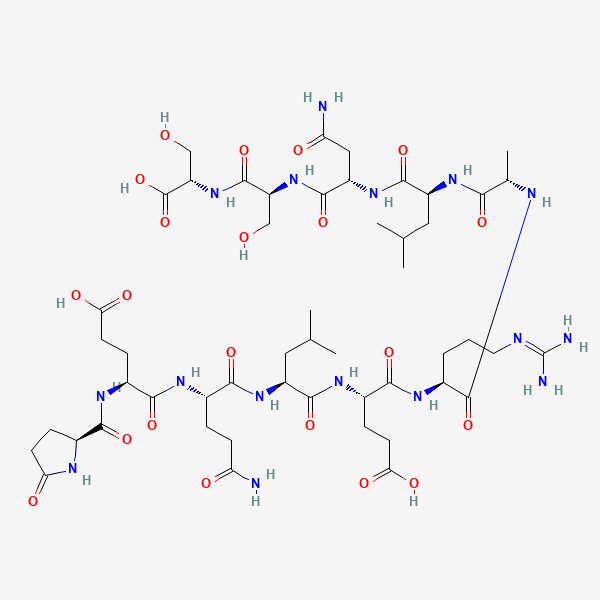
- Molecular formula
- C51H84N16O21
- Molecular weight
- 1257.3 g/mol
- IUPAC name
- (4S)-5-[[(2S)-5-amino-1-[[(2S)-1-[[(2S)-1-[[(2S)-1-[[(2S)-1-[[(2S)-1-[[(2S)-4-amino-1-[[(2S)-1-[[(1S)-1-carboxy-2-hydroxyethyl]amino]-3-hydroxy-1-oxopropan-2-yl]amino]-1,4-dioxobutan-2-yl]amino]-4-methyl-1-oxopentan-2-yl]amino]-1-oxopropan-2-yl]amino]-5-(diaminomethylideneamino)-1-oxopentan-2-yl]amino]-4-carboxy-1-oxobutan-2-yl]amino]-4-methyl-1-oxopentan-2-yl]amino]-1,5-dioxopentan-2-yl]amino]-5-oxo-4-[[(2S)-5-oxopyrrolidine-2-carbonyl]amino]pentanoic acid
Verified external records:
References
More on ARA-290
Everything else we've written about ARA-290 — what the community reports, the explainers that cover it, and the terms it keeps running into.