Human (controlled)Mixed
On this page
GABA — gamma-aminobutyric acid — is the brain’s main “brake pedal.” It’s the neurotransmitter your nervous system uses to quiet things down, the calming counterweight to the signals that keep you alert and wired. That’s why it shows up in supplements aimed at stress and sleep. The honest complication: it’s far from settled that GABA you swallow actually reaches the brain.
What is GABA?
GABA is a non-proteinogenic amino acid, meaning your body uses it as a signalling molecule rather than as a brick for building proteins. It’s the most abundant inhibitory neurotransmitter in the central nervous system — the chemical that tells neurons to slow their firing. Familiar calming drugs like benzodiazepines and alcohol work partly by amplifying GABA’s effect, which tells you how central this one molecule is to feeling relaxed.
What does GABA do in the body?
GABA’s day job is turning the volume down. Think of the brain as a car with an accelerator (glutamate) and a brake (GABA): press the brake and neurons fire less, which lowers anxiety, eases muscle tension, and helps the nervous system wind down for sleep. It also operates in the enteric nervous system — the web of nerves lining your gut — which is one reason researchers suspect an oral GABA supplement might act on the body without ever entering the brain.
Where do you get GABA?
Your body makes its own GABA on demand from glutamate, so you’re never relying on food for it. Diet does contribute small amounts, mostly from fermented foods like kimchi, miso and tempeh, and from certain specially processed teas. Supplemental GABA is produced by fermentation and sold as a powder or capsule, typically for stress or sleep support.
What does the research show?
The most concrete human work is on relaxation. Small controlled trials have found that oral GABA can nudge brain-wave patterns toward a calmer state and slightly lower stress readings within an hour — a promising, low-risk signal, though the studies are small and several are industry-funded. The big open question is mechanism. GABA the molecule has trouble crossing the blood-brain barrier, so whether a supplement raises brain GABA at all, or works indirectly through the gut, is unresolved. It’s an exciting molecule with a real effect worth chasing down — just one where the evidence is still early and the plumbing isn’t proven.
Is GABA safe?
GABA has a clean tolerability record at supplement doses, with only mild, temporary effects such as tingling, flushing, or a slight dip in blood pressure at higher intakes. If you take sedatives or blood-pressure medication, run it past a clinician first, since the effects could stack. As always, start low and see how you respond.
Evidence by outcome
Each outcome GABA has been studied for, with the honest evidence grade and what the studies actually found. A tier never stands alone — the verdict rides with it.
| Outcome | Evidence | What was found |
|---|---|---|
| Relaxation & stress | Human (controlled)Mixed | Small controlled human studies have reported that oral GABA can shift brain wave patterns toward a more relaxed state and modestly lower stress markers within an hour or so of taking it. The trials are small and some are industry-funded, so treat this as an encouraging early signal rather than settled science. |
| Reaching the brain from a supplement | MechanisticUnclear | Here's the honest catch: GABA the molecule struggles to cross the blood-brain barrier, the tight filter that guards the brain. Whether swallowed GABA reaches the brain in meaningful amounts — or works indirectly through the gut's nervous system — is unresolved. Any calming effect may not come from GABA directly topping up brain levels. |
FDA & legal status
- United States: dietary supplement / food (as of Jul 2026)
A non-proteinogenic amino acid, sold as a dietary supplement. Not an FDA-approved drug; supplements are regulated as food, not medicine.
Chemical identifiers
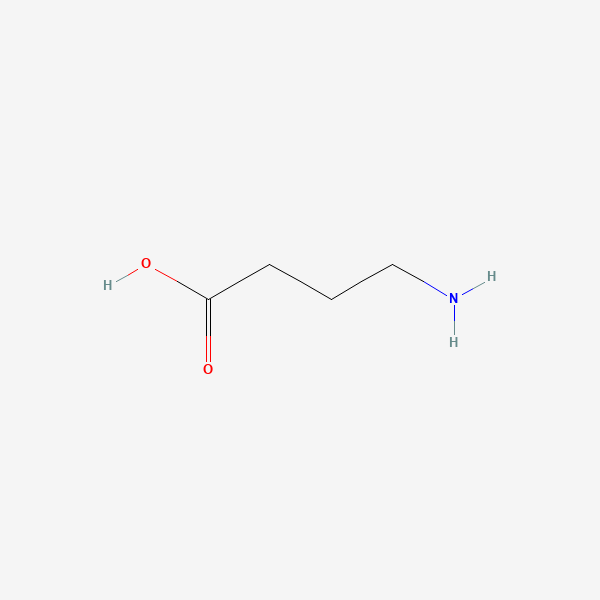
- Molecular formula
- C4H9NO2
- Molecular weight
- 103.12 g/mol
- IUPAC name
- 4-aminobutanoic acid
Verified external records: