Human (controlled)Mixed
On this page
L-Glutamine is the most abundant free amino acid floating around your body, and it’s the preferred fuel for two of your most demanding tissues: the lining of your gut and your immune cells. Your muscles make it in bulk, so it’s usually non-essential — but during serious illness or trauma, demand can outrun supply and it becomes conditionally essential.
What is L-Glutamine?
L-Glutamine is a conditionally-essential proteinogenic amino acid, and the one your body keeps in the largest free-floating pool. “Conditionally essential” means you normally make enough — mostly in muscle, from glutamate and a spare nitrogen group — but under heavy physical stress your needs can exceed production. It’s the amide cousin of glutamic acid, carrying an extra nitrogen it can hand off where needed. You’ll see it written Gln or Q.
What does L-Glutamine do in the body?
L-Glutamine is a workhorse fuel and courier. The fast-dividing cells lining your intestine and your immune cells burn it as a primary energy source, which is why it’s so tied to gut and immune health. It also acts as the body’s main shuttle for nitrogen, ferrying it safely between muscle, gut, liver and kidney, and it’s a starting material for glutathione, DNA building blocks and other amino acids. Think of it as both firewood for hungry tissues and a delivery truck for nitrogen.
Where do you get L-Glutamine?
L-Glutamine is abundant in protein foods — meat, poultry, fish, eggs, dairy, and soy foods like tofu — with smaller amounts in vegetables such as cabbage and spinach. On top of dietary intake, your own muscle tissue continuously manufactures and releases it, so a healthy person eating enough protein is well supplied.
What does the research show?
The most serious human research is clinical. Because glutamine feeds the gut barrier and immune system, it’s been trialled in critically ill, post-surgical and burn patients — settings where blood glutamine drops. The results are honestly mixed: some trials show benefit for the gut lining and recovery, others show little, and it remains an open question doctors are still working out. In healthy athletes the picture is more deflating — most controlled trials find little consistent gain for recovery or immunity, probably because well-fed muscle already churns out plenty. The exciting biology is real; the supplement case is situation-dependent.
Is L-Glutamine safe?
L-Glutamine is among the more benign supplemental amino acids and is well tolerated at gram-scale doses in healthy people. The main caution is for anyone with liver or kidney disease, who should check with a clinician first, since glutamine is woven into how the body moves nitrogen and clears ammonia.
Evidence by outcome
Each outcome L-Glutamine has been studied for, with the honest evidence grade and what the studies actually found. A tier never stands alone — the verdict rides with it.
| Outcome | Evidence | What was found |
|---|---|---|
| Gut and immune support in illness | Human (controlled)Mixed | Because glutamine is a top fuel for gut-lining and immune cells, it has been trialled in critically ill, surgical and burn patients to protect the gut barrier and support recovery. Results are mixed — some trials helped, others didn't — so it's an active clinical question, not a settled answer. |
| Exercise recovery and immunity in athletes | Human (controlled)Mixed | In healthy, well-fed athletes the evidence is weaker: most controlled trials show little consistent benefit for muscle recovery or reducing post-exercise infections, likely because these people already make plenty. |
FDA & legal status
- United States: fda approved (as of Jul 2026)
This amino acid is also an FDA-approved prescription medicine (e.g. L-Glutamine). That approved drug is prescription-only; any version sold as a plant-extract "supplement" is a separate, unapproved product.
Chemical identifiers
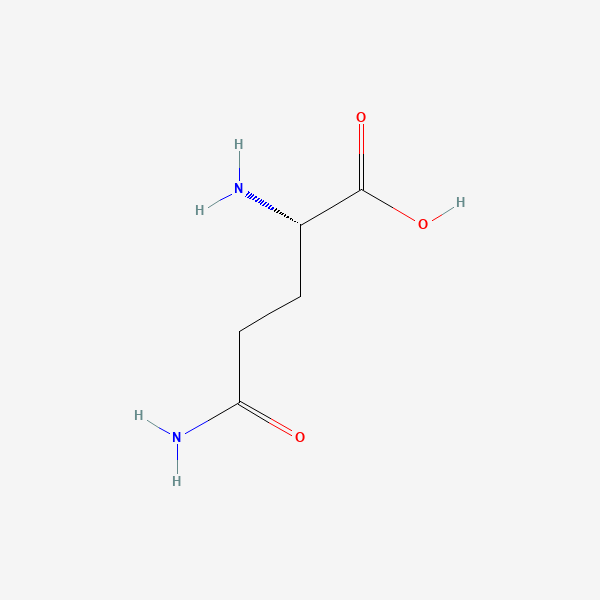
- Molecular formula
- C5H10N2O3
- Molecular weight
- 146.14 g/mol
- IUPAC name
- (2S)-2,5-diamino-5-oxopentanoic acid
Verified external records: