Human (controlled)Mixed
On this page
Glycine is the smallest and one of the most useful amino acids your body makes. It’s the amino acid your body reaches for to build collagen, to manufacture its master antioxidant glutathione, and to quietly calm the nervous system at night. It’s non-essential — meaning you can synthesize it — but a growing line of research asks whether “can make it” and “makes enough of it” are really the same thing.
What is glycine?
Glycine is a non-essential proteinogenic amino acid, the simplest of the twenty that build our proteins. Its side chain is a single hydrogen atom, which makes it small and flexible enough to fit into tight molecular corners other amino acids can’t — which is exactly why collagen, the body’s most abundant protein, is packed with it. You’ll see it written as Gly or the single letter G. It has a mildly sweet taste, which is where its name comes from.
What does glycine do in the body?
Glycine punches far above its size. It is a structural building block of collagen, where roughly one amino acid in three is glycine — so it underpins skin, tendon, cartilage and bone. It’s also a precursor the body uses to make glutathione (its master antioxidant), creatine, heme (part of red blood cells), and bile salts. And in the spinal cord and brainstem it acts as an inhibitory neurotransmitter, a calming counterweight to the excitatory signals that keep you wired.
Where do you get glycine?
The richest food sources are the collagen-heavy parts of animals: bone broth, gelatin, and the skin, connective tissue and bones of meat, poultry and fish. Dairy, eggs and legumes contribute too. Because a modern diet often skips the collagen-rich “nose-to-tail” cuts our ancestors ate, some researchers think typical intakes sit below what’s ideal — the everyday reason people reach for a glycine or collagen supplement.
What does the research show?
The most concrete human evidence is for sleep. In small controlled trials, about 3 grams of glycine before bed improved people’s subjective sleep quality and next-day alertness and helped them fall asleep faster — a real, low-risk signal, even if the studies are small. Its role as a collagen backbone and a glutathione precursor makes glycine a biologically sensible target for skin, joint and metabolic health, and observational human work links better glycine status to healthier metabolic markers. That second bucket is promising but mixed and mostly associational — the raw material clearly matters; the proof that extra glycine visibly moves those outcomes in people is still arriving.
Is glycine safe?
Glycine has a reassuring safety record. It’s been used in gram-scale doses in human trials with only mild, temporary effects — occasionally soft stools or a little nausea at high intakes. As with any supplement, the sensible move is to start at the low end and see how you respond.
Evidence by outcome
Each outcome Glycine has been studied for, with the honest evidence grade and what the studies actually found. A tier never stands alone — the verdict rides with it.
| Outcome | Evidence | What was found |
|---|---|---|
| Sleep quality | Human (controlled)Helped | In small controlled human studies, about 3 g of glycine taken before bed improved subjective sleep quality and next-day alertness, and shortened the time to fall asleep. The trials are small, but they are genuine human data — an encouraging, low-risk signal rather than proof. |
| Collagen & connective-tissue support | MechanisticUnclear | Glycine is a structural backbone of collagen, so supplying more of it is a biologically sensible idea for skin, tendon and joint tissue. That the raw material matters is clear; that swallowing extra glycine visibly improves those tissues in people is not yet nailed down. |
| Metabolic & antioxidant health | Human observationalMixed | As a glutathione precursor, glycine is linked in observational and small interventional human work to better antioxidant status and metabolic markers. The findings are promising but mixed, and mostly associational so far. |
FDA & legal status
- United States: fda approved (as of Jul 2026)
This amino acid is also an FDA-approved prescription medicine (e.g. Glycine; Aminosyn Ii). That approved drug is prescription-only; any version sold as a plant-extract "supplement" is a separate, unapproved product.
Chemical identifiers
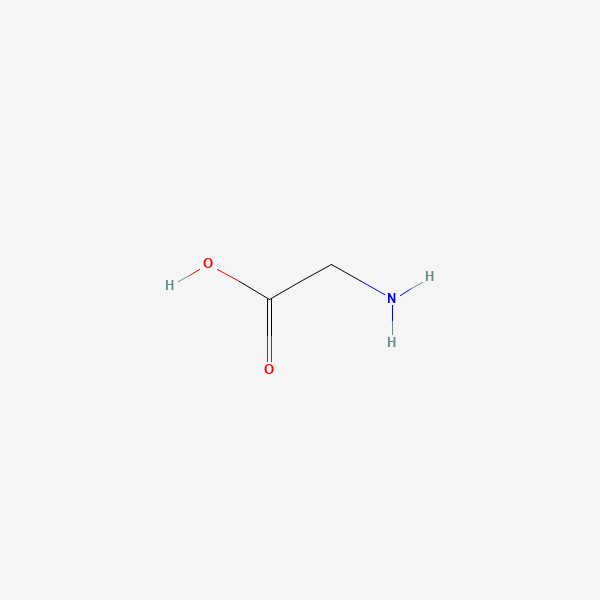
- Molecular formula
- C2H5NO2
- Molecular weight
- 75.07 g/mol
- IUPAC name
- 2-aminoacetic acid
Verified external records:
References
- 1.Glycine — PubChem compound record (CID 750), National Library of Medicine
- 2.Glycine — indexed human research (PubMed, National Library of Medicine)
- 3.Bannai & Kawai — New therapeutic strategy for amino acid medicine: glycine improves the quality of sleep
- 4.Johnson AA et al. — Glycine and aging: Evidence and mechanisms.
- 5.Razak MA et al. — Multifarious Beneficial Effect of Nonessential Amino Acid, Glycine: A Review.
- 6.Gundersen Y et al. — [Glycine].
- 7.Adeva-Andany M et al. — Insulin resistance and glycine metabolism in humans.
More on Glycine
Everything else we've written about Glycine — what the community reports, the explainers that cover it, and the terms it keeps running into.
- Collagen peptides side effects: What Trials ReportExplainer
- Do Collagen Peptides Break a Fast?Explainer
- How to Use Collagen Peptides: Doses From StudiesExplainer
- Marine vs bovine collagen: Does the Source Matter?Explainer
- Collagen for Joint Pain: The Real RCT EvidenceExplainer
- Collagen Hydrolysate vs Peptides: The DifferenceExplainer