Also known as: OXT · alpha-hypophamine
Human RCTMixed
On this page
- What is oxytocin?
- How does oxytocin work?
- What oxytocin benefits are actually proven?
- Does intranasal oxytocin help autism or social function?
- Is oxytocin nasal spray FDA-approved?
- What are the risks and side effects?
- Evidence by outcome
- FDA & legal status
- Reported side effects
- Chemical identifiers
- References
- Related compounds
- More on Oxytocin
The peptide oxytocin is a natural hormone and an FDA-approved injectable obstetric drug, but the popular “love hormone” uses are not approved and have not produced consistent clinical benefits. Human randomized trials exist, so the evidence tier is high; the verdict for intranasal social and autism claims is mixed, including a large negative trial.
Key facts: Human RCT evidence · mixed verdict for nootropic uses · FDA-approved injection for obstetric care · oxytocin nasal spray is not FDA-approved · key risks depend heavily on route and setting · no compound-specific WADA status is assigned here.
What is oxytocin?
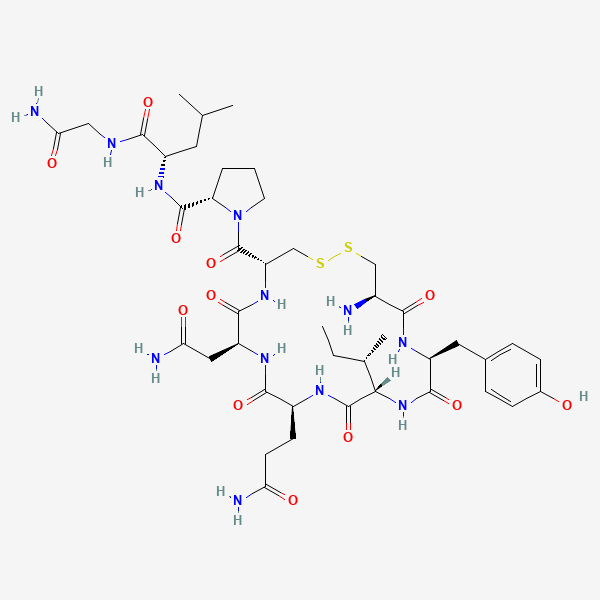
The oxytocin peptide is a cyclic hormone made from nine amino acids, with the sequence CYIQNCPLG, a molecular weight of 1,007.2 g/mol and PubChem CID 439302. The body makes oxytocin in the hypothalamus and releases it through the posterior pituitary. A synthetic version is also a prescription medicine. Same molecule, very different claims.
Oxytocin drives uterine contractions around childbirth and milk ejection during breastfeeding. Oxytocin signaling also affects social attention, attachment and responses to threat. That second job produced the nickname love hormone peptide, but the nickname compresses a complicated signaling system into a greeting-card slogan.
Oxytocin does not simply add affection. Brain effects can change with the person, the social setting and what researchers measure. That is why a lab result involving eye gaze or emotion recognition cannot automatically become a treatment for loneliness, anxiety, autism or relationship problems.
How does oxytocin work?
Oxytocin works by activating the oxytocin receptor, or OXTR. In the uterus, that signal raises the strength and frequency of smooth-muscle contractions. In the brain, oxytocin can change how social cues and threats are processed, but researchers have not found one predictable “trust switch” that behaves the same way in every person or situation.
The obstetric mechanism is direct enough to monitor minute by minute: contractions strengthen, and clinicians can stop an intravenous infusion if activity becomes excessive. The proposed nootropic mechanism is harder. An oxytocin nasal spray is intended to place peptide near nasal pathways that may reach the central nervous system, yet delivery to the relevant brain tissue, dose-response and behavioral effect are all less tidy than the marketing suggests.
That puts oxytocin in an unusual corner of the nootropic peptide category: the molecule is medically established, while the headline brain and behavior uses remain unsettled.
What oxytocin benefits are actually proven?
Oxytocin benefits are established for specific obstetric uses, not for making people more loving, trusting or socially fluent. The FDA-approved injection label covers medically indicated induction or stimulation of labor, postpartum uterine contraction and control of bleeding or hemorrhage. The label also includes adjunctive management of incomplete or inevitable abortion.
The product matters. The DailyMed injection label describes intravenous or intramuscular use under clinical supervision. It does not approve intranasal oxytocin for autism, anxiety, bonding, sexual enhancement or relationship therapy. The distinction is easy to lose because both products say “oxytocin” on the front. Approval follows the finished drug, route and indication, not the molecule’s reputation.
This is the useful correction to generic “what is oxytocin?” pages: the obstetric drug works well enough to be standard care, but that approval offers no shortcut around failed or inconsistent behavioral trials. The broader list of FDA-approved peptides follows the same product-level rule.
Does intranasal oxytocin help autism or social function?
Intranasal oxytocin has mixed human evidence, with the strongest single autism trial finding no benefit. The 2021 randomized, placebo-controlled SOARS-B trial enrolled 290 children and adolescents and tested treatment for 24 weeks. Social withdrawal improved by nearly the same amount with oxytocin and placebo, and secondary social and cognitive outcomes also showed no meaningful group difference.
The NEJM trial’s full report used a target total dose of 48 international units daily. The primary between-group difference was -0.2 points, with a 95% confidence interval from -1.5 to 1.0 and P=0.61. In plain English: the trial did not show that the spray beat placebo.
A 2025 dose-response meta-analysis pooled 12 smaller randomized trials with 498 participants. The initial overall analyses found no significant improvement in social impairment or repetitive behavior. A 48-IU subgroup and dose-response models suggested possible benefit at higher doses, but the authors also reported substantial heterogeneity and limited data at the top dose ranges. That is a signal worth testing, not a clinical win.
The evidence grade is therefore human RCT, mixed. “Mixed” does not mean half-proven. It means smaller analyses contain signals while a large, long trial and the pooled overall results failed to show consistent benefit.
Is oxytocin nasal spray FDA-approved?
Oxytocin nasal spray is not FDA-approved in the United States. A pharmacy may prepare a patient-specific compounded drug under section 503A when the statutory conditions are met, but the resulting spray remains a compounded product. FDA does not review compounded drugs for safety, effectiveness or quality before marketing.
That distinction separates a legitimate compounding pathway from an approved indication. The FDA’s compounding explanation says section 503A generally covers qualifying patient-specific work by a licensed pharmacist, state-licensed pharmacy, federal facility or physician. It does not turn compounded oxytocin nasal spray into Pitocin for the brain.
As of July 16, 2026, FDA approval belongs to prescription injection for labeled obstetric care. The social, anxiety and autism uses remain investigational. Readers comparing those claims with peptides discussed for anxiety should compare the outcome measured, not just the route or peptide label.
What are the risks and side effects?
Oxytocin risks depend sharply on route and setting. In obstetric use, excessive stimulation can cause sustained contractions, uterine rupture, reduced placental blood flow, fetal distress, hypoxia or death. Prolonged high-dose infusion can also cause water intoxication with seizures. The injection label requires continuous observation during labor induction or stimulation.
Intranasal safety looks less dramatic in the largest autism trial: adverse-event incidence and severity were similar between oxytocin and placebo over 24 weeks. That is useful human evidence, but it does not establish years-long safety, healthy-person enhancement, or the identity and sterility of every compounded spray.
The cleanest summary is not “safe” or “dangerous.” Hospital injection is a potent, monitored drug with known obstetric hazards. Intranasal oxytocin has shorter controlled-trial experience, inconsistent efficacy and product-quality questions when compounded. The approved peptide is real medicine; the love-hormone upgrade is still a research hypothesis with a surprisingly stubborn placebo problem.
Evidence by outcome
Each outcome Oxytocin has been studied for, with the honest evidence grade and what the studies actually found. A tier never stands alone — the verdict rides with it.
| Outcome | Evidence | What was found |
|---|---|---|
| Medically indicated labor induction and postpartum bleeding | Human RCTHelped | Injectable oxytocin is an established prescription obstetric drug. Its FDA-approved label covers medically indicated induction or stimulation of labor and uterine contraction or bleeding control after delivery, not bonding, anxiety or social enhancement. |
| Core social symptoms in autism spectrum disorder | Human RCTMixed | A 24-week randomized trial enrolling 290 children and adolescents found no advantage over placebo on social or cognitive outcomes. A 2025 analysis of 12 smaller RCTs found no significant overall benefit, although subgroup and dose-response analyses produced signals at higher daily doses. |
| General bonding, trust and anxiety benefits | Human RCTMixed | Oxytocin has measurable effects on social processing, but human experiments do not support a universal love, trust or anti-anxiety effect. Results vary with dose, delivery, outcome, population and social context. |
FDA & legal status
- United States: fda approved (as of Jul 2026) — approved for Medical induction or stimulation of labor, Adjunctive management of incomplete or inevitable abortion, Postpartum uterine contraction and bleeding or hemorrhage control
FDA approval applies to prescription oxytocin injection for labeled obstetric uses. Oxytocin nasal spray is not an FDA-approved product. A patient-specific nasal preparation may be compounded under section 503A when its legal conditions are met, but compounded drugs are not FDA-approved.
Reported side effects
| Effect | Frequency | Severity |
|---|---|---|
| Uterine hyperstimulation, tetanic contractions or uterine rupture | — | Serious |
| Fetal distress, hypoxia, arrhythmia or death secondary to excessive uterine activity | — | Serious |
| Water intoxication with convulsions during prolonged high-dose infusion | — | Serious |
Chemical identifiers
References
More on Oxytocin
Everything else we've written about Oxytocin — what the community reports, the explainers that cover it, and the terms it keeps running into.
- Oxytocin Reddit: Nasal Spray Reality CheckOn Reddit
- PeptideGlossary
- Peptide vs proteinGlossary