Human (controlled)Helped
On this page
L-Theanine is the amino acid that explains why a cup of green tea feels calmer than a cup of coffee, even when both have caffeine. It’s a compound the tea plant makes, and in your brain it produces a state people describe as “relaxed but alert” — settled, without the fog of a sedative. That combination is why it’s become a go-to for stress, focus, and taking the jitters off caffeine.
What is L-theanine?
L-Theanine is a non-proteinogenic amino acid found almost exclusively in tea. Your body doesn’t make it and doesn’t build it into proteins — it’s a beneficial plant compound you get by drinking (or supplementing) it. Structurally it resembles glutamate, one of the brain’s main signaling molecules, which is the key to how a substance from a leaf ends up influencing your mood and attention. You’ll see it labeled as theanine or the branded form Suntheanine.
What does L-theanine do in the body?
L-Theanine’s action is in the brain. It crosses the blood-brain barrier and gently shifts neurotransmitter activity, nudging up calming signals like GABA, serotonin and dopamine. On an EEG it increases alpha brain waves — the electrical pattern of someone who’s relaxed but still switched on, like the calm focus of being “in the zone.” Crucially, it does this without knocking you out, which is what separates it from a sedative and makes it usable in the middle of a workday.
Where do you get L-theanine?
Green and black tea are the main natural sources, with matcha especially rich because you consume the whole powdered leaf. A few mushrooms contain trace amounts. To reach the doses used in studies — often 100 to 400 mg — many people use L-theanine supplements, since a typical cup of tea provides only a fraction of that.
What does the research show?
The human evidence here is unusually good for a calming supplement. Controlled trials show L-theanine lowering stress markers and boosting alpha-wave activity — measurable “calm without sedation.” The standout finding is the theanine-plus-caffeine combination, which in controlled studies improved attention and accuracy beyond caffeine alone while smoothing its jittery edge. A systematic review also points to eased anxiety and better sleep quality in some people, with effects that vary by dose. Low risk, real signal, and a mechanism that makes sense.
Is L-theanine safe?
L-Theanine is very well tolerated at the 100–400 mg doses used in research, with no serious side effects reported and none of the wired feeling caffeine can bring. A few people feel mildly drowsy at the higher end. As calming agents go, it’s about as gentle as they come — though it’s a support, not a substitute for treating a diagnosed anxiety disorder.
Evidence by outcome
Each outcome L-Theanine has been studied for, with the honest evidence grade and what the studies actually found. A tier never stands alone — the verdict rides with it.
| Outcome | Evidence | What was found |
|---|---|---|
| Calm & stress reduction | Human (controlled)Helped | Controlled human trials show L-theanine lowering markers of stress and subjective tension, and increasing alpha brain waves linked to relaxed alertness. It's a genuine "calm without sedation" effect — one of the better-supported claims for any over-the-counter calming supplement. |
| Focus & attention (with caffeine) | Human (controlled)Helped | The theanine-plus-caffeine pairing is the star result. In controlled studies the combination improved attention and task accuracy more than caffeine alone, while theanine smoothed out caffeine's jittery edge — which is why it's a favorite nootropic stack. |
| Anxiety & sleep quality | Human (controlled)Mixed | A systematic review found theanine can ease anxiety and support sleep quality in some settings, though effects vary by person and dose. Promising and low-risk, but not a replacement for treatment of a diagnosed anxiety disorder. |
FDA & legal status
- United States: dietary supplement / food (as of Jul 2026)
A non-proteinogenic amino acid, sold as a dietary supplement. Not an FDA-approved drug; supplements are regulated as food, not medicine.
Chemical identifiers
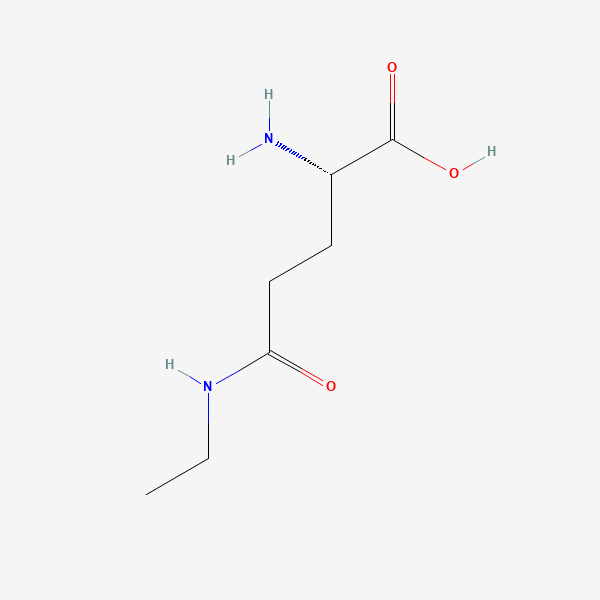
- Molecular formula
- C7H14N2O3
- Molecular weight
- 174.2 g/mol
- IUPAC name
- (2S)-2-amino-5-(ethylamino)-5-oxopentanoic acid
Verified external records:
References
- 1.L-Theanine — PubChem compound record (CID 439378), National Library of Medicine
- 2.L-Theanine — indexed human research (PubMed, National Library of Medicine)
- 3.Hidese et al. — Effects of L-theanine administration on stress-related symptoms and cognitive functions in healthy adults: a randomized controlled trial
- 4.Owen et al. — The combined effects of L-theanine and caffeine on cognitive performance and mood
- 5.Nobre AC et al. — L-theanine, a natural constituent in tea, and its effect on mental state.
- 6.Bulman A et al. — The effects of L-theanine consumption on sleep outcomes: A systematic review and meta-analysis.
- 7.Kochman J et al. — Health Benefits and Chemical Composition of Matcha Green Tea: A Review.
More on L-Theanine
Everything else we've written about L-Theanine — what the community reports, the explainers that cover it, and the terms it keeps running into.
- L vs D Amino Acids: What the L Actually MeansExplainer
- L-form amino acidGlossary