Human (controlled)Mixed
On this page
L-Tryptophan is the essential amino acid your body can’t make and can’t do without — and it’s the raw material behind two of the molecules that run your day-night rhythm: serotonin and melatonin. You get it from protein-rich food, and a small slice of it gets pulled aside to influence mood, calm, and sleep.
What is L-Tryptophan?
L-Tryptophan is an essential proteinogenic amino acid, meaning it’s one of the twenty building blocks of protein and one of the nine your body cannot synthesize. It carries a bulky indole ring on its side chain — the same chemical signature you’ll find in serotonin. You’ll see it abbreviated Trp or W. Because it’s essential, every molecule you have arrived through your diet.
What does L-Tryptophan do in the body?
L-Tryptophan wears two hats. Most of it is used the ordinary way, slotted into new proteins. But a small, tightly regulated fraction is converted into 5-hydroxytryptophan and then serotonin — the neurotransmitter tied to mood, appetite and calm — which the body can further turn into melatonin at night. Think of it as the single upstream ingredient for both your daytime mood chemistry and your nighttime sleep signal. A separate portion feeds the kynurenine pathway, which helps produce NAD+, a coenzyme every cell burns for energy.
Where do you get L-Tryptophan?
L-Tryptophan comes from protein. Poultry (turkey’s reputation is real, if overstated), eggs, dairy, fish, red meat, soy, nuts, seeds and oats all supply it. Anyone eating enough total protein is almost certainly getting enough tryptophan — the interesting question in research isn’t scarcity, it’s how much of it gets routed into serotonin versus into ordinary protein.
What does the research show?
The strongest human evidence is indirect but convincing. Controlled “tryptophan depletion” studies — where volunteers drink a mix that temporarily strips tryptophan — can lower mood in people prone to depression, which pins down serotonin’s dependence on this amino acid in living humans. Supplement trials for mood and for sleep exist and lean positive, but the effects are modest and mixed, so tryptophan is best framed as a plausible, low-risk lever rather than a proven treatment. It’s an exciting target precisely because the upstream biology is so clear.
Is L-Tryptophan safe?
L-Tryptophan from food is very safe and part of every normal diet. Purified supplements are usually well tolerated but can bring drowsiness, nausea or headache, and the sensible move is to start low. Because it feeds serotonin, anyone taking antidepressants or other serotonergic medicine should check with a clinician before adding a supplement.
Evidence by outcome
Each outcome L-Tryptophan has been studied for, with the honest evidence grade and what the studies actually found. A tier never stands alone — the verdict rides with it.
| Outcome | Evidence | What was found |
|---|---|---|
| Serotonin and mood | Human (controlled)Mixed | Tryptophan is the direct precursor to serotonin, and controlled human "tryptophan depletion" studies show that temporarily lowering it can dip mood in susceptible people — strong evidence the link is real. Whether supplementing extra reliably lifts mood in healthy people is less settled. |
| Sleep | Human (controlled)Mixed | Because tryptophan sits upstream of melatonin, it has been trialled for sleep in humans with some positive but modest results. It is a plausible, low-risk sleep target rather than a proven sleep aid. |
FDA & legal status
- United States: dietary supplement / food (as of Jul 2026)
A proteinogenic amino acid found in dietary protein and sold as a supplement. Not an FDA-approved drug; supplements are regulated as food, not medicine.
Chemical identifiers
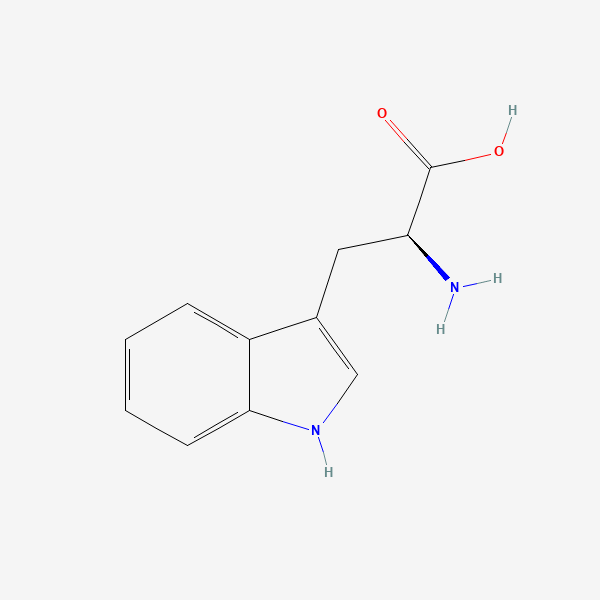
- Molecular formula
- C11H12N2O2
- Molecular weight
- 204.22 g/mol
- IUPAC name
- (2S)-2-amino-3-(1H-indol-3-yl)propanoic acid
Verified external records:
References
More on L-Tryptophan
Everything else we've written about L-Tryptophan — what the community reports, the explainers that cover it, and the terms it keeps running into.