Human (controlled)Helped
On this page
L-Tyrosine is the amino acid your body reaches for when it needs to make dopamine, noradrenaline and adrenaline — the chemistry of drive, focus and the stress response. Your body can build it from phenylalanine, so it’s only conditionally essential, but it has one of the more interesting track records for holding mental performance together when you’re cold, tired or overloaded.
What is L-Tyrosine?
L-Tyrosine is a conditionally-essential proteinogenic amino acid. “Conditionally essential” means the body normally makes its own — here from the essential amino acid phenylalanine — so you only truly depend on food for it when that supply runs short. Its side chain is a phenol ring, and that ring is the scaffold the body decorates to build the catecholamine neurotransmitters. You’ll see it written Tyr or Y; the name traces to the Greek for cheese, where it was first found.
What does L-Tyrosine do in the body?
L-Tyrosine is a precursor with an outsized job list. The body converts it, step by step, into dopamine, then noradrenaline, then adrenaline — the signals behind motivation, alertness and the fight-or-flight response. Separately it’s the starting material for thyroid hormones, which set your metabolic rate, and for melanin, the pigment in skin and hair. Picture it as a blank chassis the body fits with different engines depending on what it needs to build.
Where do you get L-Tyrosine?
L-Tyrosine is abundant in protein-rich food: cheese and dairy, meat, poultry, fish, eggs, soy, legumes, nuts and seeds. The body also manufactures it from phenylalanine, so between diet and internal production most people are well covered. The exception is PKU, a genetic condition where phenylalanine can’t be converted, making dietary tyrosine medically essential.
What does the research show?
L-Tyrosine’s standout evidence is for thinking under pressure. Controlled human trials show that a dose before a genuine stressor — extreme cold, a night of lost sleep, intense multitasking — helps protect working memory and mental performance, apparently by replenishing the dopamine and noradrenaline those states deplete. That’s a real, repeatable human finding, and a satisfying one because it matches the biology. The catch worth being honest about: the benefit shows up under stress, and there’s little sign tyrosine sharpens an already-rested, unstressed mind whose stores are full.
Is L-Tyrosine safe?
L-Tyrosine is well tolerated at the doses used in studies, with only occasional mild nausea or headache. Two honest caveats follow from its precursor roles: anyone taking MAOI antidepressants, or managing a thyroid condition, should get medical advice first, since tyrosine feeds both of those systems.
Evidence by outcome
Each outcome L-Tyrosine has been studied for, with the honest evidence grade and what the studies actually found. A tier never stands alone — the verdict rides with it.
| Outcome | Evidence | What was found |
|---|---|---|
| Cognition under acute stress | Human (controlled)Helped | This is tyrosine's best-supported use. In controlled human trials, doses given before demanding stressors — cold, sleep loss, heavy multitasking — helped preserve working memory and mental performance, likely by topping up the dopamine and noradrenaline these situations burn through. The benefit shows up under stress, not in already-rested, unstressed people. |
| Everyday mood and focus | MechanisticUnclear | As the direct precursor to dopamine and noradrenaline, tyrosine is a logical focus and mood target, but there's little evidence it boosts either in healthy, unstressed people whose levels are already adequate. |
FDA & legal status
- United States: fda approved (as of Jul 2026)
This amino acid is also an FDA-approved prescription medicine (e.g. Aminosyn Ii; Isoleucine, Leucine, Lysine Acetate, Methionine, Phenylalanine, Threonine, Tryptophan, Valine, Alanine, Arginine, Aspartic Acid, Glutamic Acid, Histidine, Proline, Serine, N-Acetyltyrosine, And Glycine). That approved drug is prescription-only; any version sold as a plant-extract "supplement" is a separate, unapproved product.
Chemical identifiers
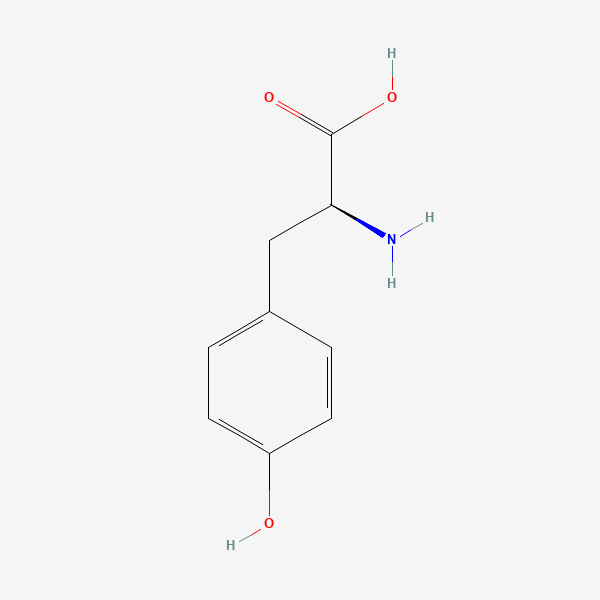
- Molecular formula
- C9H11NO3
- Molecular weight
- 181.19 g/mol
- IUPAC name
- (2S)-2-amino-3-(4-hydroxyphenyl)propanoic acid
Verified external records: