Also known as: Larazotide acetate · AT-1001 · AT1001 · Larazotida
Human RCTMixed
On this page
- What is larazotide?
- How does larazotide work?
- What does the research on larazotide show?
- Larazotide evidence at a glance
- Is larazotide safe? Side effects
- FDA & legal status (2026)
- How was larazotide dosed in the studies?
- Larazotide vs BPC-157 and the injectable gut peptides
- Frequently asked questions
- Who is larazotide for — and who should be cautious?
- Evidence by outcome
- FDA & legal status
- Registered clinical trials
- Reported side effects
- Chemical identifiers
- References
- Related compounds
- More on Larazotide
Larazotide (larazotide acetate, AT-1001) is an oral peptide that acts inside the gut to tighten the “leaky” junctions between intestinal cells. Larazotide was tested as a celiac-disease treatment in several real human trials — the strongest human evidence of almost any gut-focused research peptide — but its pivotal Phase 3 trial was terminated in 2022, and no product was ever approved.
What is larazotide?
Larazotide is a lab-made peptide — a short chain of 8 amino acids (sequence GGVLVQPG) — designed to be swallowed rather than injected. Unlike the injectable healing peptides people usually search for, larazotide is engineered to stay and work inside the gut: it is minimally absorbed into the bloodstream, so it does its job at the surface of the intestinal lining and mostly passes on. It came up through pharmaceutical development (Alba Therapeutics, later 9 Meters Biopharma) as a candidate treatment for celiac disease, and it is best understood as a “gut-barrier” or “leaky gut” peptide, not a tendon-and-ligament one. Larazotide is not an approved medicine and not a supplement.
How does larazotide work?
Larazotide works by helping the gut wall stay sealed. The intestinal lining is a single layer of cells zipped together by tight junctions — protein seals that decide what slips between cells and into the body. In celiac disease, gluten triggers a signaling molecule called zonulin that loosens those seals, making the gut more permeable (the “leaky gut” idea). Larazotide is described as a tight-junction regulator, or zonulin antagonist: it counteracts that loosening and helps keep the junctions closed, which lowers how much passes through the gut wall. Because larazotide acts locally and is barely absorbed, its effect is aimed at the gut surface rather than the whole body. The mechanism is well-characterized and biologically plausible; whether tightening the barrier translates into a reliable clinical benefit is the harder question the trials tried to answer.
What does the research on larazotide show?
Larazotide has something most research peptides never get: real randomized human trials. It ran through Phase 1, several Phase 2 studies, and a Phase 3 program in celiac disease (registered studies, ClinicalTrials.gov). In the Phase 2 work — including a well-known trial in patients who still had symptoms despite a strict gluten-free diet (NCT01396213) — a low 0.5 mg oral dose reduced symptoms more than placebo, and, unusually, that low dose outperformed higher ones. That’s a genuine human-RCT signal, which is why larazotide is graded far above the animal-only research peptides. The honest counterweight: the pivotal Phase 3 CeDLara trial was terminated in 2022 (NCT03569007), the program did not lead to approval, and results across the gut-permeability endpoints were inconsistent. So the fair summary is mixed: a promising Phase 2 story that the confirmatory trial did not carry across the line.
Larazotide evidence at a glance
Here is the fast, honest orientation — one row per use, the best evidence that exists for it, and what that evidence actually showed. The exciting-sounding uses are not the proven ones, and larazotide’s headline use is the one place the human evidence is strongest yet still ended mixed.
| Use | Best evidence so far | What it showed |
|---|---|---|
| Celiac symptoms on a gluten-free diet (headline) | Human RCT (Phase 2 trials; Phase 3 terminated) | Low-dose (0.5 mg) larazotide beat placebo on symptoms in Phase 2; the pivotal Phase 3 was halted in 2022. Mixed — promising but not confirmed. |
| Intestinal permeability / gut barrier | Human RCT (gluten-challenge trials) | Barrier effects were measured directly in people; results were inconsistent across endpoints. Mixed. |
| COVID-19 (MIS-C, long COVID) | Mechanistic-hypothesis | A plausible “seal the leaky gut” rationale; one pediatric trial terminated, a long-COVID trial active in 2026. No efficacy result yet. |
Is larazotide safe? Side effects
Larazotide’s safety picture is more reassuring than most research peptides, for a specific structural reason: it is designed to stay in the gut and is minimally absorbed, so it doesn’t circulate through the body. Across its trials larazotide was generally well tolerated, with the most common side effects being headache and ordinary gastrointestinal symptoms (abdominal pain, diarrhea, flatulence), often at rates close to placebo. The real caveats are about what doesn’t exist: because no larazotide product was ever approved, there is no long-term post-marketing safety record, and any “larazotide” sold online is an unregulated research chemical whose purity, identity, and dose you cannot verify. A peptide that behaved well in a controlled trial is not the same thing as a vial from an unaccountable vendor.
FDA & legal status (2026)
Larazotide is not FDA-approved for any use, and it is not a dietary supplement. It sits in the “investigational drug” category: it was studied in registered clinical trials all the way through Phase 3 for celiac disease, but the pivotal Phase 3 (CeDLara) was terminated in 2022 and no larazotide medicine reached the market. As of 2026 larazotide is still being looked at in early-stage research for other conditions, but there is nothing you can be prescribed and nothing legally sold as a supplement. Because this is a status that can change, treat any claim here as dated and re-check it — the full dated breakdown is in the FDA & legal status block below.
How was larazotide dosed in the studies?
In its celiac trials, larazotide was taken by mouth, three times a day, before meals — the timing matters because the goal is to have the peptide present in the gut when gluten arrives. The doses studied ran into the low milligram range, and the standout finding was that a 0.5 mg dose worked better than higher doses in the persistent-symptoms Phase 2 trial (NCT01396213) — a reminder that “more” is not automatically “better” with this peptide. This is reported as information about what the trials used, not a protocol to copy: larazotide is not an approved drug, it was always studied alongside a gluten-free diet rather than as a license to eat gluten, and there is no verified consumer product to dose.
Larazotide vs BPC-157 and the injectable gut peptides
Larazotide and BPC-157 both get discussed under “gut healing,” but they are almost opposites in how they work. Larazotide is an oral, locally-acting barrier sealer with genuine human RCTs behind it and a mixed verdict; BPC-157 is an injected, systemic peptide with strong animal healing data but no completed human trial. KPV is a third gut-relevant peptide, studied mostly for gut inflammation. None of these is an approved treatment, and they answer different questions — larazotide is the only one whose evidence base is built on randomized human trials, even though that base ended inconclusive. See the healing peptides hub for how the whole category compares.
Frequently asked questions
Is larazotide proven to work in humans?
Not in the “approved treatment” sense. Larazotide has something most research peptides lack — genuine randomized human trials — and its Phase 2 celiac results were encouraging at a low 0.5 mg dose. But the pivotal Phase 3 trial was terminated in 2022 and it was never approved, so the honest grade is mixed: strong human evidence base, inconclusive final answer.
Is larazotide the same as migalastat?
No — and this is a common mix-up. Larazotide’s development code was AT-1001, but a completely different drug, migalastat (for Fabry disease), was also coded AT1001 by a different company. They are unrelated molecules. On this page, “larazotide” always means the celiac-disease gut-barrier peptide, never migalastat.
Is larazotide legal?
Larazotide is not an approved drug and not a legal dietary supplement in the United States, so it cannot be sold for human consumption. Any “larazotide” offered online is an unregulated research chemical, sold “for research use only,” with no guarantee of what’s actually in the vial.
Is larazotide banned in sport?
Larazotide is not marketed or known as a performance-enhancing substance, and it is not a typical anti-doping target. That said, WADA’s S0 category is a catch-all for substances with no current regulatory approval for human use — so an athlete under anti-doping rules should treat any non-approved investigational peptide with real caution and verify before use.
How was larazotide taken?
By mouth, three times a day before meals, in the celiac trials. That’s unusual for a peptide — most are injected — and it works because larazotide is built to act at the gut lining rather than be absorbed into the blood.
Who is larazotide for — and who should be cautious?
Larazotide draws in people with celiac disease who do everything right — strict gluten-free diet — and still deal with symptoms, plus the broader “leaky gut” crowd looking for something that seals the intestinal barrier. The honest framing: larazotide is the rare gut peptide with real randomized human trials behind it, and its low-dose Phase 2 celiac signal was encouraging. But the pivotal Phase 3 was halted, it is not approved, it was only ever tested alongside a gluten-free diet, and there is no verified product to buy — what’s sold online is unregulated. Anyone treating larazotide as a substitute for a gluten-free diet, or as a settled treatment, has gotten ahead of the evidence. It’s a compelling, well-studied idea whose final verdict simply isn’t in.
Evidence by outcome
Each outcome Larazotide has been studied for, with the honest evidence grade and what the studies actually found. A tier never stands alone — the verdict rides with it.
| Outcome | Evidence | What was found |
|---|---|---|
| Celiac disease symptoms (on a gluten-free diet) | Human RCTMixed | Larazotide is one of the very few research-associated gut peptides tested in real randomized human trials. Several Phase 2 trials in celiac patients reported that a low (0.5 mg) oral dose reduced symptoms better than placebo, and the 0.5 mg dose oddly beat higher doses. But the confirmatory Phase 3 trial (CeDLara) was terminated in 2022, and larazotide is not approved. The honest read: a promising Phase 2 signal that a pivotal Phase 3 did not confirm. |
| Intestinal permeability / gut barrier | Human RCTMixed | In human gluten-challenge trials, larazotide was studied for its effect on how leaky the gut becomes after gluten exposure. Results across trials were inconsistent — some endpoints moved, others did not — which is part of why the program never reached approval. The gut-barrier mechanism is real and well-studied; a clean, reproducible clinical benefit was harder to pin down. |
| COVID-19 (MIS-C / long COVID) | MechanisticUnclear | Because larazotide tightens the gut barrier, researchers proposed it for conditions linked to a leaky gut, including COVID-19-related MIS-C in children and long COVID. A pediatric MIS-C trial was terminated; a long-COVID trial was still active in 2026. No efficacy readout supports these uses yet — this is a plausible mechanism being tested, not a proven treatment. |
FDA & legal status
- United States: investigational (as of Jul 2026)
Larazotide is not FDA-approved for any use and is not a dietary supplement. It is an investigational drug: it was studied in registered clinical trials (through Phase 3 in celiac disease), but its pivotal celiac Phase 3 was terminated in 2022 and no product reached market. As of 2026 it remains under early clinical investigation for other conditions. Re-verify status before relying on it.
openFDA Drugs@FDA lists no approved product for Larazotide as of 2026-07-15.
Registered clinical trials
29 registered studies mention Larazotide on ClinicalTrials.gov (latest update 2026-10-22). A registered trial means a study is planned or underway — not that Larazotide is approved or proven.
Reported side effects
| Effect | Frequency | Severity |
|---|---|---|
| Headache | — | — |
| Gastrointestinal symptoms (abdominal pain, diarrhea, flatulence) | — | — |
| Nasopharyngitis (cold-like symptoms) | — | — |
Chemical identifiers
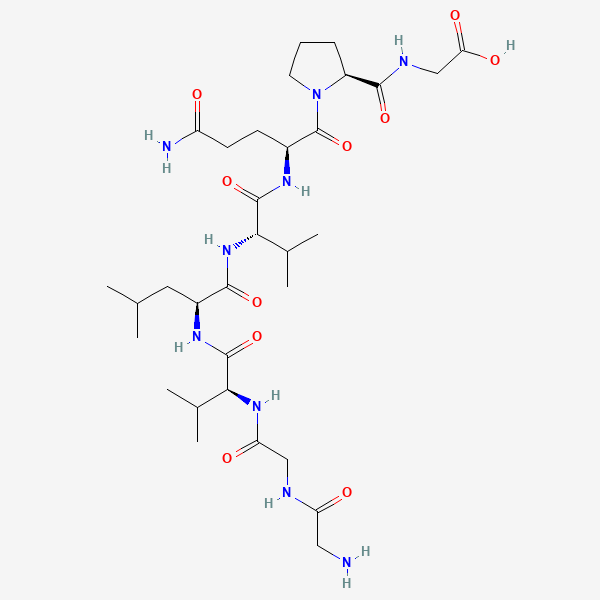
- Molecular formula
- C32H55N9O10
- Molecular weight
- 725.8 g/mol
- IUPAC name
- 2-[[(2S)-1-[(2S)-5-amino-2-[[(2S)-2-[[(2S)-2-[[(2S)-2-[[2-[(2-aminoacetyl)amino]acetyl]amino]-3-methylbutanoyl]amino]-4-methylpentanoyl]amino]-3-methylbutanoyl]amino]-5-oxopentanoyl]pyrrolidine-2-carbonyl]amino]acetic acid
Verified external records:
References
- 1.Larazotide — indexed research (PubMed, National Library of Medicine)
- 2.Larazotide — registered clinical studies (ClinicalTrials.gov)
- 3.CeDLara — Phase 3 larazotide acetate in celiac disease (NCT03569007, terminated)
- 4.Larazotide acetate — Phase 2b in celiac disease (NCT01396213)
- 5.Larazotide (AT-1001) — compound record (PubChem CID 9810532)
More on Larazotide
Everything else we've written about Larazotide — what the community reports, the explainers that cover it, and the terms it keeps running into.