Also known as: Vasoactive intestinal polypeptide · VIP-28 · Aviptadil (synthetic VIP)
Human RCTMixed
On this page
- What is VIP?
- How does VIP work?
- What does the research show?
- What the community reports
- Is VIP safe? Side effects
- FDA & legal status (2026)
- How is VIP used, and can it be mixed?
- VIP vs other healing and anti-inflammatory peptides
- Frequently asked questions
- Who is VIP for — and who should be cautious?
- Evidence by outcome
- FDA & legal status
- Registered clinical trials
- Reported side effects
- Chemical identifiers
- References
- Related compounds
- More on VIP
VIP peptide is the body’s own 28-amino-acid “stand down and open up” signal: it relaxes blood vessels and airways while damping some immune activity. Human lung trials reached Phase 3, but the popular nasal-spray recovery use has no controlled trial, and no VIP product is FDA-approved.
If you found VIP through the mold-illness, gut-recovery or “anti-inflammatory peptide” corner of the internet, the crucial question is whether hospital aviptadil data can support a nasal-spray recovery claim. It cannot—not yet. VIP is still one of the few peptides here to reach Phase 3, so readers can inspect human outcomes instead of trying to make a mouse study wear a lab coat.
What is VIP?
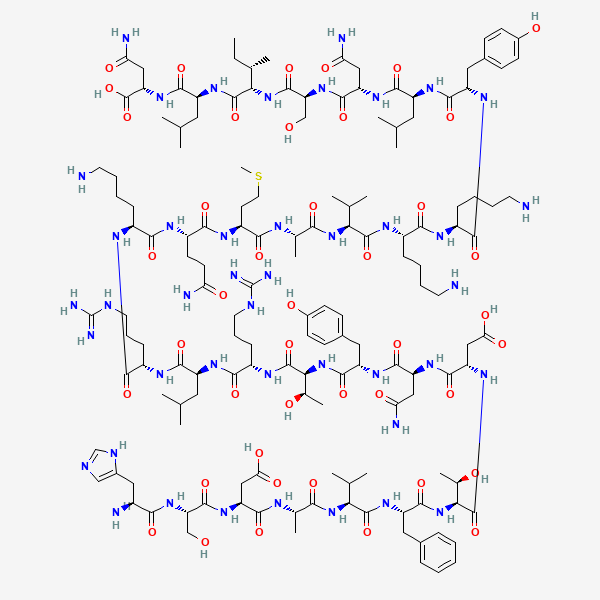
VIP is a 28-amino-acid peptide (sequence HSDAVFTDNYTRLRKQMAVKKYLNSILN) that your body produces in nerves running through the gut, lungs, heart and brain. It belongs to the same peptide family as secretin and glucagon, and it was first isolated from intestine in 1970 — which is where the “intestinal” in its name comes from, even though it acts all over the body. VIP is a hormone and neurotransmitter, not a research-lab invention: everyone reading this makes it right now. The versions in the news — aviptadil and pemziviptadil — are synthetic copies or long-acting redesigns of this same natural molecule, built because the real thing disappears from the bloodstream in minutes.
How does VIP work?
VIP works by docking onto two receptors, VPAC1 and VPAC2, that sit on blood vessels, airways, gut lining and immune cells. Think of VIP as a broadcast “stand down and open up” signal. On the muscle wrapped around your blood vessels and airways, it tells that muscle to relax — like loosening a kinked hose so more blood and air move through (that’s the vasodilation and bronchodilation). In the gut it turns up fluid secretion. And on the immune system it acts like a referee waving play to a stop, nudging cells toward regulatory T cells and away from an inflammatory pile-on.
The catch for anyone hoping to use VIP as a drug is speed: the body clears the natural peptide in only a few minutes. That is useful for a fast internal signal and a headache for drug developers—hence the longer-lasting lab redesigns.
One vivid, real-world proof that these receptors matter: a tumor that overproduces VIP (a “VIPoma”) causes relentless watery diarrhea and flushing. That’s the same machinery — vasodilation plus gut secretion — just stuck in the “on” position.
What does the research show?
VIP has a deep human research base — thousands of human papers, which is rare for a compound in this world — but the therapeutic story splits into two very different tracks, and it matters which one you’re reading about. The serious human trials tested lungs and blood vessels, not “recovery,” and the results were honest and mixed. The recovery reputation rests on biology, not on trials.
| Human study | Form and route | What happened | What it does not establish |
|---|---|---|---|
| TESICO, 471 randomized participants | Aviptadil, IV infusion | Stopped for futility; the trial did not improve the day-90 primary outcome | Benefit from intranasal VIP for recovery or CIRS |
| Pulmonary hypertension, 20 participants | Aviptadil, one 100 mcg inhaled dose | Pulmonary vasodilation was modest, temporary and strongest in a subset | A durable treatment effect or a home-use dose |
| Sarcoidosis, 20 participants | VIP, inhaled for four weeks | Immune markers shifted, including lower TNF-alpha production; the study was open-label | Symptom improvement in a blinded controlled trial |
| Migraine, 21 participants | VIP, two-hour IV infusion | 15 developed migraine after VIP versus 1 after placebo | Safety of chronic intranasal exposure |
Human trials (real, and mostly unfinished or negative). As the synthetic form aviptadil, VIP was tested in randomized trials for critically ill COVID-19 patients, including the large NIH-run ACTIV-3b/TESICO trial (published TESICO results). The 471-person comparison was stopped for futility and did not establish the clear benefit that earlier reports had suggested. For pulmonary arterial hypertension, the long-acting analog pemziviptadil (PB1046) reached a Phase 2 trial (NCT03556020) that was terminated before delivering a clear answer. A 20-person pulmonary-hypertension study found that one inhaled dose produced modest, short-lived vasodilation. Another 20-person, open-label sarcoidosis study found immune-marker changes after four weeks of inhaled VIP, including lower TNF-alpha production (PMID 20442436). Those are human signals, but neither is pivotal confirmation. The registered record also includes small COPD work (NCT00464932).
The anti-inflammatory / recovery use (mechanism only). VIP’s reputation as a recovery and anti-inflammatory peptide comes from cell and animal work, where it quiets inflammatory signaling and expands regulatory T cells. That mechanism is well studied — but a mechanism in a dish or a mouse is not a result in a person. No controlled human trial has tested intranasal VIP for general recovery, gut healing or chronic inflammatory illness, so we grade that specific use mechanistic-hypothesis and flag it none-in-humans. The forward-looking read: the biology that made people interested is real, and it simply hasn’t been put to a proper human test for this use yet.
What the community reports
VIP has a devoted following in the chronic-inflammatory-illness and biohacker communities, largely through an intranasal VIP spray used as part of “mold illness” or CIRS (chronic inflammatory response syndrome) recovery routines. People in those communities report improvements in energy, brain fog and inflammation markers after adding intranasal VIP late in a longer protocol. These accounts are anecdotal, and there is no controlled human trial behind this use. They come with the usual problems: no control group, no way to separate VIP from everything else in a multi-step protocol, and survivorship bias (people who feel nothing tend to stop posting). They’re useful for understanding why people are curious, not for proving the peptide caused the change.
Is VIP safe? Side effects
VIP’s honest safety story is that its side effects are its main effects, turned up too far. Because VIP is a potent vasodilator, it can drop blood pressure and cause flushing — the more you give and the faster, the more likely that is. Because it drives intestinal secretion, it can cause diarrhea or loose stools (the same mechanism that makes VIPoma tumors so miserable). In a randomized crossover trial, 15 of 21 people with migraine developed an attack after a two-hour VIP infusion, versus 1 after placebo (PMID 34357396).
VIP does have real trial safety data, which most compounds here don’t, but there is no long-term safety profile for intranasal recovery use. Research-market material also lacks an approved product’s assurance of purity, dose accuracy and sterility. Anyone who already runs low blood pressure or lives with migraine has a concrete reason to be cautious.
FDA & legal status (2026)
VIP is not FDA-approved for any use and is not a dietary supplement. The 2026 detail that generic summaries miss is compounding: FDA’s May 14 list places vasoactive intestinal peptide in 503A Category 1, under evaluation (FDA document). That is not approval, and it does not prove safety or effectiveness; it means qualifying patient-specific compounding may continue under FDA’s interim policy while the bulk substance is evaluated. Research-market VIP remains outside that pharmacy framework. Aviptadil’s Phase 3 history and an active formulation patent do not change the answer: there is still no FDA-approved VIP product as of July 17, 2026.
How is VIP used, and can it be mixed?
VIP has been delivered very differently depending on who’s using it, and none of it is a protocol you should copy. In trials, aviptadil was given by intravenous infusion or inhalation under medical supervision; in the recovery community, VIP is used as an intranasal spray. Reported community amounts are small and measured in micrograms per spray, but these are doses reported by users, not validated by a trial — and native VIP’s few-minute half-life means the community’s intranasal use and the hospital infusions are different things, not two versions of one “dose.”
If you’re reconstituting a lyophilized research vial, the math is just arithmetic — our reconstitution & dosing calculator turns a vial size, a volume of water and a target amount into the exact number of units to draw. People also ask what can share a syringe with what; our mixing compatibility reference covers what’s commonly combined and where the honest answer is “not enough data.”
VIP vs other healing and anti-inflammatory peptides
VIP sits alongside a few other compounds people reach for when the goal is calming inflammation or supporting recovery, and it’s worth knowing how it differs. VIP is a large, natural signaling hormone with real human trials (for lungs and blood vessels) but no approved recovery use. KPV is a tiny anti-inflammatory tripeptide from alpha-MSH whose evidence is animal and cell-level. BPC-157 is the famous tissue-healing peptide, strong in rodents but still awaiting human trials. TB-500 / thymosin beta-4 is framed as a systemic healing signal on similarly preliminary evidence.
The through-line is promising biology across the board, with human proof ranging from “tested and mixed” (VIP) to “not tested yet” (the rest). You can browse the whole group in the healing peptides hub and the immune / anti-inflammatory hub, or the full peptide index.
Frequently asked questions
VIP peptide questions often collapse three different things into one name: the hormone your body makes, aviptadil used in clinical research, and compounded or research-market nasal products. These short answers keep the form, route and level of evidence attached to every claim.
Does VIP actually work?
VIP works, unquestionably, as a natural signal in your body — it’s a real hormone with well-mapped effects. As a treatment the answer is more sobering: its serious human trials (severe COVID-19, pulmonary hypertension) did not deliver a clear win, and its popular recovery use has never been tested in a controlled human trial. So the honest verdict is a mixed one for the tested uses, and unproven for the recovery use.
Is VIP legal and FDA-approved?
VIP is not FDA-approved for any use and is not a dietary supplement in the United States. FDA currently lists vasoactive intestinal peptide in 503A Category 1 while it evaluates the bulk substance for compounding; that interim status is not an approval. Aviptadil has been through FDA-regulated trials but was never approved.
How do people take VIP?
VIP has been given by IV infusion or inhalation in medical trials (as aviptadil), while the recovery community uses an intranasal VIP spray. Because natural VIP is cleared from the blood in minutes, these routes behave very differently, and none of them is a validated protocol.
Is VIP safe?
VIP has real trial safety data, and its most common effects are predictable from its biology: lower blood pressure, flushing, diarrhea and headache. What’s missing is any long-term safety data for the intranasal recovery use, plus the usual purity and sterility unknowns of unregulated research-grade material.
Is VIP banned in sport?
VIP is not named in USADA’s 2026 Prohibited List summary. That is not the same as a blanket clearance: S0 covers non-approved pharmacological substances not addressed elsewhere, and an athlete’s route and product can matter. Competitive athletes should obtain a substance-specific ruling before use.
What’s the difference between VIP and aviptadil?
VIP is the natural peptide your body makes; aviptadil is a synthetic copy of that same molecule, manufactured as a drug candidate. Pemziviptadil (PB1046) goes a step further — it’s a redesigned, long-acting VIP analog built to survive in the bloodstream far longer than the few minutes natural VIP lasts.
Who is VIP for — and who should be cautious?
VIP draws in two very different crowds: people following lung, blood-pressure or critical-illness research, and people chasing recovery and anti-inflammatory benefits through intranasal sprays. The honest framing for the second group: the anti-inflammatory biology is real and well studied, but the recovery use has no human trial behind it, so treat it as a promising hypothesis, not a proven tool. For everyone, VIP’s vasodilator effects mean anyone with low blood pressure, or who is pregnant, or who is uncomfortable using an unregulated research chemical with no long-term safety data, has every reason to wait for better human evidence.
The good news is that VIP is one of the few compounds here where real human data already exists, so you can decide with facts instead of hope.
Evidence by outcome
Each outcome VIP has been studied for, with the honest evidence grade and what the studies actually found. A tier never stands alone — the verdict rides with it.
| Outcome | Evidence | What was found |
|---|---|---|
| Severe COVID-19 / ARDS (as synthetic VIP, aviptadil) | Human RCTMixed | VIP, as the synthetic form aviptadil, was tested in randomized human trials for critically ill COVID-19 patients, including the large NIH-run ACTIV-3b/TESICO trial. The rigorous trials did not establish the clear survival benefit that earlier, smaller and more disputed reports had suggested, and no product was approved. Real human RCT evidence — with an honestly mixed result. |
| Pulmonary arterial hypertension (as pemziviptadil / aviptadil) | Human (controlled)Unclear | VIP relaxes lung blood vessels, so it was developed for pulmonary arterial hypertension — inhaled VIP in small early studies and, later, the long-acting analog pemziviptadil (PB1046) in a Phase 2 trial. The pivotal program was terminated before it delivered a clear efficacy answer, so the human verdict here is unknown rather than positive or negative. |
| Inflammatory lung disease (COPD / sarcoidosis, inhaled VIP) | Human observationalMixed | VIP has been inhaled in small human studies of COPD and sarcoidosis to test its anti-inflammatory and airway-relaxing effects. These were small, early-stage studies with signals but no pivotal confirmation, so the honest read is a mixed, unfinished human story rather than a proven treatment. |
| Anti-inflammatory recovery / immune modulation (intranasal VIP) | MechanisticUnclear⚠ none in humans | VIP's reputation in the recovery and chronic-inflammatory-illness community rests on its biology — in cells and mice it quiets inflammatory signaling and expands regulatory T cells. That mechanism is real and well studied, but no controlled human trial has tested intranasal VIP for general recovery or "anti-inflammatory" use, so this use is a hypothesis, not a finding. |
FDA & legal status
- United States: investigational (as of Jul 2026)
No VIP product is FDA-approved. Synthetic VIP (aviptadil) reached Phase 3 trials for severe COVID-19 and was studied for pulmonary hypertension under FDA oversight, but none led to approval. FDA's May 14, 2026 503A bulk-drug document places vasoactive intestinal peptide in Category 1, meaning it is under evaluation for compounding rather than approved; research-market VIP remains outside the approved-drug and dietary-supplement systems.
openFDA Drugs@FDA lists no approved product for vasoactive intestinal peptide as of 2026-07-15.
Registered clinical trials
20 registered studies mention VIP on ClinicalTrials.gov (latest update 2026-09-21). A registered trial means a study is planned or underway — not that VIP is approved or proven.
Reported side effects
| Effect | Frequency | Severity |
|---|---|---|
| Drop in blood pressure (hypotension) and facial flushing — VIP is a potent vasodilator | — | dose-related |
| Diarrhea or loose stools — VIP stimulates intestinal fluid secretion | — | mild-to-moderate |
| Headache during or after infusion | — | — |
Chemical identifiers
- Molecular formula
- C147H237N43O43S
- Molecular weight
- 3326.8 g/mol
- IUPAC name
- (2S)-4-amino-2-[[(2S)-2-[[(2S,3S)-2-[[(2S)-2-[[(2S)-4-amino-2-[[(2S)-2-[[(2S)-2-[[(2S)-6-amino-2-[[(2S)-6-amino-2-[[(2S)-2-[[(2S)-2-[[(2S)-2-[[(2S)-5-amino-2-[[(2S)-6-amino-2-[[(2S)-2-[[(2S)-2-[[(2S)-2-[[(2S,3R)-2-[[(2S)-2-[[(2S)-4-amino-2-[[(2S)-2-[[(2S,3R)-2-[[(2S)-2-[[(2S)-2-[[(2S)-2-[[(2S)-2-[[(2S)-2-[[(2S)-2-amino-3-(1H-imidazol-5-yl)propanoyl]amino]-3-hydroxypropanoyl]amino]-3-carboxypropanoyl]amino]propanoyl]amino]-3-methylbutanoyl]amino]-3-phenylpropanoyl]amino]-3-hydroxybutanoyl]amino]-3-carboxypropanoyl]amino]-4-oxobutanoyl]amino]-3-(4-hydroxyphenyl)propanoyl]amino]-3-hydroxybutanoyl]amino]-5-carbamimidamidopentanoyl]amino]-4-methylpentanoyl]amino]-5-carbamimidamidopentanoyl]amino]hexanoyl]amino]-5-oxopentanoyl]amino]-4-methylsulfanylbutanoyl]amino]propanoyl]amino]-3-methylbutanoyl]amino]hexanoyl]amino]hexanoyl]amino]-3-(4-hydroxyphenyl)propanoyl]amino]-4-methylpentanoyl]amino]-4-oxobutanoyl]amino]-3-hydroxypropanoyl]amino]-3-methylpentanoyl]amino]-4-methylpentanoyl]amino]-4-oxobutanoic acid
Verified external records:
References
- 1.Vasoactive intestinal peptide — indexed research (PubMed, National Library of Medicine)
- 2.Vasoactive intestinal peptide — registered clinical studies (ClinicalTrials.gov)
- 3.ACTIV-3b / TESICO — aviptadil for severely ill inpatients with COVID-19 (ClinicalTrials.gov, NCT04843761)
- 4.Pemziviptadil (PB1046), a long-acting VIP analogue, in symptomatic PAH — Phase 2 (ClinicalTrials.gov, NCT03556020)
- 5.Vasoactive intestinal peptide in COPD (ClinicalTrials.gov, NCT00464932)
- 6.FDA — Drugs (approval status)
- 7.TESICO randomized trial of intravenous aviptadil for COVID-19 respiratory failure
- 8.Inhaled vasoactive intestinal peptide in pulmonary hypertension
- 9.Inhaled vasoactive intestinal peptide in pulmonary sarcoidosis
- 10.VIP infusion and migraine attacks — randomized crossover trial
- 11.FDA 503A bulk drug substances under evaluation — Category 1
- 12.USADA summary of the 2026 WADA Prohibited List
More on VIP
Everything else we've written about VIP — what the community reports, the explainers that cover it, and the terms it keeps running into.