Human RCTNo effect
On this page
Homocysteine is an amino acid your body makes every time it uses methionine, and it’s become one of the most-ordered blood markers in heart medicine. High levels travel with heart disease, stroke, and cognitive decline, and B-vitamins — folate, B12, and B6 — reliably push the number down. The catch that makes homocysteine worth understanding: lowering the number hasn’t reliably lowered the risk.
What is homocysteine?
Homocysteine is a sulfur-containing amino acid, but not the kind your body strings into proteins. It’s a non-proteinogenic intermediate — a short-lived molecule that exists between other steps of metabolism. You don’t eat it and it isn’t a nutrient. Your body makes it as it runs the methionine cycle, the chemistry that hands out methyl groups (small chemical tags used to build DNA, neurotransmitters, and more). The simplest way to picture homocysteine is as the used-up form of methionine, waiting to be either recycled or disposed of. Its blood level is the thing doctors actually measure, and that number is why homocysteine gets so much attention.
How your body makes and clears homocysteine
Homocysteine appears when methionine gives away its methyl group. Methionine first becomes SAMe, the body’s main methyl donor; once SAMe drops off its methyl tag, what’s left, after one more step, is homocysteine. From there the body clears it two ways. The first is re-methylation: adding a methyl group back to turn homocysteine into methionine again, a step that needs folate (vitamin B9) and vitamin B12 — though the nutrient betaine can drive an alternate version of the same recycling step. The second is trans-sulfuration: routing homocysteine toward cysteine, which needs vitamin B6. Both exits depend on B-vitamins, so when folate, B12, or B6 run short, homocysteine has nowhere to go and its level climbs. That single dependency is why homocysteine doubles as a read-out of B-vitamin status.
Why high homocysteine matters
A high blood level — hyperhomocysteinemia — is the finding that put homocysteine on the map. Across large observational studies, people with higher homocysteine have more heart disease, more strokes, and, in some datasets, faster cognitive decline. The link is consistent enough that an elevated reading is treated as a flag worth explaining. At the far extreme sits homocystinuria, a rare inherited disorder in which the clearing machinery is broken and homocysteine climbs to very high levels, causing serious problems with the eyes, skeleton, and blood vessels from early life. That’s a genetic condition managed medically — not the mild elevation most people are told about.
Does lowering homocysteine actually help?
This is the part most write-ups skip. Folate, B12, and B6 lower homocysteine — that much is settled and easy to show. The obvious next step was to test whether lowering it prevents heart attacks and strokes, and in the 2000s several large randomized trials did exactly that: give the B-vitamins, drop the homocysteine, and count the cardiovascular events. The results were deflating. The vitamins moved the number as expected, but heart attacks and cardiovascular deaths mostly didn’t budge. A few trials hinted at a small reduction in stroke, but the headline held: lowering the marker didn’t lower the risk. The most likely reading is that homocysteine is a passenger, not a driver — a number that rises alongside real risk (poor B-vitamin status, kidney trouble, inflammation) without being the thing that causes the damage. That distinction — a marker you can move versus a lever that changes outcomes — is exactly what to watch for when reading health evidence, and it’s the whole story of homocysteine.
Homocysteine and MTHFR gene variants
MTHFR is the gene behind one of the enzymes that recycles homocysteine, and common variants (the best-known is called C677T) make that enzyme work more slowly. People who inherit two slow copies tend to run somewhat higher homocysteine, especially when their folate intake is low. This is real biochemistry, and it’s why MTHFR turns up in so many searches. The honest caveat: these variants are common — a large share of the population carries at least one — and for most people they nudge homocysteine up modestly without causing disease on their own. Good folate status blunts much of the effect. An MTHFR result is a reason to make sure your B-vitamins are adequate, not a diagnosis or a reason to panic.
Is a high homocysteine level dangerous?
A high homocysteine reading is best treated as a prompt, not a verdict. It’s a signal to check your folate, B12, and B6 status and to look at overall cardiovascular risk — not a number to chase down for its own sake, since the trials show that driving it lower doesn’t automatically pay off. The B-vitamins used to lower it are safe at sensible doses; the main exception is very high-dose B6 taken long-term, which can cause nerve problems. A markedly high level, or any suspicion of homocystinuria, deserves a proper medical work-up rather than self-treatment. Homocysteine isn’t something you take, so the goal isn’t to optimize a number — it’s to keep the machinery that clears it supplied with the B-vitamins it needs.
Evidence by outcome
Each outcome Homocysteine has been studied for, with the honest evidence grade and what the studies actually found. A tier never stands alone — the verdict rides with it.
| Outcome | Evidence | What was found |
|---|---|---|
| High homocysteine as a cardiovascular risk marker | Human observationalMixed | Across large observational studies, people with higher homocysteine have more heart disease and stroke — a consistent association. But an association isn't proof of cause: homocysteine may be a passenger that rises when something else (poor B-vitamin status, kidney function, inflammation) is off. Solid risk marker, not an established cause. |
| Lowering homocysteine with B-vitamins to prevent heart attacks or strokes | Human RCTNo effect | B-vitamins reliably lower homocysteine — that part is settled. The catch: large randomized trials in the 2000s gave folate, B12 and B6, dropped the homocysteine, and mostly found no reduction in heart attacks or cardiovascular deaths. A few hinted at a small stroke benefit, but the headline held — lowering the number didn't lower the events. |
| Homocysteine, B-vitamins and cognitive decline | Human RCTMixed | High homocysteine tracks with faster cognitive decline and dementia risk in observational data, and a few B-vitamin trials in people with elevated levels slowed brain shrinkage on scans. But results are inconsistent and larger trials haven't shown B-vitamins reliably prevent dementia. A promising signal, not proven prevention. |
FDA & legal status
- United States: dietary supplement / food (as of Jul 2026)
A non-proteinogenic amino acid, sold as a dietary supplement. Not an FDA-approved drug; supplements are regulated as food, not medicine.
Chemical identifiers
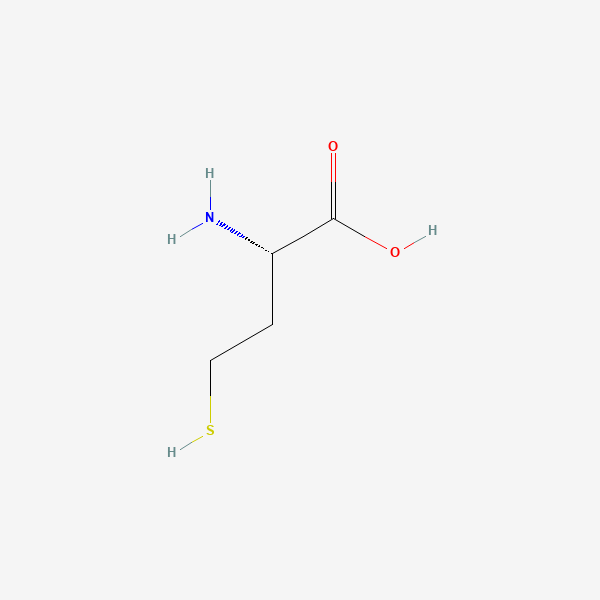
- Molecular formula
- C4H9NO2S
- Molecular weight
- 135.19 g/mol
- IUPAC name
- (2S)-2-amino-4-sulfanylbutanoic acid
Verified external records:
References
- 1.L-Homocysteine — PubChem compound record (CID 91552), National Library of Medicine
- 2.Homocysteine and cardiovascular disease — indexed human research (PubMed, National Library of Medicine)
- 3.B-vitamin homocysteine-lowering randomized trials — indexed human research (PubMed, National Library of Medicine)
- 4.Folate — Health Professional Fact Sheet (homocysteine and cardiovascular risk), NIH Office of Dietary Supplements