Human (controlled)Mixed
On this page
- What is the l carnitine peptide actually?
- How does L-carnitine move fat into mitochondria?
- Which form of carnitine does what?
- Where do you get L-carnitine, and do healthy people need more?
- Does L-carnitine burn fat or improve exercise performance?
- What does human research say about ALCAR, diabetes, heart health, and fertility?
- What doses have human studies used?
- Is injectable L-carnitine different from a peptide vial?
- Is L-carnitine safe, and what are the side effects?
- Who should skip casual L-carnitine use?
- What is L-carnitine’s FDA, legal, and sport status in 2026?
- Frequently asked questions
- Evidence by outcome
- FDA & legal status
- Chemical identifiers
- References
- Related compounds
The l carnitine peptide you heard about is not a peptide at all: L-carnitine is an amino-acid-derived carrier that helps move long-chain fats into mitochondria. That job is real; automatic fat loss is not. Oral supplements, prescription levocarnitine, ALCAR, and unapproved injectable vials are different products wearing one familiar name.
What is the l carnitine peptide actually?
The l carnitine peptide is a search label, not a biochemical category. L-carnitine is one small molecule with the formula C7H15NO3 and a molecular weight of 161.20; a peptide is a chain of two or more amino acids joined by peptide bonds. L-carnitine has no amino-acid sequence and no peptide bonds. Sellers group it beside injectable peptides because the same customers buy it, not because the chemistry changed while nobody was looking.
The accurate description is a non-proteinogenic amino-acid derivative. Your body builds it from lysine and methionine, mainly in the liver, kidneys, and brain. Vitamin C, iron, vitamin B6, and niacin participate in that pathway. Unlike the standard amino acids, carnitine is not inserted into proteins. It works free in cells and in reversible acylcarnitine forms. For contrast, tyrosine is inserted into proteins, while glutathione really is a short three-amino-acid peptide. Carnitine is neither.
That classification matters in practice. A peptide vial is often a freeze-dried chain that must be reconstituted. Levocarnitine is highly water-soluble and is sold as oral solution, tablets, dietary supplements, and regulated prescription injection. A gray-market vial labeled “L-carnitine peptide” does not inherit the evidence, sterility, concentration, or approval of a licensed levocarnitine drug merely because both labels contain the same molecule name.
Key facts
- What it is: an amino-acid derivative and fatty-acid carrier, not a peptide.
- Evidence tier: controlled human research exists, but supplement outcomes are mixed.
- Established use: prescription levocarnitine treats defined carnitine-deficiency states.
- Popular uses: weight loss, exercise recovery, cognition, mood, and metabolic health.
- 2026 U.S. status: supplements are sold legally; prescription levocarnitine is approved for specific deficiency indications; generic “research” injections are not equivalent approvals.
- Sport: carnitine itself is not named as a prohibited substance, but the route and IV volume can make administration a prohibited method.
- Main risks: gastrointestinal upset, fishy odor, seizures in susceptible people, warfarin interaction, injection hazards, and unresolved cardiovascular questions around TMAO.
How does L-carnitine move fat into mitochondria?
L-carnitine runs the shuttle that gets long-chain fatty acids across the inner mitochondrial membrane, where cells can oxidize them for energy. Think of the membrane as a border that a bulky fatty-acid cargo cannot cross with its original paperwork. Carnitine temporarily takes the cargo, carries it through, and hands it back to coenzyme A on the other side. The carrier then returns for another load.
The full carnitine shuttle uses three working parts. Carnitine palmitoyltransferase I (CPT I) transfers a fatty-acid group from fatty acyl-CoA onto carnitine outside the inner membrane. A translocase exchanges that acylcarnitine for free carnitine across the membrane. Carnitine palmitoyltransferase II (CPT II) then rebuilds fatty acyl-CoA inside the mitochondrial matrix, ready for beta-oxidation. The carnitine is released and recycled.
Carnitine also accepts short acyl groups that would otherwise accumulate and disturb the balance between free coenzyme A and acyl-CoA. Those acylcarnitines can leave the mitochondrion and, in some cases, the body. This is why carnitine is both an import ferry for fuel and an export route for metabolic leftovers.
The mechanism is indispensable, but it does not mean extra carnitine automatically makes a well-supplied muscle burn more fat. Roughly 95% of body carnitine is already stored in heart and skeletal muscle, and plasma contains only a small fraction. Raising a blood measurement for a few hours is not the same as meaningfully raising the muscle pool or increasing total daily energy expenditure. The shuttle needs cargo and energy demand; adding ferries to an empty dock does not create freight.
Which form of carnitine does what?
L-carnitine, acetyl-L-carnitine, propionyl-L-carnitine, and L-carnitine L-tartrate share the same carnitine backbone, but they are not interchangeable study labels. The attached group, formulation, and route change where researchers use each form and how a result should be read. ALCAR is the brain-focused form; tartrate dominates sports products; levocarnitine is the drug name used on U.S. prescription labels.
| Name on the product or paper | What it is | Where the human evidence is concentrated | What it does not establish |
|---|---|---|---|
| L-carnitine / levocarnitine | The biologically active L form | Deficiency treatment, dialysis, metabolism, weight, and exercise | That every retail injectable is an approved drug |
| Acetyl-L-carnitine (ALCAR) | Carnitine carrying an acetyl group | Cognitive decline, dementia, neuropathy, and depressive symptoms | A general nootropic effect in healthy young adults |
| L-carnitine L-tartrate | A supplement salt that provides L-carnitine | Exercise recovery and muscle-damage markers | Reliable acute fat loss or a stimulant-like workout effect |
| Propionyl-L-carnitine | Carnitine carrying a propionyl group | Peripheral circulation and intermittent claudication | That plain L-carnitine gives the same vascular result |
| D-carnitine | The opposite stereoisomer | No accepted supplement role | Safety or equivalence to L-carnitine; it can interfere with carnitine use |
ALCAR can cross into the brain and supplies an acetyl group that can enter energy metabolism or support acetylcholine synthesis. That makes it a plausible research tool for neurological and mood outcomes, not a promise of sharper thinking after one capsule. Trials in older adults with cognitive impairment are mixed: older meta-analyses reported improvement at some timepoints, while a Cochrane review did not support routine clinical use for dementia.
Form matching is basic evidence hygiene. If an ALCAR trial enrolled older adults with depression, its result should not be pasted onto injectable levocarnitine for gym performance. Same family, different question.
Where do you get L-carnitine, and do healthy people need more?
Red meat is the richest common food source, followed at a distance by dairy, fish, and poultry; plant foods contain very little. Healthy adults usually do not need dietary carnitine because the body synthesizes enough. The NIH Office of Dietary Supplements fact sheet reports no established recommended daily allowance and distinguishes lower intake from true deficiency.
Approximate food values show the gap. A cooked 3-ounce beef steak supplies about 42 to 122 mg, one cup of whole milk about 8 mg, three ounces of cod about 3 to 5 mg, and two slices of whole-wheat bread about 0.2 mg. Dietary carnitine is absorbed more efficiently than a large oral supplement: NIH estimates roughly 63% to 75% bioavailability from food versus about 14% to 18% from supplemental L-carnitine.
Vegetarians and vegans commonly have lower circulating carnitine than omnivores, but that is not automatically a disease or proof that a supplement will improve performance. Healthy kidneys conserve carnitine, and the liver and kidneys make it. The earlier version of this page blurred “lower intake” with “more likely to benefit”; the human physiology is more selective than that.
True primary carnitine deficiency is a rare genetic transporter disorder. Secondary deficiency can accompany end-stage kidney disease and hemodialysis, premature birth, certain organic-acid disorders, or medicines that deplete carnitine. These are clinical situations measured with plasma and sometimes tissue markers, not a diagnosis made from feeling tired after lunch.
Does L-carnitine burn fat or improve exercise performance?
L-carnitine can support small changes in body weight in some studied populations, and some trials find less soreness or better recovery, but it is not a reliable acute fat burner or performance booster. The biology makes the marketing pitch sound inevitable: if carnitine carries fat to the furnace, more carrier should mean more fat burned. Controlled trials keep refusing to be that tidy.
A 2020 systematic review of 37 randomized trials found reductions in body weight, body mass index, and fat mass, but not body-fat percentage or waist circumference. An earlier nine-trial analysis found an average advantage around 1.3 kg over control, with much of the evidence coming from adults with overweight, diabetes, or other metabolic conditions. That is a real human signal. It is also far smaller and more population-dependent than the phrase “turns fat into energy” implies on a label.
Exercise research splits into three separate questions: can oral carnitine raise muscle stores, can it improve a performance test, and can it soften the damage after hard training? A 24-week study using 2 g twice daily with carbohydrate raised muscle carnitine and lowered perceived exertion in 14 recreational athletes. A 12-week study using 1 g twice daily in 24 vegetarian and omnivorous men raised muscle carnitine about 13% in vegetarians but did not improve cycling performance in either group.
Recovery may be the more promising lane. A randomized double-blind trial enrolled 80 adults and used L-carnitine L-tartrate for five weeks; 73 completed the exercise challenge. The supplement group reported better perceived recovery and soreness, had lower creatine kinase, and preserved more strength and power after the challenge. Contrast that with a 12-person crossover trial in which a single 2 g dose two hours before exhaustive cycling did not improve either of two cycling tests. Timing, duration, population, and outcome all matter.
The useful read is not “works” or “doesn’t work.” L-carnitine has controlled human evidence for modest body-composition and recovery effects, while acute performance results are inconsistent. Someone expecting a caffeine-like workout effect or visible fat loss without an energy deficit is asking the molecule to do a job the trials have not shown.
What does human research say about ALCAR, diabetes, heart health, and fertility?
Human research reaches well beyond fat loss, but the result changes by form and population. ALCAR has a signal in depressive symptoms and older cognitive-disorder trials; L-carnitine has mixed metabolic and cardiovascular findings; fertility studies improve some intermediate measures more consistently than live-birth outcomes. These are separate evidence streams, not one giant “energy” benefit.
Brain and mood. A 2018 meta-analysis pooled 12 randomized controlled trials with 791 participants and found that ALCAR reduced depressive symptoms versus placebo or no intervention. The authors also found similar symptom changes to established antidepressants in three small comparative trials, with fewer adverse effects, and called for larger modern trials. This does not make ALCAR an established depression treatment, especially because the trials were heterogeneous and many participants were older. Cognitive-decline evidence is older and mixed, with effects appearing at some timepoints but not others.
Insulin resistance and diabetes. A 2023 meta-analysis summarized 41 randomized trials in 2,900 adults, most of whom had diabetes, obesity, polycystic ovary syndrome, or fatty-liver disease. Doses from 0.25 to 4 g/day over 2 to 52 weeks improved fasting glucose, insulin resistance, and HbA1c in the pooled analysis, but not serum insulin. Those findings may matter in metabolically unwell groups; they do not prove prevention in healthy adults.
Heart and circulation. Some meta-analyses report improvements in cardiac function or walking outcomes in defined patient groups, while other trials find no effect. The counterweight is TMAO, trimethylamine N-oxide, which gut microbes can produce from unabsorbed carnitine. Higher TMAO tracks with cardiovascular risk, but the causal story is still being worked out. In a six-month randomized trial of 157 adults with metabolic syndrome, 2 g/day did not change total carotid plaque volume, yet the carnitine group had greater increases in total and LDL cholesterol and a greater increase in carotid stenosis. One trial is not a universal verdict, but it is too concrete to hide behind “generally safe.”
Fertility. A meta-analysis of male-subfertility trials found improvements in several sperm-motility measures and reported more pregnancies, but it did not establish a live-birth benefit. In women with polycystic ovary syndrome, a randomized ART trial found no improvement in implantation or pregnancy outcomes when L-carnitine was added. These findings do not support casual use as a general fertility supplement; they support more targeted research.
What doses have human studies used?
Human studies have used roughly 0.25 to 4 g/day orally for common supplement questions, but the dose follows the condition, form, and study design. This table reports research exposure, not a personal protocol. Prescription dosing for diagnosed deficiency uses a separate clinical logic, monitoring, and product label.
| Research question | Form and reported exposure | Duration or timing | What happened |
|---|---|---|---|
| Weight and body composition | L-carnitine, trial-dependent | Trial-dependent | Small average weight advantage; results varied |
| Exercise fuel use | L-carnitine L-tartrate, 2 g twice daily with carbohydrate | 24 weeks | Muscle carnitine rose; perceived exertion fell in a 14-person study |
| Vegetarian muscle stores | L-carnitine, 1 g twice daily | 12 weeks | Stores rose about 13% in vegetarians; performance did not improve |
| Exercise recovery | L-carnitine L-tartrate, daily study product | 5 weeks | Better soreness/recovery measures in one 80-person randomized trial |
| Acute endurance recovery | L-carnitine, single 2 g dose | 2 hours before cycling | No performance benefit in a 12-person crossover trial |
| Depressive symptoms | ALCAR, trial-dependent | Pooled across 12 randomized trials | Symptom signal, strongest in older groups; larger trials still needed |
| Metabolic markers | L-carnitine, 0.25–4 g/day | 2–52 weeks | Pooled improvements in several glycemic markers in clinical populations |
| Prescription deficiency | Levocarnitine oral solution, label starts adults at 1 g/day and titrates clinically | Ongoing with laboratory monitoring | FDA-labeled treatment, not a supplement-performance protocol |
Oral absorption puts those numbers in context. The current prescription label reports about 15% absolute bioavailability for levocarnitine tablets and oral solution in healthy volunteers. It also reports a terminal half-life of 17.4 hours after a slow intravenous bolus, but that number does not tell you how often a healthy person should inject anything. Pharmacokinetics describes what the body did under a measured condition; it is not a hidden dosing recommendation.
Is injectable L-carnitine different from a peptide vial?
Injectable L-carnitine can be a legitimate prescription drug, but a vial sold beside research peptides is not automatically that drug. FDA-labeled levocarnitine injection is used for specific deficiency states, including metabolic complications in some dialysis patients. Licensed products have an application, standardized concentration, sterile manufacturing, route-specific labeling, and adverse-event reporting. A generic online vial may disclose none of those things.
The distinction is not oral versus injectable so much as regulated product versus unknown product. The current DailyMed levocarnitine label for one oral solution explicitly says “for oral use only” and “not for parenteral use.” Putting that oral liquid in a syringe would not turn it into the approved injectable formulation. Route is part of the product.
Injection also changes the risk ledger. Oral carnitine’s common problems are gastrointestinal; an injection adds contamination, abscess, tissue injury, dosing error, and vascular risk if the route is wrong. Concentrated intramuscular solutions can cause local pain. Subcutaneous use discussed in forums is not the route established by an oral label, and community practice is not a substitute for a product’s prescribing information.
For someone evaluating a vial, the minimum useful questions are plain: Is there a U.S. National Drug Code and matching DailyMed label? Does the manufacturer on the vial match that record? Is the route listed? Is the concentration stated in mg/mL rather than vague “units”? Is there a lot number, expiry, pharmacy or manufacturer, and storage instruction? A certificate of analysis can describe identity or assay, but it cannot by itself prove sterility or FDA approval.
This is the piece the ranking pages miss. They explain carnitine biology and supplement benefits; they do not tell the person who found an “L-carnitine peptide” vial that the label has collapsed four separate questions—identity, formulation, sterility, and legal status—into one marketing phrase.
Is L-carnitine safe, and what are the side effects?
L-carnitine is usually tolerated in food and studied oral amounts, but larger supplemental doses can cause nausea, vomiting, abdominal cramps, diarrhea, and a fishy body odor. Around 3 g/day is where NIH says these effects become more likely. Prescription labeling also reports seizures, including increased frequency or severity in people with a seizure history, and postmarketing hypersensitivity reactions.
The fishy odor is chemistry, not folklore. Gut microbes convert some unabsorbed carnitine into trimethylamine, a fish-smelling compound; the liver converts much of that into TMAO. That same pathway creates the cardiovascular uncertainty described above. The concern is strongest with repeated high exposure and in people whose gut microbiome efficiently produces TMAO, not with a normal serving of food.
Medication context matters. Valproic acid and some other anticonvulsants can lower carnitine, which is why levocarnitine appears in clinical toxicology and deficiency care. The prescription label also reports increased international normalized ratio (INR) with warfarin and recommends monitoring after levocarnitine starts or changes. A supplement can be biologically ordinary and still complicate a prescription.
ALCAR can share gastrointestinal effects and may feel activating to some users, but anecdotal descriptions such as “mental energy” are not a safety dataset. Pregnancy, breastfeeding, pediatric use, kidney disease, dialysis, seizure disorders, and anticoagulation are situations where the product form and clinical reason matter more than the front-label promise.
Who should skip casual L-carnitine use?
Casual L-carnitine supplementation is a poor fit for anyone expecting effortless fat loss, anyone treating unexplained fatigue as proof of deficiency, and anyone considering an injectable vial with no matching regulated label. People with a seizure disorder, warfarin use, serious kidney disease, pregnancy, or a suspected metabolic disorder need clinical context rather than a gym protocol. Diagnosed deficiency is the opposite case: that is where levocarnitine can be real medicine.
Healthy omnivores already store a large carnitine pool in muscle, so more in the bloodstream may not change the bottleneck. Healthy vegetarians and vegans can have lower levels without being deficient. Testing or supplementation makes more sense when there is a defined reason—primary transporter deficiency, dialysis-related loss, a relevant metabolic disorder, or a depleting medicine—than when the only evidence is a product category on a peptide site.
Competitive athletes have an extra reason to slow down before using an injectable product. The ingredient may be permitted while the delivery method is not. Product contamination is also a separate anti-doping risk that a label reading “L-carnitine” cannot rule out.
What is L-carnitine’s FDA, legal, and sport status in 2026?
In the United States in July 2026, L-carnitine occupies two legal lanes: it is sold as a dietary supplement, and levocarnitine is an FDA-approved prescription drug for specific carnitine- deficiency indications. Approval belongs to the drug product, route, and indication; it does not spread to every supplement or research vial. L-carnitine itself is not named on WADA’s 2026 list as a prohibited substance, but IV administration can cross the prohibited-method rule.
| Product or use | U.S. status in July 2026 | What that status means |
|---|---|---|
| Oral dietary supplement | Lawfully marketed supplement category, subject to supplement rules | Not FDA-approved to treat fat loss, depression, dementia, or deficiency |
| Prescription oral levocarnitine | FDA-labeled drug for primary systemic carnitine deficiency and specified secondary deficiency uses | Pharmacy product with product-specific labeling |
| Prescription IV levocarnitine | FDA-labeled formulations exist for defined clinical uses, including certain dialysis-related metabolic complications | Not approval for bodybuilding or a gray-market research vial |
| Unmatched “research” injectable | No automatic drug approval from the ingredient name | Identity, sterility, concentration, and legality must be established product by product |
| Sport use | Carnitine is not specifically prohibited | WADA/USADA method rules still apply to IV infusions or injections over 100 mL per 12 hours outside listed exceptions |
The anti-doping detail is easy to miss. WADA’s method M2.2 prohibits intravenous infusions or injections totaling more than 100 mL in a 12-hour period, except those legitimately received during hospital treatment, surgery, or clinical diagnostic investigation. USADA explains that the volume rule can apply even when the infused substance itself is permitted. Intramuscular and subcutaneous injections are not the same as an IV infusion for this volume rule, but athletes still carry responsibility for the contents of any product they use.
Frequently asked questions
L-carnitine questions tend to collapse chemistry, fat-loss marketing, and injectable-product questions into the same sentence. The short answers below keep those lanes separate: the molecule has an established metabolic job and approved medical uses, while many performance and weight claims remain modest or mixed.
Is L-carnitine a peptide or an amino acid?
L-carnitine is neither a peptide nor one of the protein-building amino acids. It is a small amino-acid derivative made from lysine and methionine. Peptide sellers use the category label commercially, but L-carnitine has no peptide sequence.
Is L-carnitine the same as ALCAR?
ALCAR is acetyl-L-carnitine, a related form carrying an acetyl group. Researchers use ALCAR more often for brain, cognition, neuropathy, and mood questions, while plain levocarnitine appears in deficiency, metabolic, and exercise research. Evidence for one form should not be silently credited to the other.
Does L-carnitine make you lose belly fat?
Randomized-trial meta-analyses find small changes in body weight and fat mass in some populations, but not a reliable reduction in waist circumference or body-fat percentage. L-carnitine can move fatty acids inside cells; it does not create the whole-body energy deficit required for large fat loss.
Is injectable L-carnitine better than oral L-carnitine?
Injection bypasses low oral bioavailability, but “more reaches the blood” is not the same as “better for your goal.” Prescription injection has defined clinical uses and adds route-specific risks. No broad human evidence shows that an unapproved injectable vial produces superior fat loss or gym performance in healthy people.
Can vegans become carnitine deficient?
Vegans consume little carnitine and often have lower blood levels, yet healthy adults generally make enough from lysine and methionine and conserve it through the kidneys. True deficiency is more strongly linked to genetic transport disorders, dialysis, prematurity, metabolic disease, or carnitine-depleting medicines than to diet alone.
Is L-carnitine banned in sport?
L-carnitine is not specifically named as a prohibited substance on the 2026 WADA list. An IV infusion or injection over 100 mL in 12 hours can still be a prohibited method outside the stated medical exceptions, and an athlete remains responsible for undeclared contaminants in a product.
Evidence by outcome
Each outcome L-Carnitine / ALCAR has been studied for, with the honest evidence grade and what the studies actually found. A tier never stands alone — the verdict rides with it.
| Outcome | Evidence | What was found |
|---|---|---|
| Fat metabolism & weight loss | Human (controlled)Mixed | Carnitine's job of ferrying fat into the cell's furnace makes "fat burner" marketing irresistible, but the human reality is underwhelming. Some controlled trials show small effects on body weight, especially in older or overweight people; in healthy, well-fed adults the benefit is modest at best. |
| Exercise performance & recovery | Human (controlled)Mixed | Studies on endurance and recovery are split. A few report reduced muscle soreness or better recovery, others find nothing meaningful. Because muscle already holds a large carnitine store that's hard to budge, results are inconsistent. |
| Brain & cognition (acetyl-L-carnitine / ALCAR) | Human (controlled)Mixed | The acetyl form crosses into the brain and has been studied for mood, mental energy and age-related cognitive decline, with some encouraging trials — particularly in older adults. Promising early human data rather than an established treatment. |
FDA & legal status
- United States: dietary supplement / food (as of Jul 2026)
A non-proteinogenic amino acid, sold as a dietary supplement. Not an FDA-approved drug; supplements are regulated as food, not medicine.
Chemical identifiers
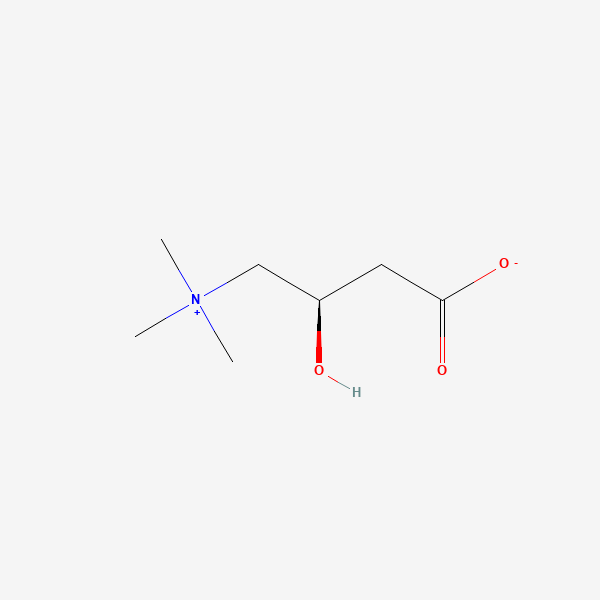
- Molecular formula
- C7H15NO3
- Molecular weight
- 161.2 g/mol
- IUPAC name
- (3R)-3-hydroxy-4-(trimethylazaniumyl)butanoate
Verified external records:
References
- 1.L-Carnitine — PubChem compound record (CID 10917), National Library of Medicine
- 2.L-Carnitine — indexed human research (PubMed, National Library of Medicine)
- 3.Acetyl-L-carnitine and cognition — indexed human research (PubMed, National Library of Medicine)
- 4.Carnitine — Health Professional Fact Sheet, NIH Office of Dietary Supplements
- 5.L-carnitine and body composition — systematic review of 37 randomized trials (PMID 32359762)
- 6.L-carnitine and weight loss in adults — systematic review and meta-analysis (PMID 27335245)
- 7.L-carnitine tartrate and exercise recovery — randomized controlled trial (PMID 34684429)
- 8.Chronic L-carnitine, carbohydrate, and exercise metabolism — randomized trial (PMID 21224234)
- 9.L-carnitine, muscle stores, and performance in male vegetarians — interventional study (PMID 25612929)
- 10.Acute L-carnitine and recovery from exhaustive endurance exercise — randomized crossover trial (PMID 16193341)
- 11.Acetyl-L-carnitine and depressive symptoms — systematic review and meta-analysis (PMID 29076953)
- 12.L-carnitine and glycemic markers in adults — systematic review and dose-response meta-analysis (PMID 36704801)
- 13.Progression of atherosclerosis with carnitine supplementation — randomized controlled trial (PMID 35366920)
- 14.L-carnitine plus acetyl-L-carnitine in male subfertility — systematic review and meta-analysis (PMID 31701550)
- 15.L-carnitine added to an ART protocol in women with PCOS — randomized clinical trial (PMID 33517804)
- 16.Levocarnitine oral solution — current prescription label, DailyMed
- 17.Levocarnitine injection — current prescription label, DailyMed
- 18.IV infusions and injections — current anti-doping rule explained by USADA