Human (controlled)Mixed
On this page
- Glutathione peptide at a glance
- What is glutathione peptide?
- How does the body make and recycle glutathione?
- What does glutathione do in the body?
- Does oral glutathione work?
- Which glutathione form has the best evidence?
- What does research say about skin lightening?
- Is glutathione FDA-approved or legal in 2026?
- Is glutathione safe, and what are the risks?
- Who should skip glutathione products?
- How should you judge a glutathione supplement claim?
- Frequently asked questions
- Evidence by outcome
- FDA & legal status
- Chemical identifiers
- References
- Related compounds
The glutathione peptide is what people usually mean when they hear about the “master antioxidant” on a podcast or clinic menu. It is a real three-amino-acid peptide your cells make constantly, but the useful question is not whether glutathione matters. It is whether swallowing, rubbing on, or injecting more produces the result being sold.
Glutathione peptide at a glance
Glutathione peptide has settled biology and mixed supplement evidence. Human trials show that sustained oral use can raise measured glutathione stores, yet short trials have also found no change, and neither result automatically proves better energy, “detox,” immunity, or disease treatment. Route matters most: oral products and elective intravenous infusions do not share the same evidence or risk.
| Question | Evidence-based answer |
|---|---|
| What is it? | An endogenous tripeptide made from glutamate, cysteine and glycine |
| Headline evidence tier | Human controlled; mixed verdict |
| FDA status, July 2026 | Dietary supplements are not FDA-approved drugs; cosmetic injectable glutathione has no FDA-approved indication |
| Doses studied orally | 250–1,000 mg/day in controlled trials, reported here as research—not a personal dose |
| Main risks | Digestive upset by mouth; contamination, infusion and hypersensitivity risks by injection |
| Banned in sport? | Glutathione is not named as prohibited, but IV volumes over 100 mL per 12 hours are prohibited outside WADA’s stated exceptions |
What is glutathione peptide?
Glutathione peptide is a tripeptide: three amino acids joined together rather than one amino acid or a hormone-like signaling peptide. Its ingredients are glutamic acid, cysteine, and glycine. The molecule weighs 307.33 g/mol and uses an unusual gamma-glutamyl bond, which helps it survive inside cells long enough to work.
That makes the search term biochemically correct. Glutathione is simply a different kind of peptide from insulin or a research peptide that binds a receptor. It behaves more like a rechargeable chemical tool kept in nearly every cell.
How does the body make and recycle glutathione?
Glutathione is built inside cells in two enzyme-controlled steps, and cysteine availability often sets the pace. First, glutamate joins cysteine; then glycine completes the tripeptide. This is why N-acetylcysteine (NAC), a cysteine donor, appears so often beside glutathione: it supplies raw material rather than delivering finished GSH.
Reduced glutathione (GSH) donates an electron and becomes oxidized glutathione (GSSG). Glutathione reductase then uses cellular energy to turn GSSG back into GSH. Think rechargeable battery, not disposable sponge—the recycling is part of the system.
What does glutathione do in the body?
Glutathione helps cells control reactive oxygen species, supports peroxide-clearing enzymes, and attaches to some drugs and foreign compounds so the body can process them. “Detox” is therefore rooted in real chemistry, but the marketing version usually skips a step: a molecule participating in detoxification does not make every cleanse claim true.
Glutathione also helps keep vitamins C and E in usable forms and provides the working substrate for glutathione peroxidases. Those enzymes depend on selenocysteine, which neatly shows why antioxidant systems work as networks rather than solo superheroes.
Does oral glutathione work?
Oral glutathione can reach measurable body compartments, but the result depends on duration, formulation, and what researchers measure. A four-week trial in 40 healthy adults used 500 mg twice daily and found no significant change in glutathione status or oxidative-stress biomarkers. That is a clean negative result, not evidence that glutathione itself is unimportant.
A six-month trial in 54 nonsmoking adults tested 250 or 1,000 mg daily. Both groups showed increases in several glutathione stores, with larger changes generally appearing over time. The reconciliation is more useful than the slogan: oral absorption is limited, not necessarily zero, and a higher lab value is still not proof of a noticeable benefit or a disease outcome.
Which glutathione form has the best evidence?
Glutathione forms are not interchangeable. Standard oral capsules have controlled human data but mixed results. Liposomal, micellar, and mouth-absorbed products aim to improve delivery, yet their supporting studies are generally small and often tied to a specific formulation. Intravenous delivery bypasses digestion, but that does not turn a higher exposure into demonstrated cosmetic or wellness benefit.
| Form | What human evidence can show | What remains unresolved |
|---|---|---|
| Standard oral GSH | Stores rose over six months in one controlled trial | Clinical benefit, ideal dose, and who responds |
| Liposomal or micellar | Small studies report higher blood exposure or stores | Independent replication and meaningful outcomes |
| Topical | Small pigmentation studies report local changes | Durability and product-to-product equivalence |
| Intravenous | Direct systemic exposure | Cosmetic efficacy, long-term safety, and product quality |
| Precursors such as NAC | Supplies cysteine for the body’s own synthesis | Not equivalent to taking finished glutathione |
What does research say about skin lightening?
Glutathione has a plausible pigmentation mechanism and a small human signal, but not a predictable whitening effect. In a randomized trial, 60 healthy participants took 500 mg/day for four weeks; melanin measurements improved significantly versus placebo at two of six body sites. The authors described lightening in a small number of participants and said long-term safety needed larger trials.
That supports the existing mixed verdict. Instrument-measured melanin changes over weeks do not establish a durable visible result, and oral findings cannot be carried across to an IV product as if the route were a footnote.
Is glutathione FDA-approved or legal in 2026?
Glutathione is sold legally in the United States as a dietary-supplement ingredient, but FDA does not approve dietary supplements for safety or effectiveness before sale. Glutathione is not an FDA-approved cosmetic injection or an approved treatment for broad “detox,” anti-aging, or skin-lightening claims. A compounded preparation is not FDA-approved merely because a pharmacy made it.
For tested athletes, the 2026 WADA list does not name glutathione as a prohibited substance. The route can still matter: IV infusions or injections totaling more than 100 mL in 12 hours are prohibited except during legitimate hospital treatment, surgery, or clinical diagnostic investigation.
Is glutathione safe, and what are the risks?
Oral glutathione was generally well tolerated in the small controlled trials, with digestive complaints among the reported issues. That record is reassuring but short: it does not establish lifelong high-dose safety, pregnancy safety, or safety alongside every medicine and cancer treatment.
Injection adds failure points that a capsule does not have. An FDA compounding alert documented seven patients who became ill within minutes after compounded IV glutathione and another patient hospitalized after an infusion. FDA testing found excessive bacterial endotoxin in the implicated material. The problem was not abstract “toxicity”; dietary-grade powder had entered a sterile injectable product.
Who should skip glutathione products?
Glutathione products are a poor fit for anyone expecting an immediate, felt boost; seeking an established treatment for a disease; or considering an elective IV infusion mainly because injection sounds stronger. People who are pregnant, nursing, receiving cancer treatment, managing a serious illness, or taking multiple medicines need individualized clinical review because the supplement trials do not answer those situations.
The clearest skip is a cosmetic injection from an online seller or a clinic that cannot identify the prescribing professional, compounding pharmacy, concentration, sterility controls, and adverse-event plan. A certificate of analysis for powder is not a sterility guarantee for the finished injection.
How should you judge a glutathione supplement claim?
Glutathione claims should be checked against four details: form, dose, duration, and endpoint. “Clinically studied” can mean a specific branded liposomal product raised a blood marker in a dozen people; it does not automatically validate a different capsule or prove that users felt better. The label should identify reduced glutathione or another exact form, amount per serving, manufacturer, lot number, and third-party identity testing.
The practical reading rule is blunt: ask whether the study measured glutathione concentration, a symptom, or a real clinical outcome. Those are three different promises wearing the same lab coat.
Frequently asked questions
Glutathione peptide questions usually collapse into four decisions: whether it is truly a peptide, whether oral products are absorbed, whether liposomal delivery earns its price, and whether skin-lightening claims hold up. Human research gives partial answers, but formulation-specific marketing often sounds much more certain than the trials are.
Is glutathione really a peptide?
Yes. Glutathione is a tripeptide made from glutamate, cysteine, and glycine. It is not a receptor-targeting peptide drug; it is a small intracellular redox molecule.
Is liposomal glutathione better than regular glutathione?
Small studies suggest some liposomal formulations can raise blood or cellular glutathione, but head-to-head evidence is limited and products differ. “Liposomal” on a label is not proof that the finished product matches the formulation tested.
Can glutathione peptide lighten skin?
Small oral and topical trials found modest changes in some pigmentation measurements, while reviews judge the overall evidence inconsistent. No good evidence makes cosmetic IV glutathione a reliably effective or low-risk shortcut.
Is NAC the same as glutathione?
No. NAC supplies cysteine, a building block the body can use to make glutathione; glutathione supplements provide the finished tripeptide. They target the same system from different directions and should not be treated as dose-for-dose substitutes.
Evidence by outcome
Each outcome Glutathione has been studied for, with the honest evidence grade and what the studies actually found. A tier never stands alone — the verdict rides with it.
| Outcome | Evidence | What was found |
|---|---|---|
| Raising the body's antioxidant status (oral) | Human (controlled)Mixed | Controlled human trials disagree by duration and endpoint. Four weeks of 1,000 mg per day did not change glutathione status or oxidative-stress biomarkers, while six months at 250 or 1,000 mg per day raised stores in several measured compartments. Raising a biomarker is not the same as improving a health outcome. |
| Skin lightening | Human (controlled)Mixed | Glutathione is widely marketed for lightening skin, and a handful of small trials report a modest effect on pigmentation. The evidence is weak and short-term, and the intravenous products often used for this raise real safety questions — this is not a well-established or risk-free use. |
FDA & legal status
- United States: fda approved (as of Jul 2026)
This amino acid is also an FDA-approved prescription medicine (e.g. Bss Plus; Balanced Salt Solution Enriched With Bicarbonate, Dextrose, And Glutathione). That approved drug is prescription-only; any version sold as a plant-extract "supplement" is a separate, unapproved product.
Chemical identifiers
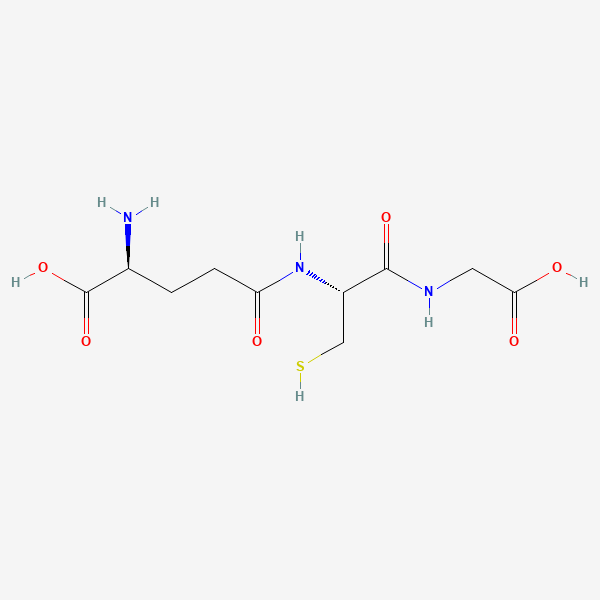
- Molecular formula
- C10H17N3O6S
- Molecular weight
- 307.33 g/mol
- IUPAC name
- (2S)-2-amino-5-[[(2R)-1-(carboxymethylamino)-1-oxo-3-sulfanylpropan-2-yl]amino]-5-oxopentanoic acid
Verified external records:
References
- 1.Glutathione — PubChem compound record (CID 124886), National Library of Medicine
- 2.Glutathione — indexed human research (PubMed, National Library of Medicine)
- 3.Oral glutathione supplementation and bioavailability — human research (PubMed)
- 4.Six-month randomized controlled trial of oral glutathione supplementation (PMID 24791752)
- 5.Four-week randomized controlled trial of oral glutathione and oxidative-stress biomarkers (PMID 21875351)
- 6.Randomized controlled trial of oral glutathione for skin pigmentation (PMID 20524875)
- 7.FDA compounding alert for injectable glutathione and endotoxin contamination
- 8.USADA resource page for the 2026 WADA Prohibited List and IV-infusion rules