MechanisticUnclear
On this page
- What is hydroxyproline?
- How does the body make hydroxyproline?
- Why hydroxyproline makes collagen strong
- Hydroxyproline, vitamin C, and scurvy
- Can you build collagen by taking hydroxyproline?
- Hydroxyproline as a marker of collagen breakdown
- Is hydroxyproline safe?
- Evidence by outcome
- FDA & legal status
- Chemical identifiers
- References
- Related compounds
- More on Hydroxyproline
Hydroxyproline is a modified version of the amino acid proline, and it’s the molecular rivet that holds collagen together. Your body doesn’t build it from scratch — it takes proline already stitched into a collagen strand and adds a small chemical tweak (a hydroxyl group), a step that quietly depends on vitamin C. That single tweak is a big reason collagen is strong.
What is hydroxyproline?
Hydroxyproline is a non-proteinogenic amino acid, which means your cells don’t read it off a gene and slot it into a protein like the standard twenty. Instead, hydroxyproline is proline with a hydroxyl (–OH) group bolted on after the fact. It turns up almost nowhere in the body except collagen and a few close relatives, where it’s one of the most common amino acids present — roughly 13 to 14 percent of collagen is hydroxyproline. Chemists abbreviate it Hyp. Because it’s made by modifying proline rather than inserted from a genetic code, hydroxyproline sits in the “non-proteinogenic” bin alongside a handful of other specialized amino acids.
How does the body make hydroxyproline?
Hydroxyproline is made on the job, after collagen has already been assembled. Once a collagen strand is built out of ordinary proline, an enzyme called prolyl hydroxylase runs down the chain and adds a hydroxyl group to many of those proline residues, converting them into hydroxyproline. Biologists call this a post-translational modification — a change made to a finished protein rather than coded into it from the start. The catch is that prolyl hydroxylase can’t run without vitamin C (ascorbate) as its helper: no vitamin C, no efficient hydroxylation. A related, vitamin C–dependent enzyme does something similar to some lysine residues, turning them into hydroxylysine, which collagen uses to cross-link its strands together.
Why hydroxyproline makes collagen strong
Hydroxyproline’s hydroxyl groups are what let collagen hold its shape. Collagen is built from three protein strands wound around each other into a tight rope called a triple helix. The added –OH groups on hydroxyproline form extra hydrogen bonds — tiny molecular grips — that lock those three strands together and keep the helix from unraveling. Take the hydroxyproline away (or fail to make it), and the helix becomes unstable and comes apart at a lower temperature; the collagen ends up weaker and floppier. That’s why hydroxyproline, together with glycine — which fills every third position in collagen’s repeating pattern — is treated as a chemical signature of collagen itself.
Hydroxyproline, vitamin C, and scurvy
The link between hydroxyproline and vitamin C is the biochemistry behind scurvy. Because prolyl hydroxylase needs vitamin C to convert proline into hydroxyproline, running low on vitamin C stalls that step. Collagen still gets assembled, but with too little hydroxyproline it can’t stabilize its triple helix, so the body lays down weak, defective collagen. That failure shows up as the classic signs of scurvy: bleeding gums, easy bruising, loose teeth, and wounds that won’t close — all tissues that lean on sturdy collagen. Sturdy collagen is also what the body rebuilds during tissue healing and recovery, which is why collagen production ramps up wherever the body is repairing itself.
Can you build collagen by taking hydroxyproline?
Eating hydroxyproline — or the collagen that contains it — gives your body raw material, but it doesn’t guarantee stronger skin or joints. This is the honest part. When you swallow collagen or gelatin, it’s broken down into amino acids and small peptides, hydroxyproline among them, and absorbed into the general pool your body draws on. There’s no dedicated pipeline that routes dietary hydroxyproline straight back into new collagen where you’d want it. There’s also a quirk: free hydroxyproline can’t be reused to build collagen the normal way, because the hydroxylation has to happen on proline inside the collagen strand, not before. Collagen-peptide supplements have been tested in people for skin elasticity and joint comfort with modest but mixed results — but those effects can’t be pinned specifically on hydroxyproline, and that supplement evidence is separate from the rock-solid structural biochemistry above. The raw-material logic is reasonable; proof that extra hydroxyproline rebuilds your own collagen isn’t there.
Hydroxyproline as a marker of collagen breakdown
Because hydroxyproline lives almost exclusively in collagen, its appearance in blood and urine is a signal that collagen is being broken down. When old collagen is degraded — including the collagen locked inside bone — hydroxyproline is released and eventually excreted. For decades, doctors measured urinary hydroxyproline as a marker of collagen turnover and bone resorption, useful in conditions such as Paget’s disease of bone. The test has largely been replaced by newer, more specific markers, since the hydroxyproline signal is noisy — diet and other proteins can throw it off — but it was one of the first windows into how fast the body was recycling its own collagen.
Is hydroxyproline safe?
Hydroxyproline is safe in the amounts you get from food and collagen supplements. It’s a normal part of everyone’s diet — anything with collagen or gelatin delivers it — and it carries no notable toxicity at those intakes. Isolated high-dose hydroxyproline isn’t a common standalone supplement, so there’s little reason to seek it out on its own; you’ll get plenty from collagen-rich foods and from your body’s own manufacturing. There’s also a rare inherited condition, hydroxyprolinemia, in which hydroxyproline builds up in the blood because of a missing enzyme — it’s generally considered benign and usually causes no symptoms.
Evidence by outcome
Each outcome Hydroxyproline has been studied for, with the honest evidence grade and what the studies actually found. A tier never stands alone — the verdict rides with it.
| Outcome | Evidence | What was found |
|---|---|---|
| Collagen strength and stability | In-vitroHelped | Hydroxyproline's hydroxyl groups add hydrogen bonds that lock collagen's triple helix together and raise its stability — a result shown clearly in biophysical and biochemical studies of collagen. This is settled structural biology, not a supplement effect: it's the reason collagen made without enough hydroxyproline, as in scurvy, is weak and unstable. |
| Building collagen by supplementation | MechanisticUnclear | Because hydroxyproline is a core piece of collagen, supplying it — usually as collagen or gelatin — is a sensible raw-material idea for skin, tendon and joint tissue. But free hydroxyproline can't be slotted straight into new collagen, and human trials haven't shown that hydroxyproline itself rebuilds your collagen. Collagen-peptide supplements show modest, mixed effects that can't be credited to hydroxyproline alone. |
| Marker of collagen turnover and bone resorption | Human observationalMixed | Because hydroxyproline sits almost only in collagen, its level in urine and blood tracks how fast collagen is breaking down, and doctors long measured it to gauge bone resorption in conditions like Paget's disease. It works, but it's nonspecific — diet and other proteins muddy the signal — so newer, more specific markers have largely replaced it. |
FDA & legal status
- United States: dietary supplement / food (as of Jul 2026)
A non-proteinogenic amino acid, sold as a dietary supplement. Not an FDA-approved drug; supplements are regulated as food, not medicine.
Chemical identifiers
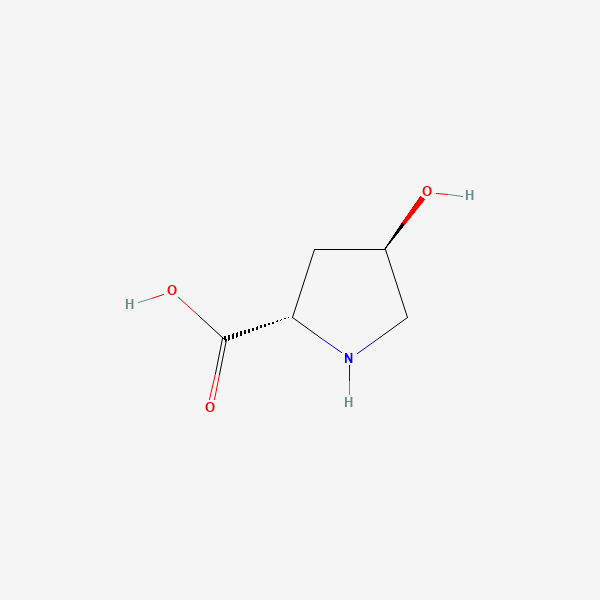
- Molecular formula
- C5H9NO3
- Molecular weight
- 131.13 g/mol
- IUPAC name
- (2S,4R)-4-hydroxypyrrolidine-2-carboxylic acid
Verified external records:
References
- 1.Hydroxyproline — PubChem compound record (CID 5810), National Library of Medicine
- 2.Hydroxyproline and collagen — indexed research (PubMed, National Library of Medicine)
- 3.Prolyl hydroxylase, vitamin C and collagen synthesis — indexed research (PubMed, National Library of Medicine)
- 4.Urinary hydroxyproline as a bone-resorption marker — indexed research (PubMed, National Library of Medicine)
More on Hydroxyproline
Everything else we've written about Hydroxyproline — what the community reports, the explainers that cover it, and the terms it keeps running into.
- Can Men Take Collagen Peptides? What Studies SayExplainer
- Collagen for Hair and Nails: The Honest EvidenceExplainer
- Do Collagen Peptides Work? What the Trials ShowExplainer
- Does collagen help cellulite? The evidenceExplainer
- Multi Collagen Peptides: Do 5 Types Beat 1?Explainer
- Collagen for Joint Pain: The Real RCT EvidenceExplainer