Human observationalMixed
On this page
- What is selenocysteine?
- Why is selenocysteine called the 21st amino acid?
- What does selenocysteine do in the body?
- Do you need selenocysteine in your diet?
- What does the research show?
- Is selenocysteine safe?
- Evidence by outcome
- FDA & legal status
- Chemical identifiers
- References
- Related compounds
- More on Selenocysteine
Selenocysteine is the 21st amino acid — chemically, it’s cysteine with a single selenium atom swapped in where sulfur normally sits. That one change turns it into an unusually reactive redox center, which is why your body slots it into about 25 selenoproteins, including the enzymes that fight oxidative stress and switch on thyroid hormone. You never eat selenocysteine directly; your body builds it from the selenium in your food.
What is selenocysteine?
Selenocysteine is a selenium-containing amino acid that the body incorporates into real, working proteins, which makes it proteinogenic — yet it isn’t one of the standard 20 amino acids from the biology textbook. Take cysteine, the sulfur amino acid, and replace its sulfur with selenium, the element sitting directly below sulfur on the periodic table, and you have selenocysteine. Cysteine’s reactive group is a thiol (-SH); selenocysteine’s is a selenol (-SeH). Selenium is heavier, more electron-rich, and easier to ionize at body temperature and pH, so the selenol acts as a faster, more reactive redox switch than the thiol — the whole reason biology bothers with it. It even has its own letter codes: Sec (three-letter) and U (one-letter).
Why is selenocysteine called the 21st amino acid?
Selenocysteine earns its “21st amino acid” nickname because of the trick the cell uses to insert it: it hijacks a genetic STOP sign. The genetic code has three “stop” codons — three-letter signals in mRNA that normally tell the ribosome “the protein ends here.” One of them, UGA, moonlights. When a stretch of mRNA carries a special looped signal called a SECIS element downstream, the cell reads that same UGA not as “stop” but as “insert selenocysteine here.” Selenocysteine is stranger still: there’s no pool of free selenocysteine floating around waiting to be used. The cell loads the ordinary amino acid serine onto a dedicated transfer RNA and chemically rebuilds it into selenocysteine right there on the tRNA, then hands it to the ribosome. No other amino acid in your body is made to order this way. Its sister exception, pyrrolysine, is counted as the 22nd.
What does selenocysteine do in the body?
Selenocysteine’s job is to be the reactive business end of selenoproteins — roughly 25 of them in humans — where its selenium atom runs chemistry that ordinary amino acids can’t do fast enough. Three families matter most. The glutathione peroxidases use selenocysteine to neutralize hydrogen peroxide and other damaging oxidants, working hand in hand with glutathione to shield cells from oxidative stress. The thioredoxin reductases keep a second arm of the antioxidant system charged and help control which proteins are switched on. And the iodothyronine deiodinases convert thyroid hormone from its storage form (T4) into its active form (T3) — so your thyroid can’t fully do its job without selenium-loaded selenocysteine. In plain terms, selenocysteine is where a lot of your antioxidant defense and thyroid activation physically happens.
Do you need selenocysteine in your diet?
You don’t take selenocysteine as a supplement, and you don’t need it pre-made in food — your body assembles it on demand from serine and selenium. What you actually need from the diet is the element selenium, an essential trace mineral. That’s the honest reframe for anyone hunting for a “selenocysteine supplement”: the thing you care about is selenium the nutrient. Selenium concentrates in Brazil nuts (by far the richest source — a couple can cover a full day), seafood, organ meats like liver and kidney, and more variably in grains, eggs and dairy depending on the selenium in the soil the food came from. Much of the selenium in food actually arrives as selenomethionine, a selenium version of methionine that the body can convert and store. Adults need roughly 55 micrograms of selenium a day. Because the body recycles selenium and builds selenocysteine only as needed, we file it as non-essential as an amino acid — even though the mineral behind it is essential.
What does the research show?
The core biochemistry is settled, not speculative: selenocysteine really is the catalytic centerpiece of human antioxidant and thyroid enzymes, confirmed across decades of molecular biology. Selenium deficiency is real too — in low-selenium regions it’s linked to Keshan disease, a heart-muscle disorder that improves when selenium is restored. Where the evidence turns mixed is the popular question: will taking extra selenium make an already-healthy person healthier? Mostly, no. Large randomized trials, including the well-known SELECT trial, tested selenium (often paired with vitamin E) for preventing cancer and found no benefit in well-nourished people — along with some signals of harm. The pattern is consistent: correcting a deficiency helps; piling on more selenium past adequacy doesn’t, and can backfire. It’s a nutrient with a narrow sweet spot.
Is selenocysteine safe?
The safety question for selenocysteine is really a question about selenium, since you never handle the free amino acid — your body makes and uses it internally. Selenium’s defining feature is that narrow safe range: too little and selenoproteins can’t be built; too much and you get selenosis, whose tell-tale signs include a garlic odor on the breath, brittle or falling hair and nails, and stomach upset, with nerve problems at the extreme. Adults are advised to stay under about 400 micrograms a day from all sources combined — a ceiling that’s surprisingly easy to approach by overdoing Brazil nuts or stacking high-dose supplements. Getting enough selenium matters; deliberately loading up on it doesn’t buy extra health and can cause real harm.
Evidence by outcome
Each outcome Selenocysteine has been studied for, with the honest evidence grade and what the studies actually found. A tier never stands alone — the verdict rides with it.
| Outcome | Evidence | What was found |
|---|---|---|
| Antioxidant enzyme activity (glutathione peroxidases) | Human observationalHelped | Selenocysteine sits at the catalytic center of the glutathione peroxidase enzymes that clear hydrogen peroxide and other oxidants — settled human biochemistry, not a hypothesis. These enzymes measurably lose activity when selenium is scarce and recover when it is restored, which is how we know the role is real rather than assumed. |
| Thyroid hormone activation (deiodinases) | Human observationalHelped | The deiodinase enzymes that convert thyroid hormone T4 into its active form T3 are selenoproteins built around selenocysteine. Their dependence on selenium is well established, which is why selenium status can affect thyroid hormone processing. The biochemistry is solid; the size of any everyday effect depends on whether you were short on selenium to begin with. |
| Selenium supplements for disease prevention | Human RCTMixed | Because selenoproteins fight oxidative stress, extra selenium was hoped to prevent cancer and heart disease. Large randomized trials — most famously the SELECT trial — found no benefit in well-nourished people, plus hints of harm. The honest read: fixing a deficiency helps, but topping up beyond adequacy does not, and can backfire. |
FDA & legal status
- United States: dietary supplement / food (as of Jul 2026)
A proteinogenic amino acid found in dietary protein and sold as a supplement. Not an FDA-approved drug; supplements are regulated as food, not medicine.
Chemical identifiers
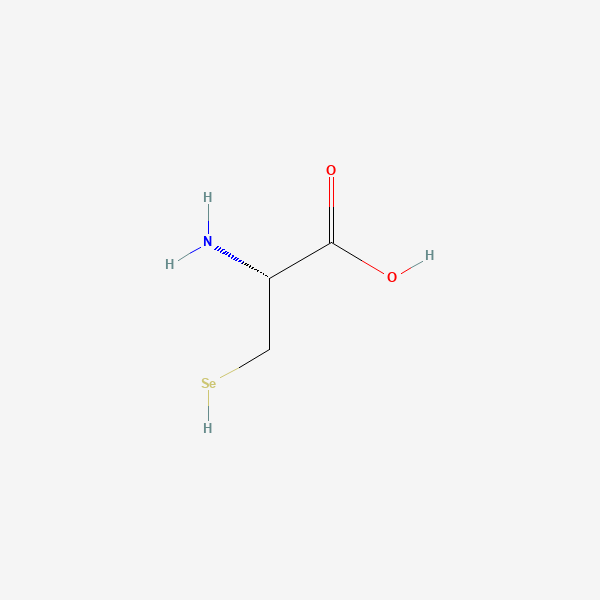
- Molecular formula
- C3H7NO2Se
- Molecular weight
- 168.06 g/mol
- IUPAC name
- (2R)-2-amino-3-selanylpropanoic acid
Verified external records:
References
- 1.L-Selenocysteine — PubChem compound record (CID 25076), National Library of Medicine
- 2.Selenium — Health Professional Fact Sheet, NIH Office of Dietary Supplements
- 3.Selenoproteins in human biology — indexed research (PubMed, National Library of Medicine)
- 4.Selenocysteine biosynthesis and UGA recoding — indexed research (PubMed, National Library of Medicine)
More on Selenocysteine
Everything else we've written about Selenocysteine — what the community reports, the explainers that cover it, and the terms it keeps running into.
- How Many Amino Acids Are There? 20, 21, or 22Explainer
- ProteinogenicGlossary